


Paragraph 1: The Weight of a Memory and the Invisible Thief
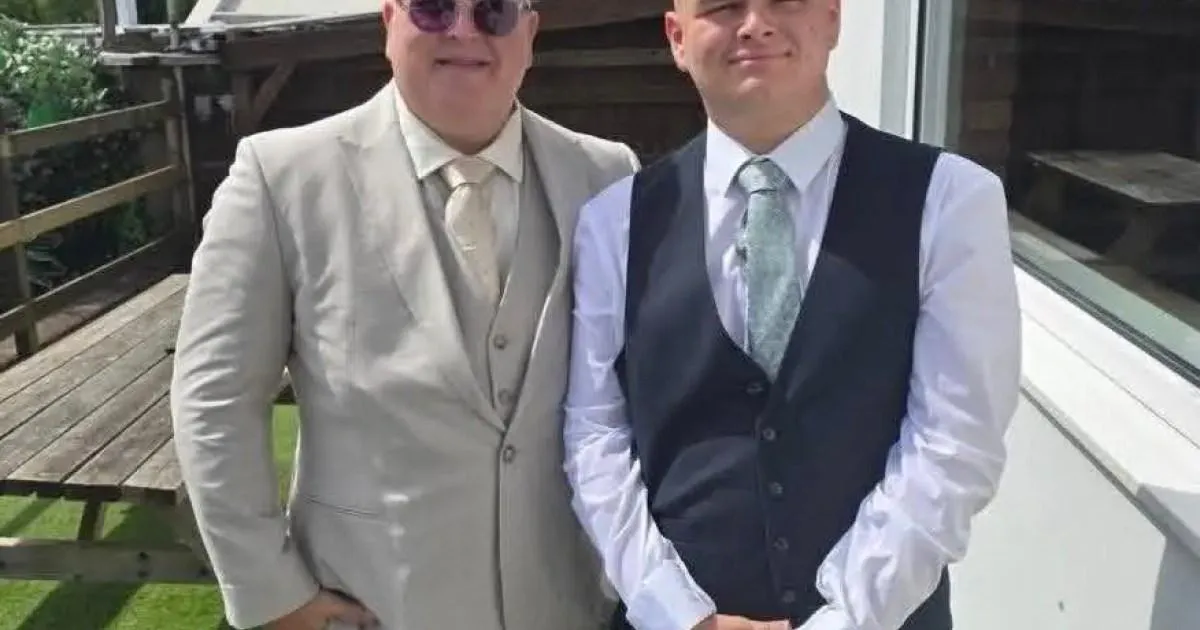
There is a particular kind of grief that accompanies the approach of a milestone anniversary—a quiet, private ache that seeks solace in the familiar. For 22-year-old Matthew Ball, the evening of what would have been his mother Rachel’s birthday was not intended as a raucous celebration, but rather as a solemn tribute. He wanted to sit in a pub, perhaps in the same way his mother once might have, to raise a glass in her memory and to feel, if only for a few hours, a semblance of normalcy. But this simple act of remembrance was violently interrupted by the cruel reality of his daily life. Matthew lives with Niemann-Pick disease type C, a devastating and brutally progressive neurological disorder. This rare genetic condition is a merciless thief, gradually dismantling the body’s fundamental architecture. It attacks the brain, leading to cognitive decline, and simultaneously damages vital organs like the liver and spleen. For Matthew, the most visible manifestations are the staggering, uncoordinated movements, the slurred speech that belies a sharp and conscious mind, and the sudden, terrifying loss of balance that has resulted in countless painful falls and broken bones. Because his condition is invisible to the naked eye, Matthew navigates a world that perpetually misreads his body’s signals. Realizing this, he took proactive, diligent measures to protect himself from misunderstanding. He obtained an official disability card, a formal document explicitly stating his condition, designed to bridge the chasm between his reality and the perception of strangers. On this emotionally charged evening, he carried that card like a shield, intending to present it to staff to prevent exactly the kind of confusion that would ultimately shatter his evening.
Paragraph 2: The Shattering of a Quiet Evening
The venue he chose was the Malcolm Uphill pub, a Wetherspoon establishment situated in the heart of Caerphilly, Wales—a place that promised a casual, unpretentious atmosphere, ideal for a quiet night of reflection. Upon arriving, Matthew was greeted with the typical bustle of a weekday evening. Demonstrating remarkable foresight and courage, he approached the bar and successfully purchased his first pint. Crucially, he took the initiative to inform the door staff and the initial bartender of his specific medical situation, presenting his disability card as proof of his condition. For a brief, hopeful window, it seemed the evening might proceed as he had prayed. He found a seat, perhaps staring into the amber liquid of his drink, lost in thoughts of his mother, surrounded by the low murmur of conversation that provided a comforting backdrop to his grief. However, as the night progressed, the fragile peace was shattered. Matthew, wanting another drink, approached the bar for a second pint. This time, he was met by a different staff member, one who had not been present for the initial explanation. This employee observed Matthew’s symptoms—his unsteady gait, the slight slurring in his words, his struggling to maintain his composure—and immediately rendered a swift, devastating, and all-too-common judgment: he was intoxicated. In that moment, Matthew’s disability card was rendered completely irrelevant, lost in the shadow of a prejudice rooted in the assumption that a young man looking unsteady must be causing trouble. He was refused service, a decision delivered publicly and pointedly, casting him as a shameful nuisance. His mother’s birthday tribute had been twisted into a scene of public humiliation, and he was effectively ejected from a social space, not for misbehavior, but simply for the crime of appearing different.
Paragraph 3: A Sister’s Fury and the Cruel Irony of the Date
The emotional fallout was immediate, explosive, and deeply painful, crystallized in the fierce, heartbroken testimony of Matthew’s sister, Abby. “Matthew wasn’t drunk,” she insisted to reporters, her words carrying the weight of years spent watching her brother navigate a hostile and unforgiving world. “He was displaying symptoms of his neurological condition.” Her statement was not merely a defensiveness of his character; it was a desperate plea to understand the brutal reality of his existence. Niemann-Pick disease has already stripped Matthew of the carefree autonomy most young men his age take for granted. It has caused him to fall, resulting in agonizing broken bones and a constant state of physical peril. It has robbed him of his career, forcing him into a life of dependence upon family and disability support. For Abby, the incident was a grotesque insult layered upon an existing, chronic injury. To be publicly labeled a drunk is humiliating for anyone, but for Matthew, it is a cruel dismissal of his daily, relentless fight for dignity. Yet, the most vicious aspect of the incident was its timing. This was a night consecrated to the memory of their late mother, Rachel. The thought that her son was publicly shamed on her birthday, that his disease was unknowingly mocked by strangers, added a layer of grief to an already poignant evening that Abby found almost unbearable. She articulated this pain succinctly: “He should not have to lose even more of his freedom.” This incident was a stark reminder that for every small victory Matthew achieves in carving out a piece of independence—like going to a pub alone—the world is quick to snatch it back, reinforcing his isolation and the profound unfairness of his condition.
Paragraph 4: The Dangerous World of Invisible Disabilities
Matthew’s ordeal is a harrowing case study of the pervasive problem of “invisible disabilities”—conditions that leave no obvious external sign, yet profoundly impair a person’s daily function. Unlike a wheelchair, a white cane, or a hearing aid, neurological symptoms like slurred speech, tremors, cognitive fog, or unsteady balance are frequently misattributed to substance abuse, mental instability, or even simple rudeness. In the hospitality industry, where staff are trained to be hyper-vigilant against over-serving alcohol, this misattribution is almost a systemic default. The radar for intoxication is tuned so finely that it picks up any deviation from a “normal” gait or speech pattern and aggressively files it under “drunk.” Matthew’s disability card, a piece of official government-issued paperwork, should have served as the ultimate shield. However, it was rendered impotent by a staff member who either failed to see it, refused to understand it, or simply did not believe that a person with such a condition would be out in a pub alone. This highlights a deep and dangerous chasm between possessing documentation and receiving genuine empathy. It is a systemic failure of training—not just in checking IDs, but in learning how to perceive human beings. When hospitality staff are not educated on the broad spectrum of neurological disorders that mimic intoxication, they become unwitting agents of discrimination, wielding the power to exclude and humiliate patrons who are simply trying to live their lives. The psychological toll this takes is immense; it forces individuals with hidden conditions to constantly perform a “normalcy” they cannot sustain, or to face the exhausting, degrading task of explaining their personal medical history to every single stranger they encounter just to be allowed to buy a pint of beer.
Paragraph 5: The Bittersweet Nature of a Corporate Apology
In the aftermath of the public outcry, JD Wetherspoon issued a formal, albeit standard, apology. Their spokesperson confirmed that the incident occurred on August 22 during a busy period, and acknowledged that a “different member of staff mistakenly thought the customer had too much to drink and he was refused service.” The apology concluded with an invitation, stating: “The company apologises to Mr. Ball and looks forward to Mr. Ball and his family returning as customers in the future.” On the surface, this appears to be a rectification—a recognition of a mistake and an open door. But for Matthew and Abby, this apology is a deeply bittersweet balm. While it absolves the specific employee of malicious intent, it does little to erase the visceral, humiliating pain of that night. It serves as a stark reminder that the primary responsibility for preventing this situation should never have fallen upon Matthew in the first place. He did everything absolutely right: he brought his documentation, he proactively explained his condition to the initial staff, and he was still failed by the system. The onus, therefore, rests not on the disabled individual to carry proof and constantly advocate for themselves, but on businesses to create environments that are inherently inclusive by design. A comprehensive training module on recognizing hidden disabilities—differentiating between a stumble caused by neurological deterioration and a stumble caused by alcohol, and knowing how to discreetly check with a patron or their companions—would have entirely prevented this ordeal. While the apology is a necessary first step, genuine progress will only occur when “disability awareness” transforms from a corporate HR checkbox into a genuine, practical, and ongoing core competency for every single person who serves the public.
Paragraph 6: A Call for Empathy in a Judgmental World
Ultimately, this story is a profound reflection of the society we have built. We are dangerously quick to judge, painfully slow to understand, and heavily reliant on stereotypes to navigate the complex interactions of our social world. When we see a young man struggling to walk in a pub, our brains instinctively reach for the most common explanation—alcohol—and we act on that assumption with a false sense of moral authority. But these snap judgments carry real, devastating consequences. They isolate individuals like Matthew, pushing them further into the shadows, eroding their already fragile confidence to leave their homes. Matthew went to a pub to honor the memory of his mother, Rachel. He did not go to cause trouble; he went to feel a sense of belonging, to grieve in a shared space, and to live a slice of life that his relentless disease constantly threatens to take away. His story is a stark, urgent reminder that empathy must become our default setting. The next time you see someone who appears unsteady, who speaks oddly, or who moves with difficulty, pause before you judge. Consider the possibility that their body is fighting a war you know nothing about. Let Matthew’s experience serve as a catalyst for a broader conversation—not just about the training of pub staff, but about the fundamental way we treat our fellow human beings. We owe it to Matthew, to Abby, and to the millions of others living with invisible conditions, to look past the surface, to offer a hand instead of a humiliating rejection, and to create a world where a trip to the pub to remember a lost loved one never ends in public shame. The mother watching over Matthew that night likely saw not a drunken man, but a courageous son battling an unforgiving disease—a perspective we must all strive to adopt.