



The recent tragic death of former Conservative minister Ann Widdecombe has sent waves of shock and confusion across the country. The 78-year-old was discovered in her home in Haytor, Dartmoor, succumbing to horrific, life-ending head injuries. What started as a local tragedy quickly escalated into a national security matter, as counter-terrorism officers descended upon a quiet street in Rotherham—nearly 300 miles away—to arrest a 28-year-old man. The suspect, whose identity remains a subject of intense public curiosity and concern, is currently being held on suspicion of murder and the preparation or instigation of terrorist acts, a pairing of charges that has left the public searching for answers and motive.
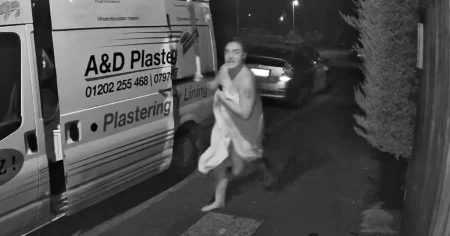
As the investigation unfolds, the logistics of the crime have become a focal point of intense scrutiny. Authorities believe the suspect embarked on a grueling round trip, driving roughly 540 miles in a single day to carry out the attack before returning to South Yorkshire. This timeline has been corroborated by local witnesses and surveillance footage, which appears to show the man leaving his residence on the morning of the murder with a wooden baton visible in his pocket. For those who knew him, the idea that he could execute such a calculated, long-distance journey is hard to reconcile with the man they saw every day—a quiet, isolated figure who mostly kept to himself.
To understand the person at the center of this investigation, one has to look at the atmosphere of the house in Rotherham. Neighbours describe a man who lived a life of profound seclusion, a recluse who rarely ventured out. For years, his primary occupation was acting as a sole caregiver for his father, an amputee who eventually passed away from cancer this past December. Since that loss, the suspect’s world seems to have shrunk even further. While residents noted he was polite and occasionally helpful by taking in parcels, he was virtually invisible to the community, hovering in the background of a quiet neighbourhood without ever making a ripple.
The suspect’s uncle, speaking with raw vulnerability, captured the disbelief felt by those who share his bloodline. Upon hearing the news of the arrest, he admitted his legs “turned to jelly,” a visceral physical reaction to the horrifying reality of what his nephew is accused of. He is candid in noting that “things don’t add up.” Like many who live in the vicinity, he observed the suspect’s car parked at home nearly every single day, making the prospect of a high-speed, long-distance mission to Dartmoor feel like something entirely detached from the nephew he had barely spoken to in a decade.
There is a palpable sense of bewilderment among the authorities as well. The suspect was not on the radar of local South Yorkshire police, nor was he flagged by the government’s Prevent counter-terrorism program. This lack of a prior criminal footprint makes the transition from a quiet, grieving son to a suspect in a high-profile, politically sensitive murder investigation all the more jarring. It raises unsettling questions about the types of individuals who might exist in the shadows of society, capable of harboring thoughts or grievances so extreme that they lead to the tragic loss of a prominent public figure.
Ultimately, as the legal process moves forward, the community is left to grapple with the dissonance between the man who cared for his ailing father and the man currently held behind bars for an alleged act of terror. While the evidence—from the CCTV footage of the baton to the specific timing of the vehicle’s departure—paints a damning picture, the “why” remains elusive. For the family, the neighbours, and a nation mourning a well-known voice in politics, it is a sobering reminder of how quickly the mundane curtains of local life can be pulled back to reveal depths of darkness that no one saw coming.