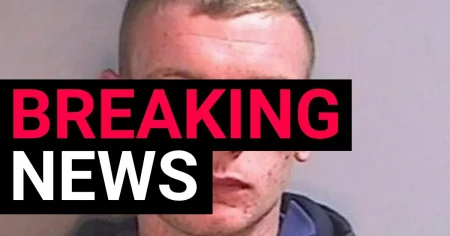




The collision on Rowrah Crescent that claimed the life of 15-year-old Devon Simmonds-Caines was not a tragic accident, but a calculated and devastating consequence of human rage. On that July afternoon, 60-year-old Terrence King made the fatal decision to abandon the law and act as judge, jury, and executioner. Seeing Devon riding an e-bike that had been stolen earlier that day, King allowed his temper to eclipse his humanity. Instead of calling the authorities, he accelerated his Vauxhall, driving at twice the speed limit directly at the teenager. The impact was instantaneous and catastrophic, leaving the young boy with injuries that were, in the words of the prosecution, simply “unsurvivable.”
During his trial, King painted a picture of a man who intended only to “block in” the bike, a claim that stood in stark contrast to the physical evidence presented in court. Prosecutor Michael Hayton KC argued that the lack of brake lights—a detail caught on footage—proved that King made no attempt to slow down or avoid contact. For a man who would later claim he never meant to cause harm, his actions told a different story: one of a deliberate, violent steer toward a vulnerable child. King’s insistence that he didn’t know why he failed to brake rang hollow against the reality of a speed-fueled collision that ended a young life in an instant.
The legal journey to justice was a difficult one for Devon’s family, who were forced to endure an initial trial that ended in a hung jury. While King attempted to mitigate his culpability by pleading guilty to the lesser charge of manslaughter in the interlude, the court refused to let the gravity of his actions be minimized. After his re-trial, a jury ultimately rejected King’s narrative, finding him guilty of murder. The emotional outburst that erupted in the public gallery when the verdict was read spoke to the profound weight of the loss, as those who loved Devon finally saw a legal recognition of the malice that had been directed toward him.
Beyond the courtroom drama, the heart of this tragedy is the vibrant, promising boy who was stolen from his family. Devon was described by his relatives as a “bubbly, outgoing” teenager who possessed a deep capacity for love and a grounded sense of respect. He was a boy who knew his own mind, who looked out for those around him, and who held onto his integrity even when he struggled to stay motivated. His family’s efforts to honor his legacy are centered on peace and remembrance, a noble goal that serves as a poignant reminder that Devon was so much more than the circumstances of his final moments.
The legal proceedings underscored the dangerous arrogance of vigilantism. Sobia Ahmed, representing the Crown Prosecution Service, highlighted the reality that King allowed his fury to override his moral compass. By taking the law into his own hands, he turned a situation involving property theft into an irreversible act of violence. His later claim of collapsing “like a sack of potatoes” upon seeing the carnage he had caused could not undo the fact that, moments before, he had steered a weaponized vehicle toward a child. The jury’s decision to convict him of murder sent a powerful signal that anger, regardless of how justified a person feels it is, is no excuse for taking a human life.
As Terrence King awaits his life sentence, the community and Devon’s family are left to process a void that can never be filled. This case serves as a somber reflection on the volatility of human emotion and the importance of restraint. A teenage boy’s future was extinguished in a blink because an older man chose violence over the phone and rage over reason. While the law has finally provided a measure of justice, it cannot restore the light to a family shattered by a senseless, preventable, and cold-blooded act of aggression. Devon’s legacy will now focus on the love he gave and the respect he commanded, rather than the horrific way his life was taken.