

For 77-year-old Peter Colmer, living in the quiet corner of Bramley Gardens in Coxheath was always defined by the lush, towering nature that bordered his community. That aesthetic, along with the neighborhood’s sense of peace, was shattered recently when the mature trees and hedgerows surrounding the local Heathside Centre were suddenly and drastically cut back. Describing the scene as “brutal and blatant,” Peter watched in disbelief as decades-old, ten-metre-high canopies were sheared down to mere two-metre stumps. It was a jarring transformation that replaced a soft, green perimeter with a barren sightline, leaving many neighbors questioning how such a significant environmental change could occur without any prior consultation or warning.
The situation has sparked particular outrage because of the timing. The work commenced right in the heart of the restricted bird nesting season, a period when government guidelines strictly discourage the disturbance of hedges and trees to protect wildlife habitats. Peter, who has lived through many seasonal changes in Coxheath, feels that the severity of the trimming—which he refers to as a “decimation”—defies both common sense and environmental sensitivity. He argues that the sudden exposure has stripped away the neighborhood’s character, creating a landscape that feels more like a “war zone” than a residential boundary, and has fundamentally altered the privacy and tranquility he and his neighbors once enjoyed.
Adding to the confusion and frustration was the timing of this work, which followed closely on the heels of notices about a planned solar panel installation at the Heathside Centre. Initially, residents like Peter feared the clearing might be a preparatory measure for the new energy project, potentially prioritizing utility over the local environment. However, the Kent and Medway Mental Health NHS Trust, which oversees the facility, has been quick to clarify that the two matters are entirely unrelated. They maintain that the decision to cut back the foliage originated from an independent tree survey, citing urgent safety concerns regarding overhanging vegetation that was encroaching upon the public highway.
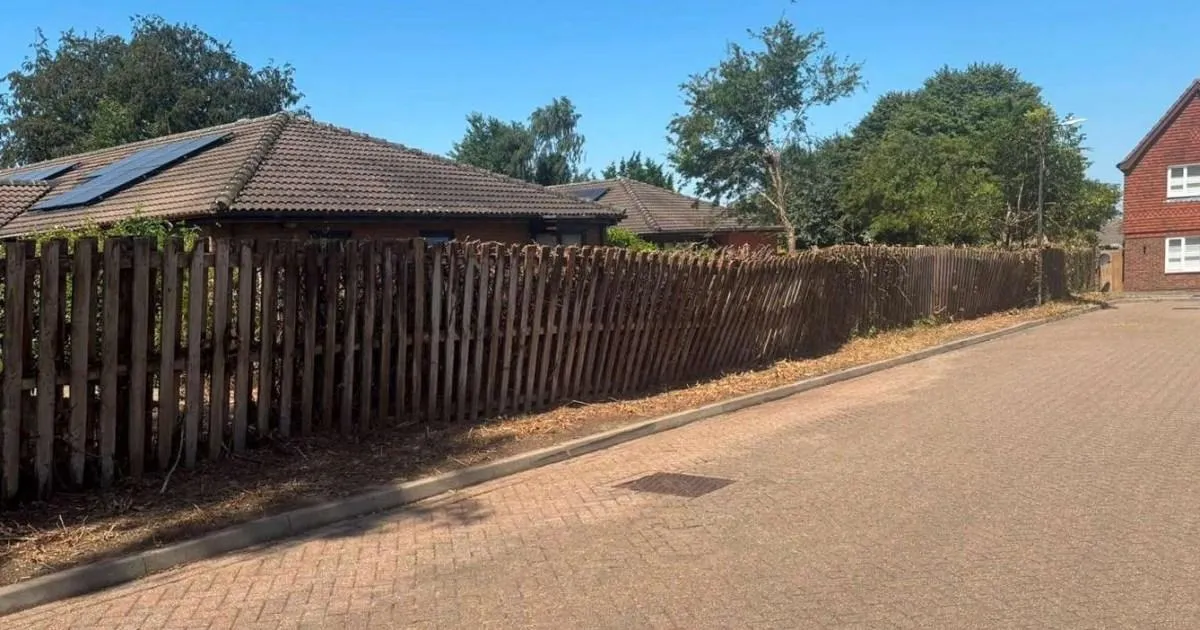
The physical reality of the site, however, remains a point of contention for local residents. Beyond the loss of the greenery itself, the structural impact left behind is visibly concerning. Peter notes that the trees appeared to provide necessary stability for the fencing that runs along the boundary; now that the foliage has been removed, the fence is buckling at awkward angles and appears weak. He worries that the remaining structure will not survive the next strong gale, leaving his home exposed not only to the elements but also to the constant glare of bright security lighting that illuminates the site 24/7. These issues have turned a once-passive environmental feature into an ongoing source of personal stress for the retirees in the area.
In their defense, the NHS Trust has expressed an understanding of the community’s distress, acknowledging that green spaces are immensely important to the wellbeing of local residents. They emphasize their commitment to keeping the Heathside Centre safe for patients and staff while attempting to fulfill their legal obligations as landowners. By citing the advice regarding public highway access, they lean on the legal exemptions provided within hedgerow management rules, which allow for cutting during the nesting season if the vegetation poses a genuine obstruction or danger to pedestrians and road users. It is a classic bureaucratic friction: the necessity of public safety standards clashing head-on with the preservation of nature and the quality of life for long-standing residents.
As the dust settles on this controversial project, the residents of Bramley Gardens are left to look out at a drastically altered view. While the council has confirmed they had no part in the work—limiting their responsibilities to the nearby library—the void left behind by the trees serves as a sobering reminder of how quickly a neighborhood’s character can change. For Peter and his neighbors, the episode serves as a painful lesson in the fragility of their local environment. They are left with a landscape that feels stripped and exposed, waiting to see if the greenery will ever be allowed to return to its former height, or if the “savaged” stumps are now the new, austere standard for their previously quiet street.