


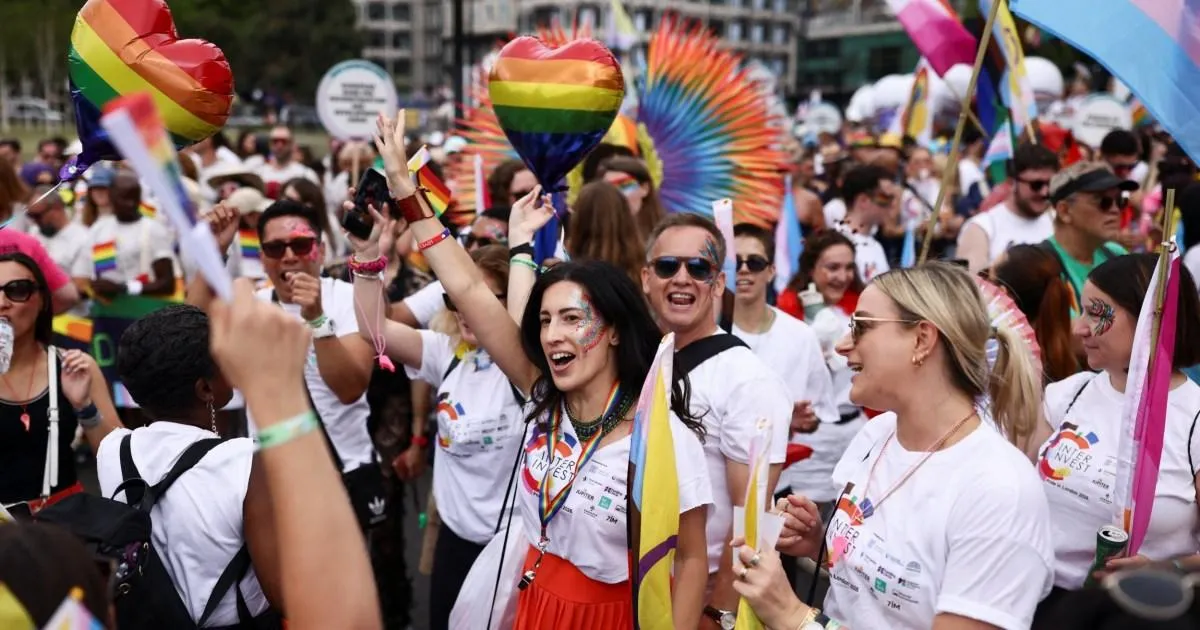
This summer, the heart of London transformed into a vibrant tapestry of color and resilience as thousands of activists, families, and allies took to the streets for the annual Pride in London parade. With over a million spectators expected to line the route from Hyde Park Corner to Whitehall, the city felt electrified—a sea of rainbow flags and joyous energy dancing under the bright, warm sun. Mayor Sadiq Khan stood at the forefront of the procession, leading the crowds in a resounding chant of “Happy Pride,” signaling a day of celebration that stretched across the capital, from the lively floats of Premier League football teams to the highly anticipated arrival of global icons like Madonna on the main stage at Trafalgar Square.
However, beneath the jubilant music and festive spirit, this year’s march served as a poignant reminder that Pride remains a movement rooted in protest. Veteran activist Peter Tatchell used the platform to cast a global spotlight on inequality, calling out FIFA for its inaction regarding countries that explicitly ban gay footballers from their national teams. His presence, alongside thousands of marchers representing more than 600 diverse groups, underscored a growing anxiety about the current cultural climate. From the local efforts of councils seeking to remove Pride flags and books to the broader international struggles for visibility, the day was a firm assertion that the progress of the past is not a permanent guarantee without continued vigilance.
The historical gravity of the movement was perhaps best captured by Julian Hows, a 70-year-old activist who remembers marching in 1972, a time when the police presence far outnumbered the participants. For Hows, the transition from those early, fragile days to the massive, city-wide events of today is a testament to progress, yet he warned against complacency. He spoke candidly about the fragility of hard-won freedoms, specifically noting the worsening climate for transgender individuals in the UK. This sentiment echoed throughout the day, transforming the celebration into a vital call to action for those who recognize that the fight for equality is far from over.
The organizers of Pride in London shared this sense of urgency, outlining a stark reality that often hides behind the confetti and performances. They pointed to the crumbling infrastructure of the community, noting that over half of London’s LGBTQ+ venues have shuttered their doors since 2006. Compounding this loss of safe spaces are systemic failures in public services, including wait times for gender-affirming care that have ballooned to over four years in some regions. Furthermore, the delay in codifying a ban on conversion therapy—first promised in 2018—remains a source of deep frustration and disillusionment for many who feel the government is failing to protect its most vulnerable citizens.
Statistics from the Home Office provided a sobering backdrop to the festivities, with reports of over 18,000 hate crimes motivated by sexual orientation in the previous year. This data serves as a painful contrast to the unity displayed during the parade, proving that despite greater public visibility, hostility remains a daily reality for many. The Metropolitan Police had preemptively declared a “no tolerance” policy regarding hate crime for the weekend, yet the presence of such a warning highlights the reality that, even on a day dedicated to love and self-expression, safety cannot be taken for granted.
Ultimately, the day was defined by the indomitable spirit of a community that has never been a stranger to adversity. As interim CEO Rebecca Paisis noted, the true power of Pride lies in unity—the collective voice of thousands becoming one front. By bridging the gap between the pioneers of the 1970s and the first-time marchers of today, the event reaffirmed that while the challenges of legislation, shrinking safe spaces, and rising hate crimes are significant, they are met with an equally powerful resolve. Pride remains, as ever, both a necessary protest and a beautiful, defiant celebration of existence.