



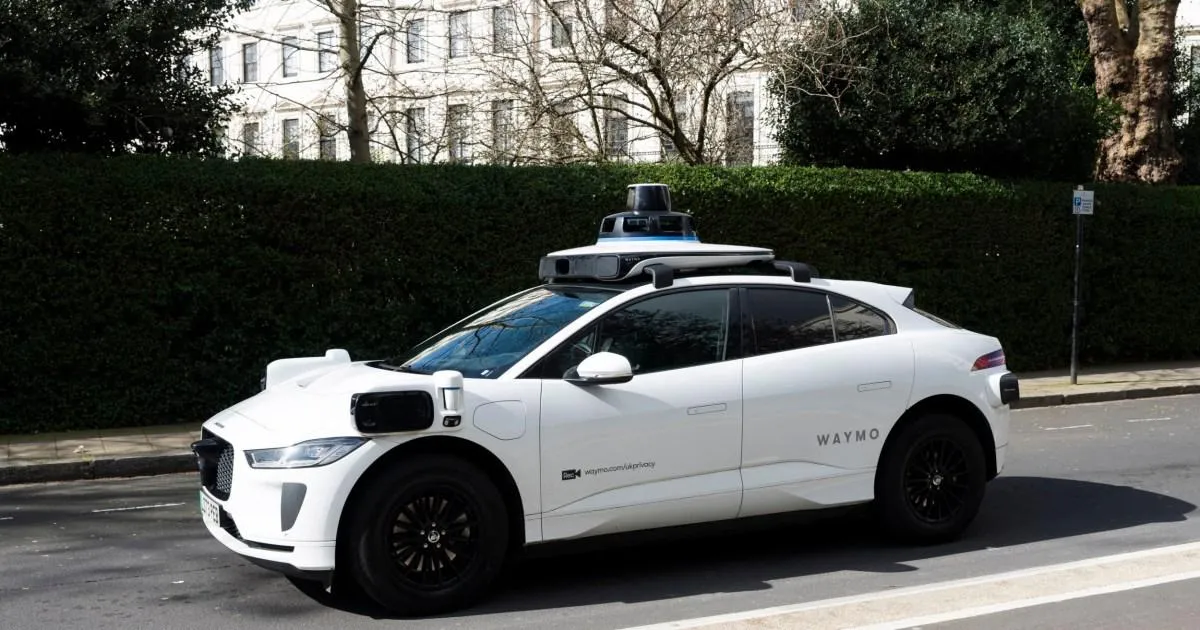
The quiet stillness of a London night was shattered early Wednesday morning when a violent collision occurred on the A13, sending shockwaves through both the local community and the tech industry. At approximately 2:00 a.m., a Waymo vehicle—part of a highly anticipated trial for autonomous ride-sharing services—became caught in a chaotic multi-car accident. While the presence of these cars on city streets is meant to signal the future of transportation, this incident served as a stark, rattling reminder of how unpredictable road travel can be, regardless of whether a human or a computer is behind the wheel.
The details of the crash are alarming, painting a picture of high-speed recklessness that left four people injured and emergency responders scrambling to the scene. According to official reports, the Waymo vehicle was traveling along the A13 when it was approached from behind by a speeding car moving at a staggering 93mph—nearly double the legal 50mph limit for that stretch of road. The speeding driver abruptly swerved into an adjacent lane, clipping another vehicle before slamming into the Waymo car. The speed and impact turned a routine late-night drive into a scene of distress, requiring immediate medical intervention for those caught in the wreckage.
Perhaps the most critical detail of the incident is that, contrary to the futuristic vision of fully autonomous transit, this specific vehicle was not operating under its own software at the time. A human test driver, tasked with monitoring the car’s performance and safety, was manually controlling the vehicle as it attempted a routine lane change. This nuance is vital, as it highlights that even with a cautious, trained operator behind the wheel, no amount of oversight can fully insulate a vehicle from the dangerous behavior of other drivers on the road.
In the aftermath, Waymo has been quick to address the mechanics of the event, clarifying that their technology was effectively “off” in the traditional sense, as the car was in manual mode. A spokesperson for the company expressed relief regarding the swift action of the London Ambulance Service and extended warm wishes for a full recovery to those injured. However, the incident raises inevitable questions about the maturity of testing these high-tech vehicles in a bustling, unpredictable urban environment like London, where aggressive driving remains an persistent hazard.
This crash serves as a sobering case study in the intersection of cutting-edge innovation and human error. Waymo’s ambitions to launch a fleet of driverless taxis in the UK depend entirely on public trust and evidence of safety. While the company maintains that their test drivers are there specifically to act as a fail-safe, this accident proves that human intervention has its limits when faced with extreme, reckless actions by other motorists. It forces us to look past the novelty of autonomous engineering and confront the harsh realities of road safety, where technology is only one variable in a much larger, more volatile equation.
As the investigation continues, the focus will likely shift toward how to better protect these experimental vehicles and their occupants from external threats. For the tech giants and city officials planning for a “smart” future, the lesson from the A13 is clear: innovation on the road does not exist in a vacuum. As long as reckless speed and human error remain a constant presence in our transit culture, the dream of a frictionless, autonomous commute remains a work in progress, one that requires not just better robots, but a fundamental change in how we ensure safety for everyone sharing the pavement.