


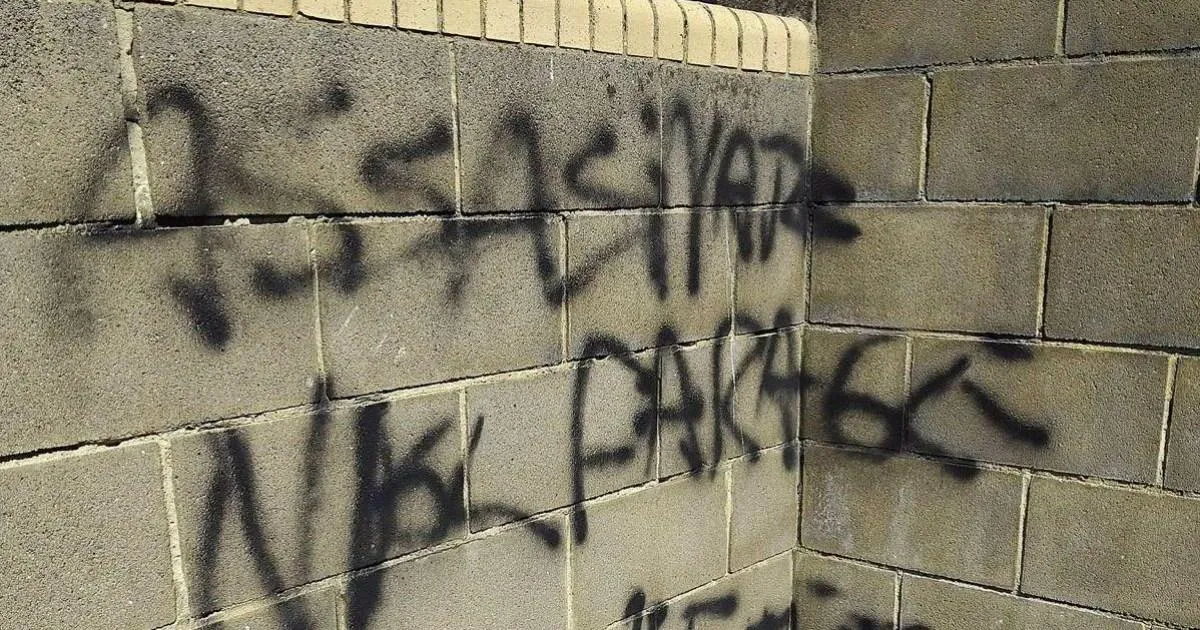
Nigel Farage, the leader of Reform UK, recently found himself at the center of a disturbing incident that has once again highlighted the volatile nature of modern British politics. Taking to Facebook, Farage shared an image of graffiti found in Folkestone, Kent, which chillingly demanded his assassination. The crude, handwritten message served as a stark reminder of the dark undercurrents that often follow polarizing figures in the public eye. For Farage, this was not merely an act of vandalism but a representation of the systemic hostility he claims to face daily. While the exact wording of the graffiti remained somewhat obscured by poor penmanship, the intent was unmistakable, fueling concerns regarding the safety of political leaders in an increasingly heated national environment.
This incident is far from an isolated event for the Reform UK leader, who has long been a lightning rod for intense reactions. The shadow of violence has loomed over his career for years, ranging from the more trivial indignity of having milkshakes thrown at him during public appearances to far more serious legal threats. Just last year, the reality of these dangers became painfully clear when an Afghan migrant was sentenced to prison for a series of intimidating videos posted to TikTok. In those clips, the perpetrator mimicked the firing of a weapon, explicitly threatening to kill Farage. These recurring episodes illustrate a harrowing landscape where political discourse frequently descends into threats of physical harm, forcing public figures to navigate a constant state of heightened security.
Beyond the physical danger, Farage is currently navigating a political storm involving his finances, specifically a controversial £5 million donation. The gift, provided by a British-Thai crypto businessman in the lead-up to the 2024 general election, has sparked significant scrutiny from Parliament’s standards commissioner. Initially, Farage defended the money as necessary for his lifetime security, yet he later pivoted, describing the sum as a reward for his efforts in securing Brexit. His flippant remark that he could spend the money on “Ferraris if I liked” only served to inflame critics who argue that such a significant windfall should have been declared and handled with greater transparency, leading to an ongoing investigation into his adherence to parliamentary rules.
Despite these ongoing controversies, Farage remains unbowed, signaling that he has no intention of distancing himself from his deep-pocketed benefactors. Central to the current debate is his relationship with billionaire entrepreneur Christopher Harborne, who has already funneled more than £25 million into the coffers of Reform UK. Farage has been vocal about his appreciation for Harborne, particularly noting the businessman’s recent decision to re-register to vote in the United Kingdom. When pressed by journalists on whether his party would continue to accept financial contributions from such high-net-worth individuals, Farage did not hesitate, stating clearly that they would accept further donations “gladly.”
For Farage, the infusion of billionaire capital is not just a matter of convenience; it is a strategic necessity for a party attempting to challenge the traditional political establishment. By embracing Harborne’s support, Farage is positioning Reform UK to compete on a playing field that has historically been dominated by the major legacy parties. He frames the criticism he receives regarding these donations as part of a broader, biased narrative pushed by his political opponents. In his view, the focus on his personal finances is a distraction from the broader ideological battle he is waging, and he remains committed to securing whatever resources are available to keep his political movement afloat and visible in the public consciousness.
Ultimately, these combined issues—the personal security threats and the financial scandals—paint a complex picture of a politician who thrives in the heat of controversy. Nigel Farage has built his career by positioning himself as an outsider fighting against a status quo that he believes is fundamentally broken. Whether he is confronting extremist threats on the streets or answering to regulators regarding his private wealth, he maintains a consistent posture of defiance. As the investigation into his funding progresses and the political temperature in Britain continues to rise, the story of Farage’s leadership remains one of contradictions: an populist appeal built on the support of the ultra-wealthy, and a political path paved with both fervent public support and dangerous public vitriol.