

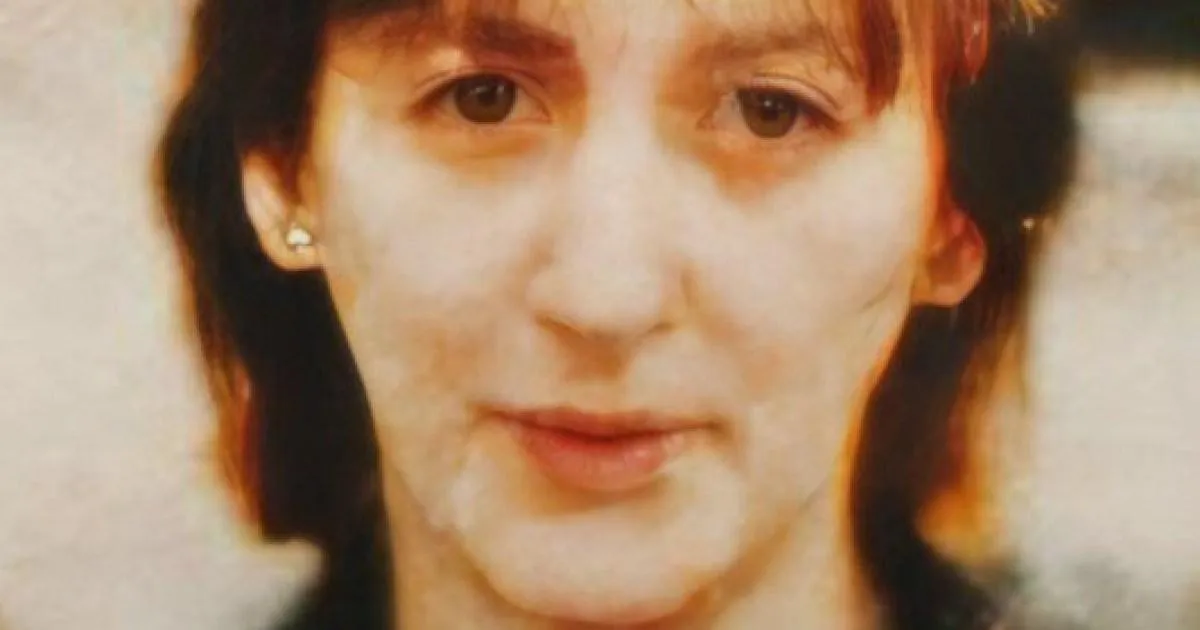
Some cases never really come to a close, not for the families left behind, and not for the communities that carry the weight of an unanswered question for decades. For nearly 28 years, the disappearance of Patricia Lashley was one of those cases. A mother of seven from Dudley, in the West Midlands, she was last seen in September 1998, and for a long time her loved ones were left with nothing but silence, speculation, and the slow, agonizing erosion of hope. But in July of this year, a missing persons inquiry took an extraordinary and devastating turn. Trevor Dunkley, now 66, who had been her partner at the time of her disappearance, was visited by police as part of the ongoing review. During that interview, he reportedly told officers, “I killed her, I’m sorry.” It was a confession that came not after hours of interrogation, but seemingly out of a conscience that had been buried along with Patricia herself. He described in chilling detail how he had hidden her body in the cellar of the home they shared, and how, over time, he had disposed of her remains so completely that no trace was ever found. This month, at Wolverhampton Crown Court, Dunkley pleaded guilty to murder and was jailed for life, with a minimum term of 10 years and 10 months. For anyone who knew Patricia, or who has followed the case, the sentence feels impossibly small compared to the decades of grief and uncertainty her family endured.
Patricia Lashley was known locally as Pat or Jade. She was a woman with deep roots in the Dudley area, though her life had taken her to London, Wales, Newcastle, and Scotland, and she had also used the names Vanessa and Tricia, as well as the surname Bradford. She was not a woman who lived in the shadows; she was someone with a large family, including seven children, and her absence should have been impossible to ignore. Yet somehow, for nearly three decades, her disappearance was a wound that never fully opened into a visible investigation. Her six oldest children grew up believing their mother had abandoned them. That belief, shaped by a childhood without her, became a part of their identity. They carried it into adulthood, a quiet ache that asked the same question over and over again: why didn’t she come back? The cruelty of that is almost impossible to put into words. The youngest child, a nine-month-old baby who was still breastfeeding at the time, was taken to social services by Dunkley himself. That baby grew up with adoptive parents, unaware for years that he had a mother who loved him, and that her love had been violently stolen from him. The image of a mother separated from her infant in such a brutal way is haunting. Patricia was reported missing by her sister in June 1999, but the trail had already gone cold. Over the years, appeals were made on television, including an appearance in the Big Issue and on Good Morning Britain, but no one came forward with the truth. All the while, Dunkley walked free, living his life as though he had not extinguished a life and shattered a family.
The details of his confession are as shocking as they are tragic. Dunkley told police that on the day of the murder, he returned home after a night shift and found Patricia in bed. He said he “just snapped” or “flipped,” and attacked her with his fists, repeatedly hitting her around the head. He then covered her body with bedding and carried her down to the cellar beneath the house. It was there that her body was left to decompose, hidden in the darkness while life continued on the floors above. He later described hearing rats under the kitchen floor, a sound that must have been a grim reminder of what was lying forgotten below. Approximately nine months to a year later, he moved away, and before he did, he disposed of the skeleton in stages, placing the bones into bins over a period of weeks. The remains were never recovered. When the body was not enough, he erased even the possibility of a grave. In his confession, Dunkley also made a series of cold statements that seem to diminish any sense of remorse. He claimed he did not love Patricia, did not have a sexual relationship with her, and that he “just wanted to help with the baby.” That phrase, “just wanted to help with the baby,” is so painfully detached from his actions. He ended that baby’s chance to know his mother, then delivered that baby into the care of social services, all while knowing exactly what he had done. His barrister, Balbir Singh, told the court that the charges had been brought based on the police interview, because there was no body, no forensic evidence, nothing except the words that had finally escaped him.
In court, Judge Michael Chambers KC delivered a sentencing that addressed the profound harm Dunkley had caused, not only by the murder itself, but by the decades of lying that followed. The judge made a point of focusing on the children, particularly the youngest, who grew up believing he was abandoned by a mother who had been killed before she could choose to leave. “He grew up thinking, obviously quite falsely, that he had been abandoned by his mother, as did his siblings,” the judge said. “That is in my judgement a grossly aggravating factor.” The judge acknowledged that Dunkley appeared to be genuinely remorseful, but he did not let that soften the reality of what had been done. What Dunkley did was “a dreadful thing,” and the long passage of time, the judge noted, was not some accident of circumstance. It was the direct result of lies Dunkley had maintained for 28 years. The loss of so many years, the stolen childhoods, the grief of a family that could not even mourn properly because there was no body to bury and no certainty about what had happened—all of that was his responsibility. Throughout the proceedings, Dunkley remained calm, even as the full weight of his confession was laid out before the court. Several members of Patricia’s family, including three of her children, were present in the courtroom. They sat through the harrowing details of how their mother had died, how her body had been treated with such disregard, and how the man she had trusted had spent nearly three decades avoiding justice. Prosecutor Robert Price told the court that Dunkley had become emotional on the day of his arrest, before telling police he had “just snapped.” But emotions, however genuine, cannot undo the calculated cruelty of keeping a mother’s fate secret for so long.
After the sentencing, Detective Inspector Michelle Cordell, from the West Midlands Homicide Unit, spoke publicly about the case, and her words captured the frustration of so many years of unanswered questions. She explained that Patricia had been reported missing by her sister in June 1999, and that the investigation had uncovered that she was last seen around September 1998. The missing person investigation was active from that point onward, and over the decades, police had revisited the information many times. It was not until the case was taken up by the missing persons unit that Trevor Dunkley was identified as someone who had been spoken to on several occasions and who might have had more to tell. The decision to speak to him again, in July of this year, led to his astonishing confession. Despite extensive excavation of the cellar, no human remains were found. There was no physical evidence left to match, no grave to visit, no final resting place for Patricia Lashley. Detective Inspector Cordell described Dunkley’s conduct as “truly shocking,” saying that anyone who could use such violence, and then conceal his crime in such a cruel way, had done something despicable. She spoke directly to what his silence had cost: “He has prevented Patricia’s loved ones from having a funeral for her. He has left them without answers for decades. It’s just unforgivable.” Those are the words of a police officer who has seen the lingering damage of unresolved violence, and they resonate far beyond this one case. A funeral is not just a ceremony; it is a chance for the living to say goodbye, to honour a life, to begin the slow process of healing. Dunkley took that away from Patricia’s family, and he gave them nothing in return but years of painful uncertainty.
What does justice mean after 28 years? For Patricia Lashley’s children, now adults with lives of their own, this sentence may feel unbearably light. Ten years and ten months cannot undo the childhood they spent wondering why their mother didn’t come home. It cannot give them the memories they should have had, the birthdays, the Christmas mornings, the quiet moments of maternal comfort that every child deserves. It cannot give the youngest son the chance to know the woman who carried him, breastfed him, and loved him in the brief months they had together. But perhaps, in some small way, the confession and the guilty plea offer something that was missing for nearly three decades: the truth. The truth that Patricia did not leave. The truth that she did not abandon her children. The truth that she was taken from them by an act of violence, and that a man who should have protected her chose instead to erase her. There is a kind of justice in that truth, even if it cannot fully heal the wound. Dunkley’s confession, however shocking, was a moment of accountability, a crack in the wall of lies he had built around himself. It does not excuse what he did, but it finally allows Patricia’s family to stop asking, and to begin remembering her as she truly was: a mother, a woman with connections across the country, someone who deserved so much more than the fate she was given. As they walk away from the courtroom, they carry with them not only their grief, but also a new and painful clarity. Patricia Lashley’s name is no longer just a missing person’s poster or a cold case file. She is, at last, a victim who has been seen, and a life that mattered.