



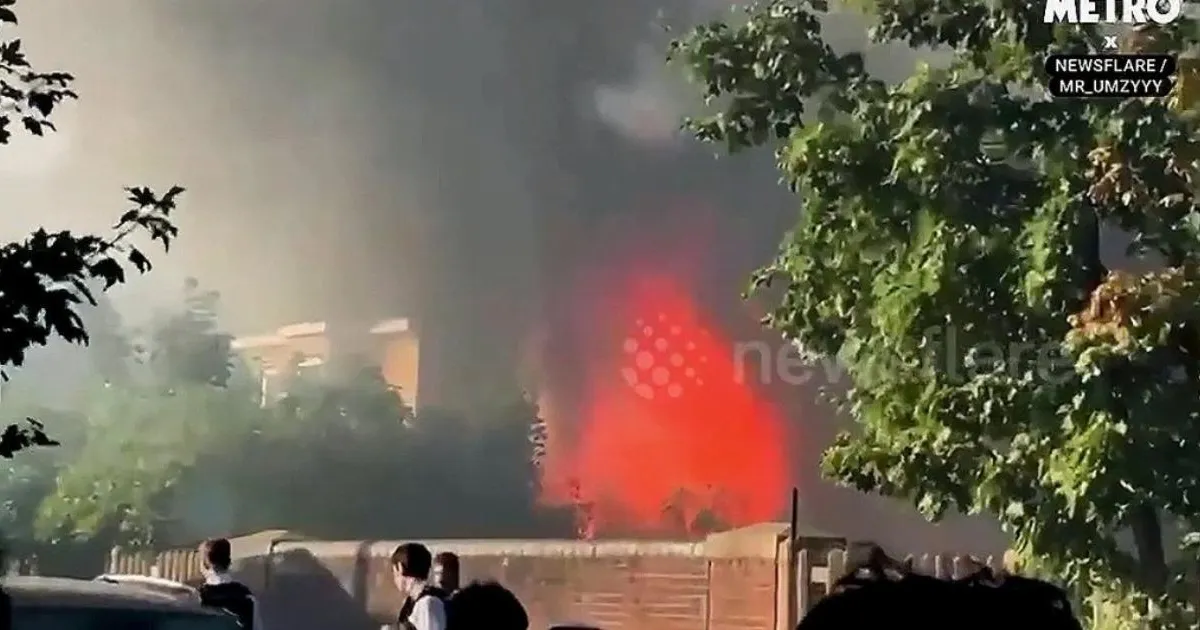
The atmosphere in Walthamstow, East London, transformed from a quiet evening into a scene of chaotic urgency yesterday as a massive fire erupted near Vallentin Road and Shernhall Street. The blaze, which tore through a residential property and quickly spread to the neighboring railway embankment near Wood Street station, sent plumes of thick, dark smoke billowing across the capital. As the flames jumped from the house to garden sheds and ultimately the tracks, approximately 125 firefighters and 20 engines were dispatched in a desperate effort to contain the inferno. For those living in the immediate vicinity, the sudden presence of emergency crews and the looming threat to their homes turned a typical night into a frightening ordeal, highlighting the vulnerability of neighborhoods situated along vital transport corridors.
The scale of the incident necessitated a swift and widespread emergency response, with residents being forced to evacuate their homes at a moment’s notice to ensure their safety. Authorities issued urgent warnings to nearby households, advising them to keep all windows and doors firmly shut to avoid inhaling the toxic smoke clogging the air. While the visual impact of the fire was terrifying, the London Fire Brigade was quick to provide a glimmer of relief, confirming that no injuries had been sustained during the incident. This success was a testament to the hard work of the crews, who labored throughout the night in incredibly hot and arduous conditions to prevent the fire from consuming more properties than it already had.
As the fire raged, speculation flourished regarding its origins, with many locals turning to social media to share their observations. While official investigations are still ongoing, local MP Stella Creasy pointed toward a potential electrical fire on the train line, a theory echoed by residents who suggested that a fallen tree may have sparked the incident by making contact with the overhead power cables. Whether the result of an unforeseen environmental hazard or a system failure, the fire serves as a stark reminder of the complexities of urban infrastructure and how quickly a localized incident can spiral into a widespread community disruption.
What truly defined the spirit of the evening, however, was the immediate support provided by the Walthamstow community. As families were pushed out of their homes, the neighborhood mobilized to help those in need, with residents from unaffected streets stepping forward to offer water and comfort. With the assistance of the local authority, emergency rest centers were set up quickly to house the displaced, ensuring that no one was left to face the cold night alone. This outpouring of kindness transformed a harrowing experience into a moment of collective endurance, proving that even in the face of such destructive forces, the human instinct to protect and care for neighbors remains a powerful constant.
By late evening, the firefighters had managed to bring the situation under control, yet the aftermath of the blaze continues to affect the daily lives of many Londoners. Transport for London confirmed significant disruptions to the Weaver line, with the stretch between Chingford and Hackney Downs remaining suspended while engineers conduct urgent, critical repairs to the damaged tracks. Assistant Commissioner Tom Goodall noted that while the fire caused substantial damage to a home and affected the gardens of some 30 properties, the quick deployment of resources prevented a far worse catastrophe. Despite the relief that the fire was extinguished, the physical scars on the environment and the ongoing travel headaches reflect the lingering impact of this significant event.
Ultimately, the incident at Wood Street stands as a sobering lesson on the fragility of our urban environment. While investigators work to pinpoint the exact cause of the blaze, the focus for the community remains on recovery and the slow return to normalcy. The collaboration between the London Fire Brigade, the British Transport Police, and the residents of Walthamstow was instrumental in ensuring that this emergency did not turn into a tragedy. As the railway repairs continue and the affected families begin the difficult process of assessing their property damage, the neighborhood remains resilient, anchored by the memory of how a community pulled together in the face of an unexpected and frightening challenge.