


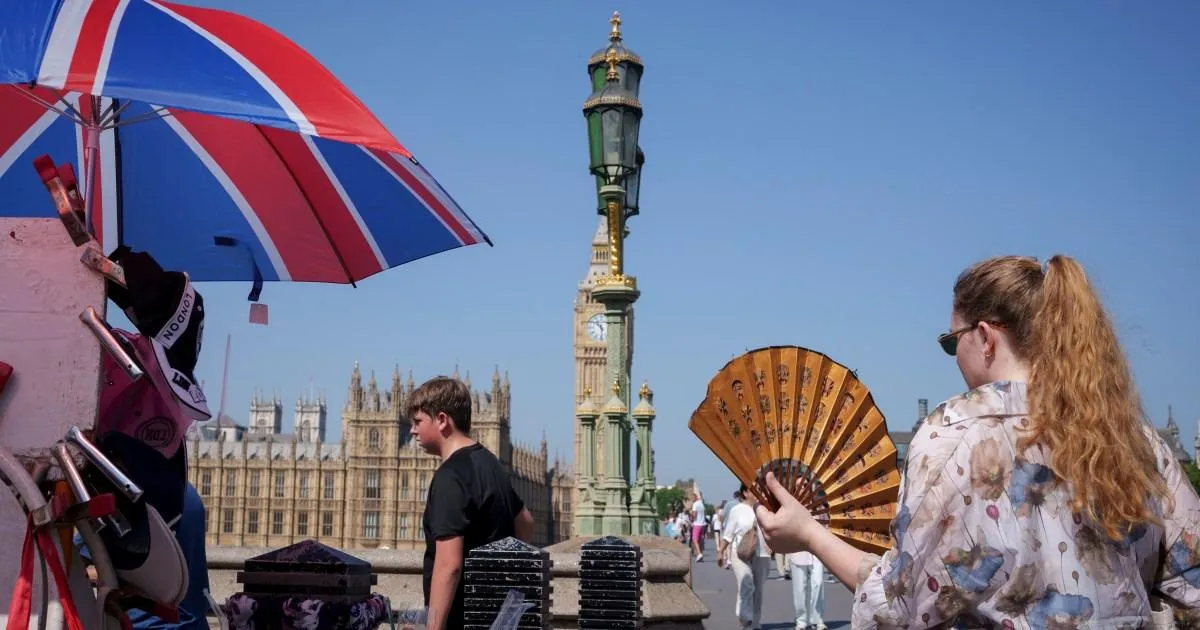
The UK is currently enduring a weather event that feels less like a typical British summer and more like an aggressive, unyielding challenge. We have officially marked ten consecutive days of temperatures soaring to 30°C or higher, a streak not witnessed in nearly two decades. Meteorologists and experts are warning that this is not merely a temporary blip of sunshine; it is a persistent, multi-week heatwave that shows no signs of breaking until late July. This extended duration puts the current summer in a league of its own, threatening to eclipse the infamous, record-breaking heat of 1976 and forcing us all to confront a harsh new reality regarding our changing climate.
What makes this situation particularly unsettling is the consistency of the heat. In London, the thermometer has refused to drop below 28°C for nearly a fortnight, turning the capital into a stifling urban furnace. To put that in perspective, the Met Office notes that we have not seen this level of sustained, blistering heat since 2003. While nostalgia often draws comparisons to the iconic summer of ’76, experts point out that our modern heatwave criteria have evolved alongside the rising mercury. We aren’t just dealing with a hot month; we are dealing with a structural shift in our weather patterns that is fundamentally altering how we live, work, and sleep.
The responsibility for this “new normal” lies squarely at the feet of climate change. Experts like meteorologist Jim Dale are blunt: we are living in self-inflicted times. While past heatwaves were occasional anomalies, they have now become an expected, recurring consequence of burning fossil fuels and trapping heat within our atmosphere. Every time we look back at historical records, we see that the thresholds we once thought were extreme are now being surpassed with alarming regularity. This year alone has seen multiple days of temperatures exceeding 34°C and 35°C—milestones that would have been considered rare statistical outliers just a few decades ago.
The mechanics behind this heat are as fascinating as they are terrifying. Much of the UK is currently gripped by a “heat dome”—a sprawling, stubborn high-pressure system that essentially acts like a lid on a pot. By stalling the jet stream and compressing air downward, this system traps heat and moisture, preventing natural airflow from cooling us down. When you combine this atmospheric “trap” with the long-term, human-driven rise in global temperatures, the result is a relentless feedback loop. We are no longer experiencing weather in isolation; we are experiencing it through the lens of a planet that is struggling to regulate its own temperature.
As if the local pressure systems weren’t enough, we are also battling the influence of a “super El Niño.” This natural phenomenon, characterized by shifts in Pacific Ocean wind and water temperatures, acts as a force multiplier for the heat already trapped by greenhouse gases. When the ocean releases this extra energy into the atmosphere, it amplifies the effects of anthropogenic climate change, turning already sweltering days into dangerous ones. The science is clear: natural cycles are no longer acting on an empty stage; they are now performing against a backdrop of a planet that is already running a fever.
Ultimately, this summer serves as a sobering reminder of the fragile balance we have upset. From the wildfire risks that now accompany our dry spells to the way we have to rethink our infrastructure and daily habits, the “stinging nettles” of climate change are no longer distant warnings—they are right in our backyards. While we may hope for a cool breeze or a refreshing evening, the data suggests that these trends are here to stay. As we navigate the remainder of this heatwave, we are left to wrestle with the reality that the way we interact with our environment must change, because the environment, quite clearly, has already changed for us.