



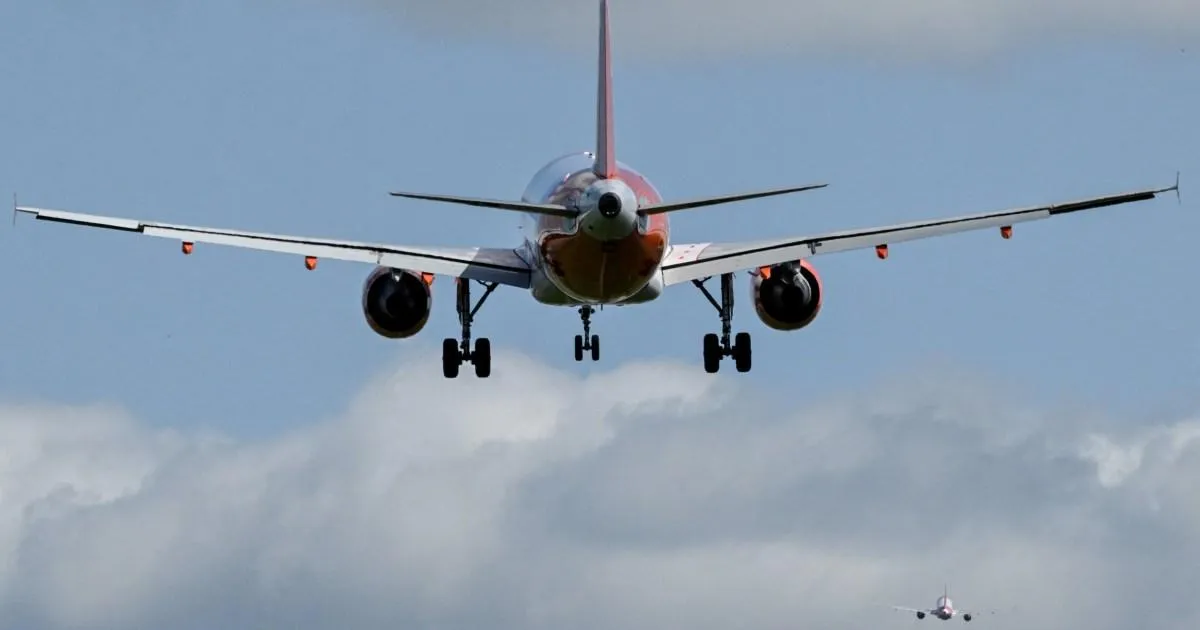
The sudden closure of a major runway is a nightmare scenario for any traveler, but for passengers arriving at London Gatwick late last night, it became a taxing reality. As the UK’s second-busiest airport, Gatwick is usually a clockwork operation, yet a technical failure involving an arriving aircraft brought the entire hub to a grinding halt. What began as a routine descent for hundreds of vacationers—many returning from sunny getaways in places like Palma de Mallorca and Tenerife—quickly devolved into a stressful series of mid-air holding patterns, emergency codes, and unexpected diversions to airports across the country.
The chaos kicked off when a British Airways flight from Mallorca touched down, only to encounter a technical problem that left the plane immobile on the active runway. As ground crews scrambled to address the obstruction, the airport’s operational heartbeat stuttered. Surrounded by fire engines and emergency personnel, the blocked runway left inbound aircraft with nowhere to go. Unable to land and hovering in the darkening skies above southern England, pilots from major carriers including TUI, easyJet, and Jet2 found themselves in a precarious position, ultimately forcing them to declare emergency status to prioritize their dwindling fuel supplies.
For those onboard, the experience was unsettling, to say the least. Flightradar24, which tracks global air traffic, showed a flurry of “7700” squawk codes—the universal signal for an aviation emergency—as nine different flights circled the airport in hopes of clearance. As the fuel gauges dipped and the wait stretched into the late hours, frustration mounted. One weary traveler, diverted mid-flight to Stansted after a long trek from Tenerife, took to social media to voice the collective anxiety of the cabin, noting that their journey had already far exceeded its expected duration with no clear word on when they would finally be back on the ground.
By the time the runway was successfully cleared and the stranded aircraft was towed away, 14 flights had been forced to divert to alternative hubs like Heathrow, Luton, and Birmingham. It was an operational ripple effect that required significant coordination from air traffic controllers and ground staff. Gatwick Airport later characterized the incident as a “short” closure necessitated by a technical issue, emphasizing that while the disruption was significant, the priority remained the safety and security of every soul on board. By 1:30 am, the airfield finally reopened, allowing the flow of travel to slowly resume toward a semblance of normalcy.
The sight of so many emergency alerts appearing simultaneously deeply unsettled the aviation community. Online forums and social media streams lit up with concerned enthusiasts watching the live tracking data, with many admitting that seeing nine emergency codes appear in such a tight window triggered fears of a catastrophic event. One observer noted that their notification alerts were firing so rapidly it felt like “the world was ending,” capturing the visceral shock that occurs when the routine safety of modern travel is suddenly called into question. It serves as a stark reminder of how fragile the logistics of thousands of tons of metal moving at high speeds truly are.
Ultimately, while the incident at Gatwick ended without tragedy, it leaves behind a lingering reminder of the unpredictability of air travel. Whether it is a technical mechanical fault or the rare occurrence of an in-flight mishap, the safety protocols in place are designed to expect the unexpected. While the passengers are likely safely home by now, the stories of the confusion above the clouds and the scramble at airports across the UK highlight the intense pressure faced by aviation professionals. It is a testament to their training that, despite the alarms ringing and the uncertainty in the cabin, every single flight was brought down safely, proving that while mechanical issues are inevitable, the system’s primary goal remains getting everyone home in one piece.