



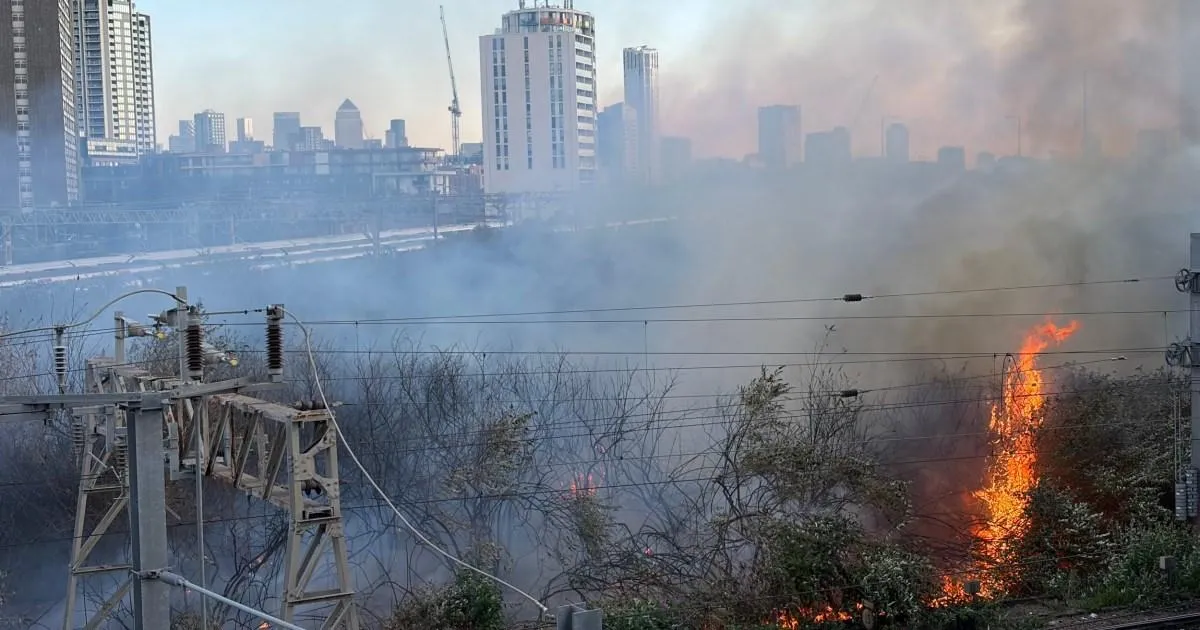
The evening commute for thousands of Londoners turned into a scene of chaos yesterday when a major fire broke out right next to Stratford station, one of the busiest transport hubs in the United Kingdom. Around 7:00 p.m., as the city was still reeling from the sweltering heat, flames began to tear through the dry shrubbery lining the railway tracks, forcing an immediate evacuation of the station. Passengers trapped on trains that had come to an abrupt standstill were guided off their carriages as thick smoke began to billow over the tracks, turning what should have been a routine journey home into a distressing and confusing ordeal.
The emergency response was substantial, with roughly 60 firefighters deployed to the scene to combat the blaze. Working in the humid, oppressive heat, crews faced the difficult task of navigating train sidings and track infrastructure to reach the deep pockets of fire spreading through the parched vegetation. Station Commander Scott Thorpe explained the complexity of the situation, noting that the fire was essentially trapped in an enclosed area surrounded by tracks, requiring the power to be isolated to ensure the safety of the firefighters. While crews worked tirelessly to bring the situation under control, the scale of the fires meant that a significant presence remained on-site long into the night.
The human impact of the blaze was felt far beyond the immediate vicinity of the station. With the Elizabeth, Mildmay, and Jubilee lines suffering from severe, and in some cases complete, service disruptions, the city’s transport network faced a massive bottleneck. Thousands of commuters were left stranded, forcing them to seek alternative routes or wait in growing frustration as information about the closures filtered through the crowds. National Rail has warned that the ripple effects of this incident will continue to linger, with reduced services expected to plague the busy station well into the coming week.
This incident serves as a sobering reminder of the volatility of London’s environment during the current record-breaking heatwave. As temperatures have climbed toward an uncomfortable 35C, the city’s landscape has been transformed into a tinderbox. The London Fire Brigade (LFB) has officially escalated the wildfire risk level to “extreme,” cautioning that the combination of sustained dry weather and relentless heat makes even the smallest spark a potential catastrophe. The blaze at Stratford is, unfortunately, indicative of a wider trend that emergency services are struggling to contain across the capital’s open spaces and parklands.
Officials are now urging the public to exercise extreme caution and personal responsibility as the heatwave persists. Assistant Commissioner Tom Goodall emphasized the gravity of the situation, noting that the current weather conditions mean that any grass fire has the potential to spread at an alarming rate, threatening not just the railway but nearby homes and communities. With much of London’s green space intimately woven into the fabric of its residential areas, the LFB is pleading with residents to remain vigilant, as the margin for error during this period is thinner than ever for both the public and the firefighters working in these brutal conditions.
Looking ahead, the incident has highlighted a growing vulnerability in urban infrastructure as climate patterns shift toward more frequent and intense heat events. While the fire at Stratford was brought under control without reported injuries, the disruption and anxiety felt by those caught in the middle serve as a wake-up call for the city. As Londoners continue to navigate the remainder of the summer, the message from authorities is clear: the fire risk is real, the situation is delicate, and every individual must play their part in preventing a small fire from becoming a community-wide tragedy.