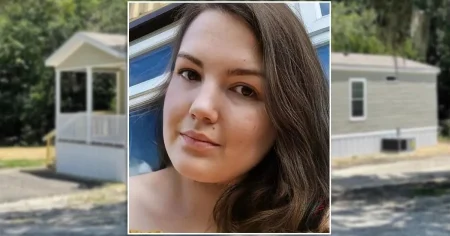



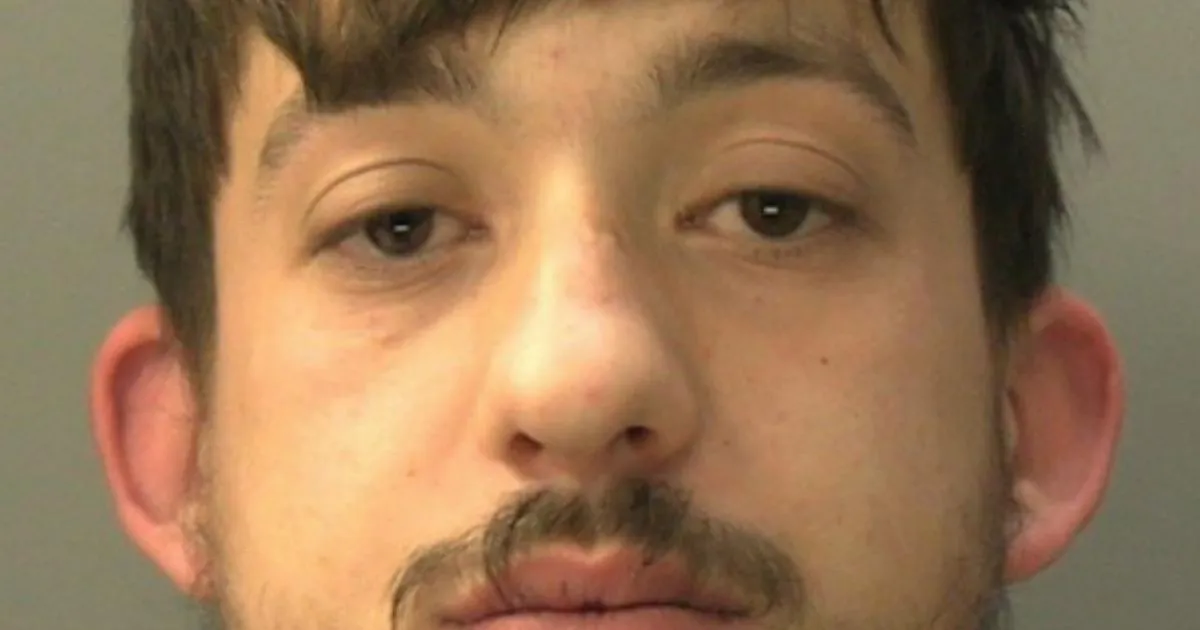
The streets of Ebbw Vale, South Wales, became the scene of a harrowing ordeal last July, when a routine evening took a terrifying turn. A young mother, simply trying to soothe her infant child to sleep with a quiet drive, found herself caught in the crosshairs of an explosive domestic dispute that had nothing to do with her. She had offered a ride home to a pregnant acquaintance who was attempting to escape an argument with her partner, Corey Morgan. What should have been a simple act of neighborly kindness transformed into a high-stakes nightmare, as the 21-year-old Morgan, fueled by an erratic cocktail of alcohol and drugs, decided to treat the public road as a weaponized battlefield.
The situation escalated with jarring speed once Morgan climbed behind the wheel of his Vauxhall Corsa. Intoxicated and consumed by rage, he pursued the two women with single-minded aggression. During this erratic chase, his disregard for human life became immediately apparent when he plowed into a stationary vehicle, rendering it a total loss. Despite the violence of the initial collision, the mother managed to keep moving, desperately trying to shield herself and her baby from the volatile man closing the distance behind her. It was a parent’s worst nightmare—being hunted through the streets while carrying your most precious cargo, watching in the rearview mirror as a familiar face turned into a reckless aggressor.
As the pursuit continued, Morgan repeatedly rammed the woman’s car, striking her Kia Rio three separate times. The sheer terror of these impacts is difficult to fathom; the victim sat trapped in her vehicle, convinced that Morgan intended to kill her and her infant child. Every thud of metal against metal echoed a chaotic and senseless desperation. It was a display of domestic violence spilling violently into the public sphere, turning a residential area into a dangerous gauntlet. The victim suffered through these repeated strikes, paralyzed by the fear that the next impact might send them off the road or cause a fatal catastrophe.
The ordeal finally came to a shuddering halt in a way that can only be described as a grim piece of poetic justice. In his attempt to deliver a fourth, potentially fatal strike, Morgan lost control of his vehicle. His reckless pursuit ended not on the bumper of his victims, but wrapped around a tree. The impact was so severe that his car flipped onto its roof, leaving him with a fractured skull, a broken neck, and a bleed on the brain. When law enforcement arrived at the mangled wreckage, the man who had been terrorizing a mother and her baby moments earlier attempted to deflect responsibility by claiming, “I wasn’t driving,” a desperate lie that could not hold up against the weight of the evidence.
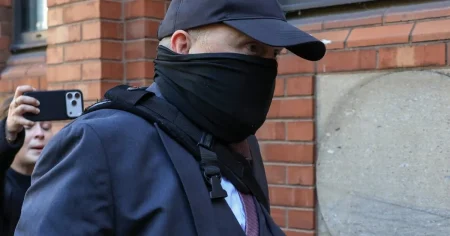
Following a two-week hospital stay, the legal consequences caught up with Morgan. During his appearance at Cardiff Crown Court, his legal representation offered the fragile defense that he had made a “massive, massive mistake”—an understatement for a man who had intentionally put multiple lives in jeopardy. Judge Recorder Greg Bull KC was having none of it, rightfully rebuking Morgan for his “disgraceful” and deliberate choices. The judge emphasized a point that resonated throughout the courtroom: Morgan had no one to blame but himself. He had been fundamentally lucky that he had not killed both himself and completely innocent members of the public during his drug-fueled tantrum.
Ultimately, Morgan was sentenced to eight months in prison and handed a driving ban, a period of incarceration that serves as a sobering reminder of the consequences of uncontrolled rage. While he now faces the repercussions of his actions, the deeper impact remains with the mother and her baby, who were forced to endure an experience that no human should ever have to face. The incident stands as a chilling testament to how rapidly a life can be upended by the choices of another, and it serves as a stark warning about the lethal intersection of substance abuse, domestic aggression, and the total abandonment of personal responsibility on our public roads.