
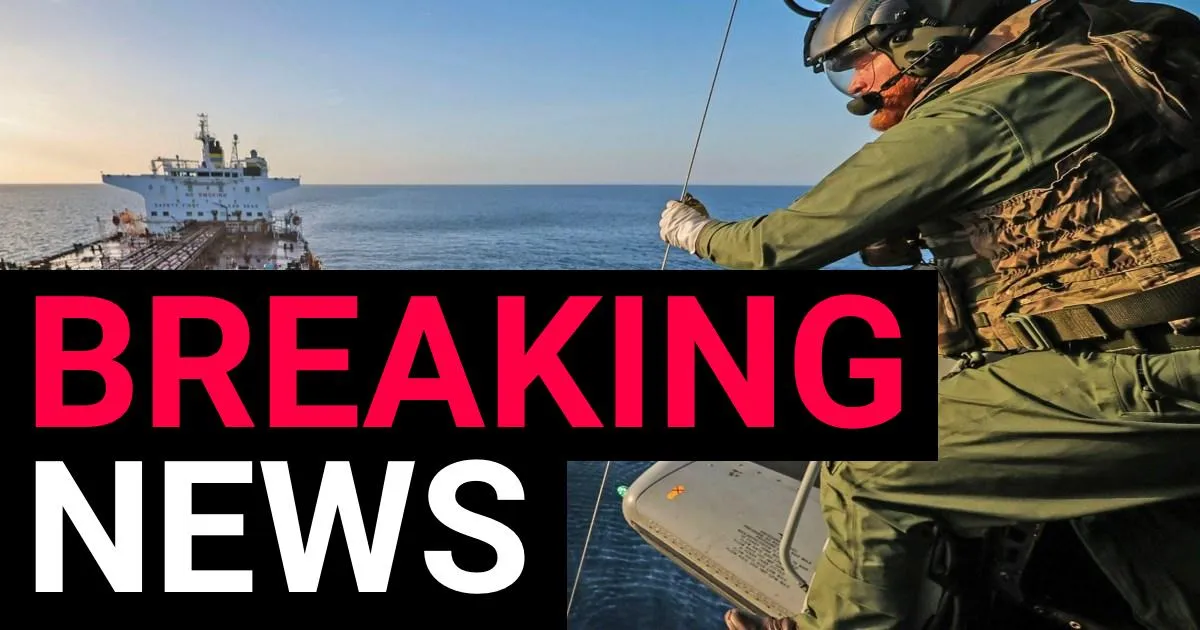
In a landmark operation that signals a hardening stance against Moscow’s efforts to bypass international restrictions, British authorities have executed a high-stakes maritime seizure. Early Sunday morning, in the busy shipping lanes of the English Channel, Royal Marine commandos and officers from the National Crime Agency (NCA) swarmed the Smyrtos, an oil tanker identified as part of Russia’s infamous “shadow fleet.” This daring interception marks the first time the United Kingdom has taken direct, forceful control of a sanctioned vessel in home waters, effectively pulling a significant player out of a clandestine network designed to hide the illicit flow of Russian oil across the globe.
The individual at the center of this legal firestorm is Ajay Pant, a 38-year-old Indian national and the captain of the Smyrtos. He is set to appear before the Southampton Magistrates Court to face serious charges, including the contravention of international sanctions. According to the NCA, the allegations against him suggest a direct role in the supply and delivery of crude oil from Russia to a third country in June, an act explicitly prohibited by the international community. The seizure serves as a stark reminder that the legal and physical barriers protecting sanctioned commerce are being vigorously enforced by British authorities.
Currently, the Smyrtos sits anchored off the coast of Weymouth in Dorset, a silent, hulking reminder of the geopolitical tensions simmering beneath the surface of the North Sea. While the vessel remains under constant surveillance to prevent environmental hazards or safety breaches, its 24 crew members—hailing from Georgia and India—have been ordered to remain on board. Their situation highlights the complexities of these shadow operations, where international seafarers often become the primary casualties of high-level diplomatic and economic warfare between states.
The existence of Russia’s “shadow fleet” is a persistent headache for Western policymakers. These 700 vessels operate under a veil of obscure ownership and questionable safety standards, reportedly moving roughly 75% of Russia’s sanctioned oil to international markets. By using these dark channels, Moscow manages to circumvent the trade barriers imposed following its invasion of Ukraine. While the UK has already sanctioned more than 500 of these ships, the capture of the Smyrtos demonstrates a pivot from passive monitoring to active intervention, proving that the British government is no longer content to merely track these vessels—they are now prepared to stop them.
This move follows a similar interdiction operation on June 1, where the UK provided critical support to intercept another suspect tanker. Speaking on the strategy behind these actions, government official Lisa Nandy praised the Royal Navy, emphasizing that the Prime Minister had issued a clear directive to remain on the “front foot.” This policy is about more than just bureaucracy; it is about national security. By crippling the logistics of Russia’s trade network, the UK aims to deliver a “significant blow” to the economic mechanisms that underpin the ongoing conflict, signaling to the Kremlin that its evasion tactics are no longer invisible to British eyes.
However, the ripple effects of this seizure are already being felt in the arena of international rhetoric. In response to the capture, voices within Russian state media have suggested, with chilling bravado, that Moscow could potentially “rig ships with bombs,” escalating the tension of an already volatile situation. As the Smyrtos sits under British guard and Captain Pant prepares for his day in court, the incident underscores the precarious nature of maritime security in the modern age. The UK’s decision to capture the vessel is a definitive signal that the “gray zone” of global shipping is rapidly shrinking, and those who attempt to sail through it may soon find themselves in the crosshairs of global justice.