

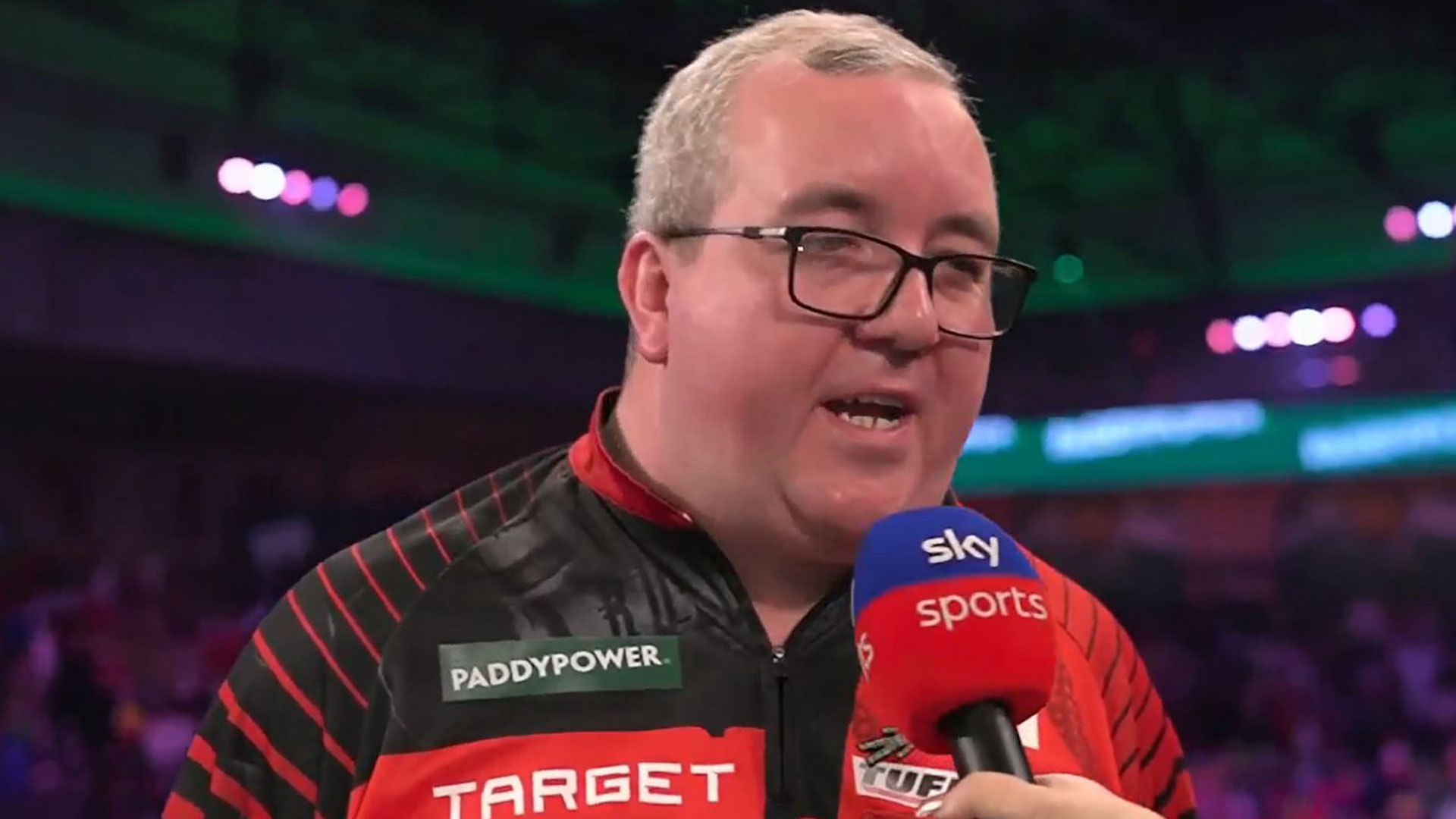
Stephen Bunting’s journey to the World Darts Championship semi-final was a rollercoaster of emotions, culminating in a tearful embrace with his family backstage. His impressive 5-2 victory over two-time world champion Peter Wright, a player Bunting considers a friend and his son’s favorite, was a testament to his skill and determination. Bunting’s performance, fueled by a roaring crowd at Alexandra Palace, showcased his ability to handle pressure and maintain focus even when his opponent mounted a comeback. The win propelled him to fifth in the world rankings, a significant achievement that clearly overwhelmed him with emotion. This victory secured Bunting a minimum of £100,000 in prize money and virtually guaranteed his place in the 2025 Premier League, solidifying his position among the darts elite.
Bunting’s dominance in the early stages of the match was undeniable. He rapidly claimed the first four sets, displaying remarkable accuracy on his doubles and averaging an impressive 105.49. His checkout prowess was on full display with finishes of 101, 130, and 143, leaving Wright struggling to keep pace. This early onslaught put immense pressure on Wright, who acknowledged Bunting’s superior performance and admitted to struggling with his own game. While Wright managed to rally and secure two sets, showcasing his resilience with a stunning 133 checkout, it wasn’t enough to overcome Bunting’s commanding lead. The momentum remained firmly with Bunting, who sealed the victory with a 90 checkout.
The emotional weight of the victory was evident in Bunting’s post-match interview. He acknowledged the pressure he felt, particularly given his son’s admiration for Wright. He also praised the crowd’s unwavering support, recognizing their crucial role in his performance. Bunting admitted to pre-match nerves but expressed hope that this victory would alleviate the pressure in subsequent matches. He attributed his success to rigorous practice sessions with Luke Humphries, a top-ranked player, which helped him hone his skills and prepare for the challenging competition. His focus remained firmly on the next opponent, Luke Littler, as he set his sights on the championship title.
On the other side of the oche, Peter Wright, also known as “Snakebite,” grappled with disappointment. He candidly admitted that he underperformed, attributing his loss not to Bunting’s skill but to his own struggles to maintain accuracy and consistency. He acknowledged that he had left himself too much ground to recover and hadn’t played to his full potential. Despite his disappointment, Wright highlighted his earlier victories in the tournament, including wins over formidable opponents like Jermaine Wattimena, Luke Humphries, and Wesley Plaisier, showcasing his ability to compete at the highest level. He viewed these wins as positive takeaways, emphasizing his determination to move forward and focus on future tournaments.
Wright’s reflection on his performance revealed a sense of frustration and self-criticism. He lamented his inability to replicate the form he displayed in previous rounds, acknowledging that he hadn’t played well enough to challenge Bunting effectively. The disappointment was palpable as he expressed regret for not giving Bunting a tougher match. He recognized the need to refocus and regain his consistency in preparation for upcoming competitions. While the World Championship title was out of reach, Wright remained optimistic about the future, emphasizing his intent to learn from this experience and continue striving for improvement.
The contrasting emotions of Bunting and Wright highlighted the high stakes and intense pressure of the World Darts Championship. Bunting’s tears of joy reflected the culmination of years of hard work and dedication, while Wright’s disappointment underscored the fine margins that separate victory and defeat in professional sports. Bunting’s journey to the semi-finals, marked by impressive performances and unwavering support from the crowd, solidified his status as a rising star in the world of darts. Meanwhile, Wright’s self-awareness and determination to learn from his shortcomings demonstrated his resilience and commitment to continuous improvement, setting the stage for future battles on the oche.