



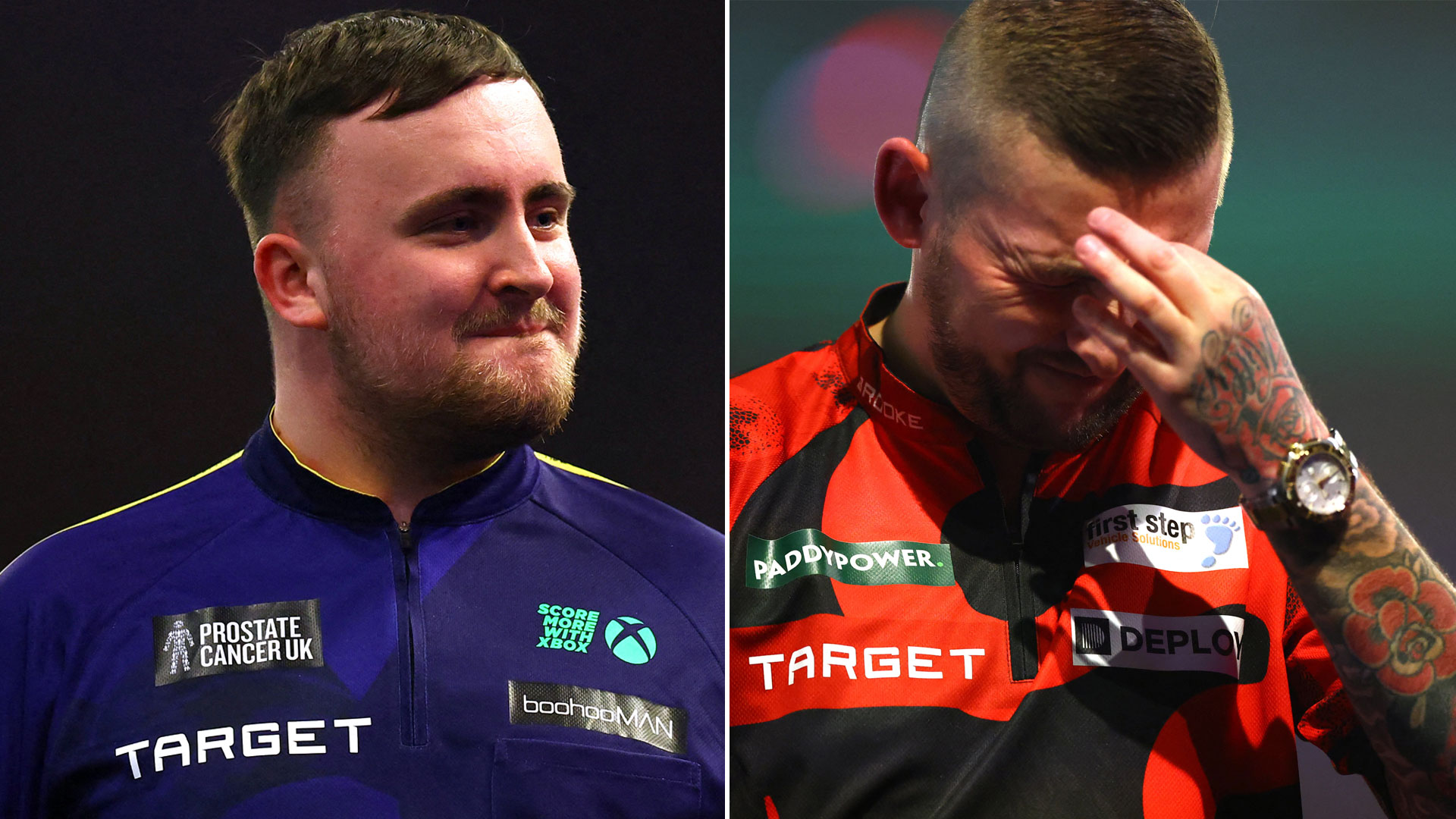
Luke Littler’s meteoric rise in the world of darts continued its dazzling trajectory at the World Darts Championship quarter-final, leaving seasoned commentator reeling in sympathy for his opponent, Nathan Aspinall. The young prodigy, often referred to as “The Nuke,” unleashed a barrage of precision and power, rapidly seizing a two-set lead and showcasing a level of composure that bely his age. Littler’s clinical efficiency on the doubles board in the early stages of the match was nothing short of breathtaking. He surrendered a mere single leg in the first six, leaving Aspinall scrambling to find a foothold in the contest. The sheer dominance of Littler’s performance painted a picture of a seasoned veteran dismantling a novice, rather than a teenager facing a two-time major champion.
The third set offered a brief respite for Aspinall, who managed to disrupt Littler’s relentless rhythm. After falling behind 1-0 and losing his throw, Aspinall appeared poised to capitalize on a rare moment of vulnerability from his younger opponent. However, just as a glimmer of hope emerged for the seasoned pro, Littler responded with the devastating power that has become his trademark – a resounding 180. This display of raw talent and unwavering resolve elicited a poignant observation from the Sky Sports commentator: “It’s cruel sometimes.” The remark encapsulated the brutal reality of professional sports, where even a momentary lapse in concentration can be mercilessly punished by a rising star. Despite this setback, Aspinall managed to salvage the set, aided by Littler’s uncharacteristic miss with just five points remaining on the board.
The fourth set witnessed a shift in the dynamics, with Aspinall injecting a touch of theatrics into the proceedings. After hitting a 180 with his first throw, setting the stage for a potential nine-darter, Aspinall played to the crowd. Capitalizing on the anticipation generated by Littler’s earlier six perfect darts, Aspinall paused before his throw, drawing playful jeers from the audience. This momentary diversion added a layer of entertainment to the match, highlighting Aspinall’s experience and ability to engage with the crowd even under pressure. Prior to the match, Aspinall had expressed his frustration at being perpetually underestimated, asserting his credentials as a two-time major champion and a “fantastic dart player.” He lamented the lack of respect he felt he received, drawing comparisons to Joe Cullen, another player who often finds himself overlooked.
Despite Aspinall’s pre-match pronouncements and his brief resurgence in the third set, the ultimate narrative of the match remained firmly centered on Littler’s ascendancy. The young phenom weathered the storm and ultimately prevailed with a convincing 5-2 victory. His performance was a testament to his exceptional talent, unwavering focus, and remarkable composure under pressure. Littler’s victory not only secured his place in the semi-finals but also served as a resounding statement of his intent to become a dominant force in the world of darts.
Aspinall, while clearly outmatched on the day, displayed flashes of the skill and resilience that have propelled him to the upper echelons of the sport. His ability to claw back a set and engage with the crowd, even in the face of adversity, underscored his competitive spirit and experience. However, against the relentless onslaught of Littler’s power and precision, these qualities proved insufficient to bridge the gap. The match ultimately served as a showcase for the changing of the guard in professional darts, with the young gun announcing his arrival on the biggest stage with a resounding victory.
The contrasting fortunes of the two players encapsulate the dramatic nature of competitive sports. Littler’s victory cemented his status as a rising star, while Aspinall’s defeat served as a reminder of the relentless nature of competition and the ever-present threat from emerging talent. The match was not merely a contest between two individuals but a symbolic representation of the dynamism and evolving landscape of professional darts, a sport where established stars must constantly contend with the relentless pursuit of the next generation.