

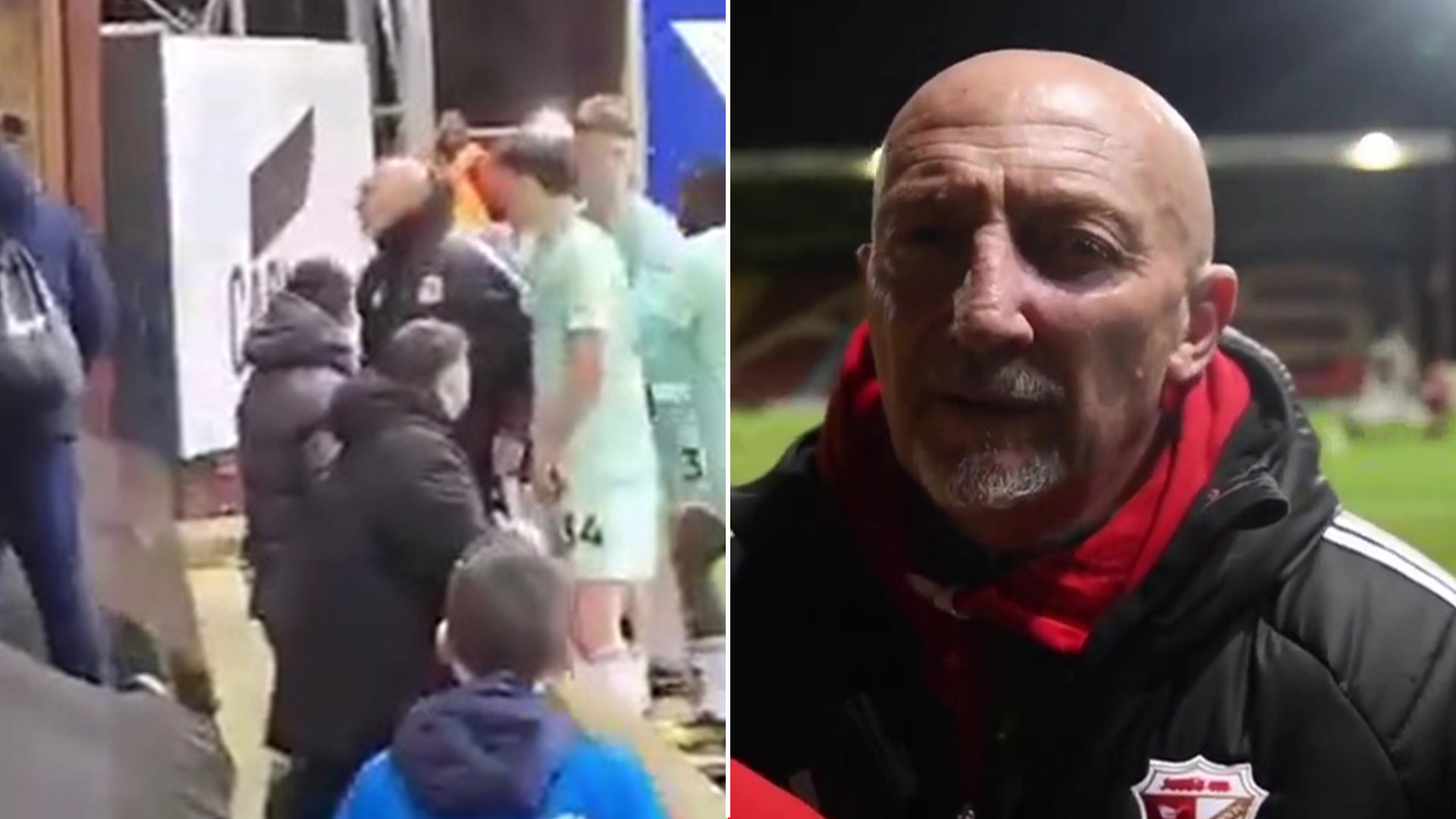
Ian Holloway’s impassioned confrontation with a Swindon Town supporter following a League Two defeat at Bradford City ignited a firestorm of debate about the relationship between managers, players, and fans. The veteran manager, known for his outspoken nature, engaged in a heated exchange with a fan at the front of the away end after Swindon’s 1-0 loss, a result that left them precariously close to the relegation zone. Holloway’s players intervened, physically restraining him as he continued to remonstrate with the supporter. This incident, captured on video, quickly spread across social media, amplifying the controversy and prompting a wide range of reactions.
The crux of the disagreement stemmed from the fan’s apparent criticism of the team’s performance, particularly after a long and arduous journey to witness the defeat. Holloway, however, felt that the effort displayed by his players warranted encouragement rather than condemnation. He argued that the fan’s negativity was counterproductive and detrimental to the team’s morale. In his post-match interview, Holloway passionately defended his players, emphasizing their hard work and commitment. He extended an invitation to the disgruntled fan to visit the training ground for a discussion, suggesting a more constructive approach to addressing concerns.
Holloway’s post-match interview further fueled the controversy. He doubled down on his defense of the players, reiterating his belief that they had given their all despite the unfavorable result. He challenged the fan’s right to criticize, suggesting that if the supporter was unhappy with the team’s performance, they should reconsider attending future matches. He questioned the value of fans who traveled long distances only to offer negativity, emphasizing his preference for supporters who offer unwavering encouragement regardless of the outcome, as long as the players demonstrate sufficient effort. This stance sparked a heated debate online, with some fans supporting Holloway’s right to defend his players, while others criticized his handling of the situation and his apparent dismissal of fan concerns.
The incident highlighted the complex dynamics at play within the football world. Holloway’s outburst brought to the forefront the often-fraught relationship between managers and fans, particularly when results are poor. While some fans empathized with Holloway’s desire to protect his players and foster a positive atmosphere, others felt that his reaction was inappropriate and dismissive of the fans’ right to express their disappointment. The debate extended to the role of fans within the club, the balance between supporting the team and holding them accountable, and the appropriate channels for expressing dissatisfaction.
Social media further amplified the controversy, providing a platform for fans to voice their opinions and engage in often-polarized debates. Some users defended Holloway, applauding his passion and honesty. They argued that fans should be more supportive and less critical, particularly when the team is struggling. Others, however, condemned Holloway’s behavior, accusing him of being disrespectful and out of touch with the fanbase. They emphasized the importance of fan engagement and the right to criticize performance, especially given the financial and emotional investment fans make in their clubs. The incident served as a microcosm of the broader tensions that often exist within football communities, highlighting the delicate balance between passion, expectation, and the right to express opinions.
The incident at Valley Parade involving Ian Holloway underscores the complex and often-tense relationship between managers, players, and fans in the pressure-cooker environment of professional football. It also highlights the power of social media in amplifying such controversies, providing a platform for both support and criticism. While Holloway’s actions were defended by some as a passionate defense of his players, others viewed them as a dismissive and disrespectful response to legitimate fan concerns. The incident sparked a broader discussion about the role of fans, their right to express opinions, and the appropriate ways to address dissatisfaction within a football club. The differing perspectives reflected the diverse and passionate nature of football fandom, emphasizing the ongoing tension between loyalty, expectation, and the desire for success.