


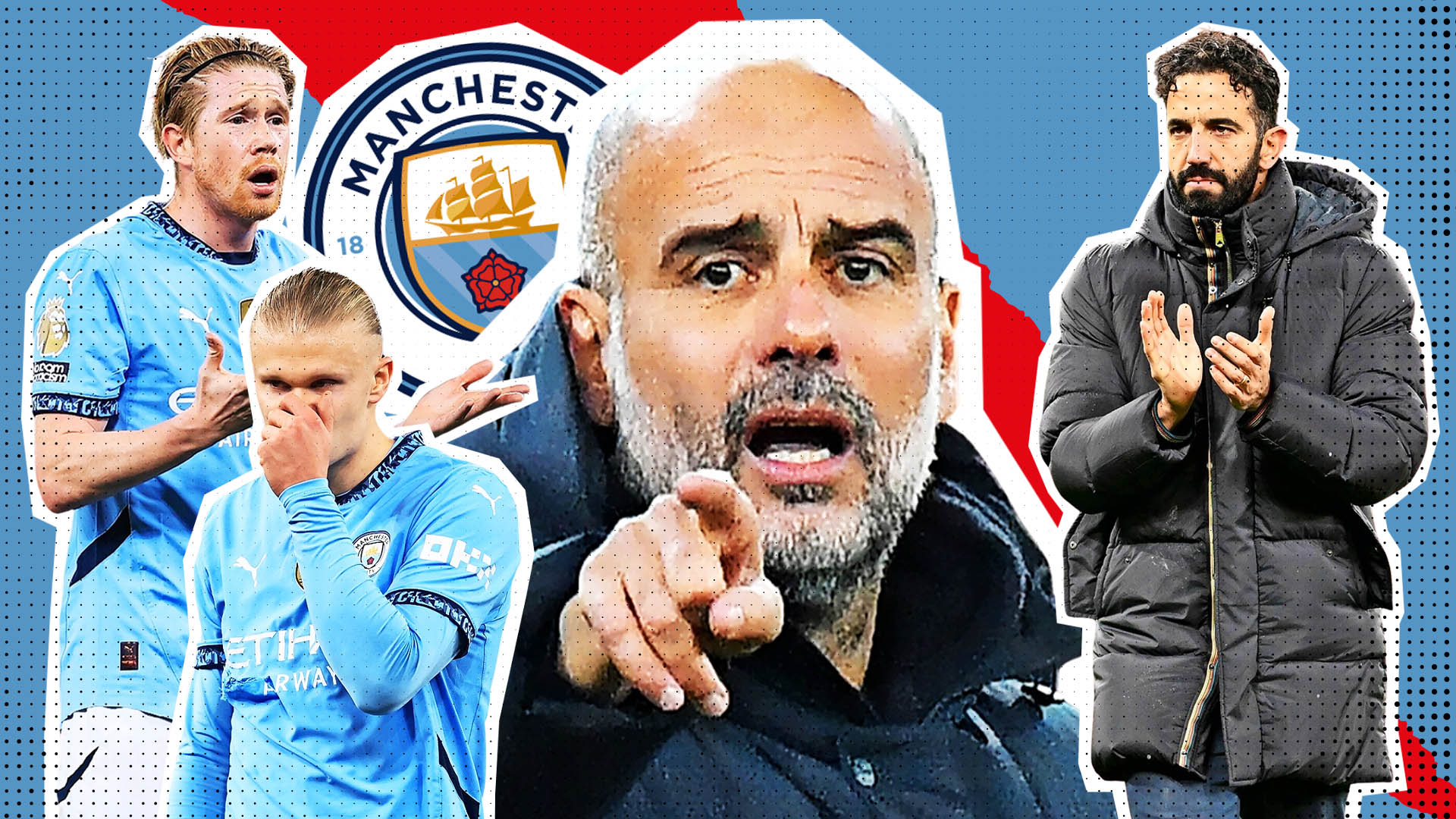
Pep Guardiola, renowned as one of football’s most innovative and successful managers, found himself confronting an unprecedented challenge: a string of seven defeats in ten games for his Manchester City squad, the worst run of his managerial career. This unexpected downturn in form prompted Guardiola to publicly address the situation and acknowledge the mounting pressure. Remarkably, he initiated the discussion about the possibility of losing the dressing room, a topic rarely broached by managers, especially those of Guardiola’s stature. He emphasized that the only scenario that would force him to consider his position at City would be losing the team’s support and trust, a situation where his instructions fell on deaf ears and the players no longer responded to his leadership. However, Guardiola reassured City fans that he hadn’t detected any such signs of disengagement, and that his commitment to the team remained stronger than ever.
Guardiola attributed the team’s struggles to several factors, including a significant number of injuries to key players, particularly the long-term absence of Rodri, and a demanding schedule that left the squad depleted and fatigued. He acknowledged that these absences had undoubtedly weakened the team and made it difficult to maintain their usual high standards of performance. He speculated that with a fully fit squad, City’s performance and league position would be significantly different. However, he accepted the reality of the situation and emphasized that such setbacks are part of football, and indeed, life. He maintained that he could not dwell on hypothetical scenarios and needed to focus on the present challenges. Guardiola’s analysis also highlighted the unprecedented nature of the current situation. He noted that in past seasons, enduring seven defeats would have been an anomaly, but the demanding schedule and injury crisis had contributed to this unusual downturn.
He drew a parallel between managing a football team and the craft of writing, arguing that consistent practice and experience are essential for improvement, regardless of one’s innate talent. He used the example of Shakespeare, suggesting that even the most gifted individuals require ongoing effort and refinement to reach their full potential. Even with the challenging circumstances, Guardiola acknowledged the criticism directed at the team and himself, accepting full responsibility for the recent poor results. He emphasized that ultimately, the burden of decision-making and the accountability for outcomes rested squarely on his shoulders, and he embraced that responsibility. Guardiola’s willingness to take ownership of the situation demonstrated his leadership qualities and reinforced his commitment to finding solutions to the team’s challenges.
The recent string of defeats represented a stark contrast to Manchester City’s usual dominance, leaving them vulnerable defensively and struggling to maintain their winning form. Guardiola candidly admitted the team’s defensive frailties, recognizing that such shortcomings often led to defeats. Despite the challenges, Guardiola remained determined to improve the team’s performance and address the defensive vulnerabilities. He welcomed constructive criticism and recognized the validity of external opinions, but he ultimately maintained that the responsibility for making decisions and implementing changes rested solely with him. He underscored his commitment to his role as manager by stating that if he were unwilling to accept the scrutiny and pressure associated with the position, he would seek alternative employment.
Further elaborating on the challenges faced by the team, Guardiola emphasized the demanding schedule and the impact of injuries on key players. He highlighted Rodri’s extensive playing time in the previous season, including his participation in the European Championships, and the subsequent toll it took on his fitness. Guardiola acknowledged that Rodri returned to City fatigued, yet his presence was still required despite not being at his optimal physical condition. The manager also stressed the difficulty of training and preparing the team effectively due to the continuous cycle of matches and the limited recovery time available for the players. The absence of several key players compounded these challenges, further hindering the team’s ability to perform at its best.
Guardiola concluded by reaffirming his commitment to Manchester City and his determination to navigate the current difficulties. While acknowledging the significance of a positive result in the upcoming Manchester derby, he emphasized that it would only be a temporary fix for a larger issue. He reiterated his resolve to stay at the club and work tirelessly to address the team’s shortcomings and restore their winning form. This commitment, coupled with his willingness to accept responsibility for the team’s performance, provides a sense of optimism for City’s future, despite the current challenges. The combination of Guardiola’s tactical brilliance, experience, and unwavering dedication suggests that Manchester City is well-equipped to overcome this difficult period and return to their winning ways.