

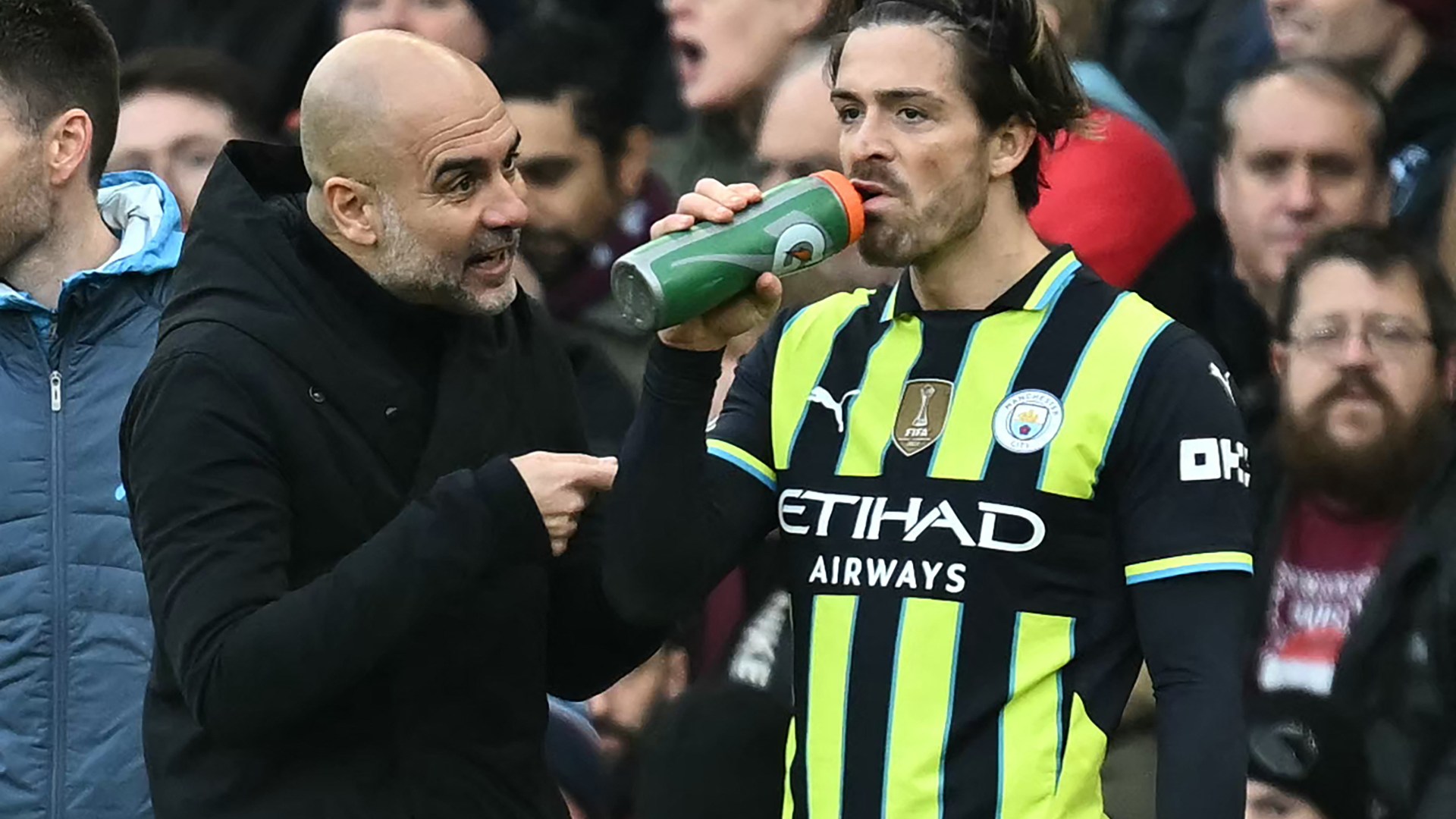
Jack Grealish, the Manchester City winger, found himself in the eye of a storm following his former club Aston Villa’s 2-1 victory over the reigning champions. The defeat extended City’s dismal run to just one win in their last 12 matches, a stark contrast to their usual dominance under Pep Guardiola. Grealish, who hadn’t scored a goal in 45 appearances, a drought spanning 369 games, became the target of relentless jeering from the Villa Park faithful throughout the match. This culminated in a controversial gesture at the final whistle where Grealish appeared to hold up three fingers towards the home crowd, seemingly a reference to the three Premier League titles he has won with City since his £100 million transfer in 2021.
Grealish’s history with Aston Villa adds a layer of complexity to the incident. Having joined the club’s youth academy at the tender age of six, he rose through the ranks to become a beloved figure, scoring 32 goals in 213 appearances and playing a pivotal role in their return to the Premier League in 2019. His departure to Manchester City, while lucrative, was met with mixed reactions from Villa supporters, some understanding his ambition while others felt a sense of betrayal. This pre-existing tension, coupled with City’s poor performance and Grealish’s own goal drought, created a volatile atmosphere that ultimately erupted in the post-match exchange.
The three-finger gesture, while open to interpretation, was widely perceived as a provocative response to the jeers. It seemed to underscore the divide between Grealish’s past and present, his loyalty now firmly with Manchester City despite his deep roots at Aston Villa. While some might argue it was a moment of frustration and a natural reaction to the intense pressure he faced, others viewed it as disrespectful and dismissive of the fans who once adored him. The incident highlights the emotional complexities of football, where player transfers, especially those involving homegrown talents, can create lasting rifts and fuel intense rivalries.
Grealish’s current struggles at Manchester City further complicate the narrative. Despite being part of the treble-winning squad in 2023, his form has dipped significantly this season, mirroring the team’s overall decline. The pressure to justify his hefty price tag, coupled with the constant scrutiny of his performances, has undoubtedly taken a toll. The jeers from the Villa fans, therefore, likely struck a particularly raw nerve, exacerbating his frustration and leading to the ill-advised gesture. This incident serves as a reminder of the immense pressure faced by high-profile players, particularly those who return to face their former clubs.
The repercussions of Grealish’s actions remain to be seen. While some may dismiss it as a minor incident, others might view it as a sign of disrespect and a breach of sporting etiquette. It could further strain his relationship with Aston Villa fans, solidifying the animosity that has developed since his departure. Within Manchester City, the incident might be viewed as an unwelcome distraction at a time when the team is struggling to find its form. Grealish’s actions, intentional or otherwise, have thrown fuel on an already burning fire, adding another layer of complexity to his relationship with his former club and its supporters.
This incident transcends a simple on-field spat. It delves into the emotional dynamics of football, exploring themes of loyalty, ambition, and the pressures of expectation. Grealish’s gesture, while seemingly small, speaks volumes about the complex relationship between players, clubs, and fans. It highlights the delicate balance between celebrating past achievements and embracing new challenges, and the potential for misunderstandings and animosity when that balance is disrupted. The fallout from this incident will likely continue to reverberate, serving as a reminder of the powerful emotions that football can evoke and the lasting impact of player transfers on the hearts and minds of fans.