



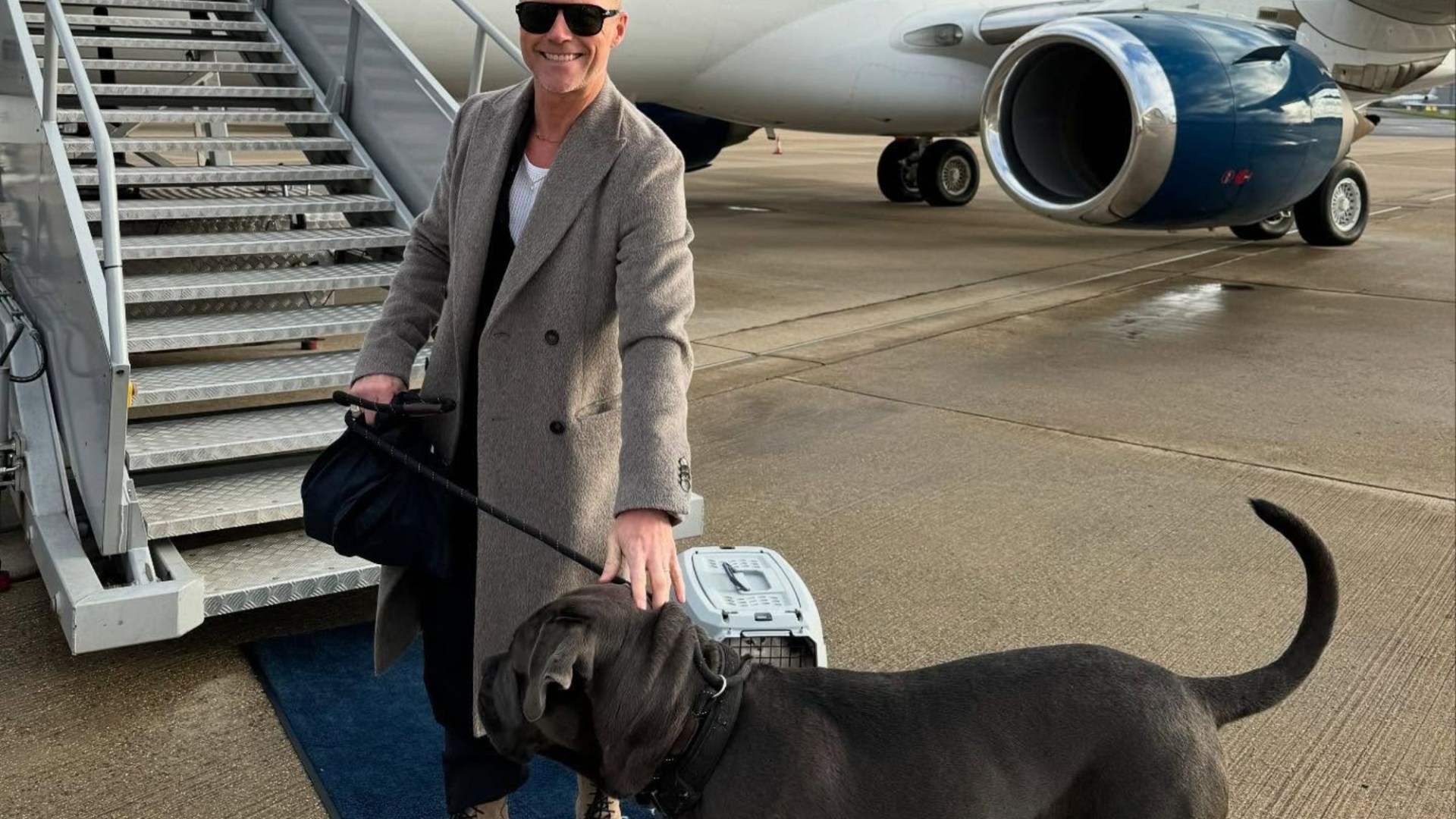
Ronan Keating, renowned singer and former Magic FM Breakfast Show host, recently sparked controversy by chartering a private jet for a staggering £15,000 to transport his beloved Cane Corso dog, Saint, and his cats from the UK to Australia. This extravagant gesture aimed to unite his family, including his Australian wife, Storm, and their children, Cooper and Coco, for the holidays in their new Australian residence. While Keating expressed gratitude for the smooth transport provided by K9 Jets, a company specializing in transporting pets, the decision to acquire and relocate a Cane Corso has raised concerns among animal welfare advocates. The breed’s inherent characteristics and potential health issues necessitate careful consideration before adoption.
The Cane Corso, a breed historically used for guarding livestock and hunting, possesses protective instincts and a powerful physique. While Ambassador Protection Dogs, the company that supplied Saint, lauded Keating as a true dog lover and highlighted Saint as an exemplary specimen, organizations like PETA advise against adopting Cane Corsos due to their predisposition to various health problems. Designated as a Breathing Impaired Breed, they are susceptible to heatstroke, particularly challenging in Australia’s climate. They are also prone to hip and elbow dysplasia and bloat, conditions that can cause significant pain and, in severe cases, prove fatal.
Furthermore, the Cane Corso’s classification as a mastiff breed often leads to its inclusion in Dangerous Dog Act legislation, raising concerns about its potential for aggression. While proper socialization and training can mitigate these risks, their inherent protective nature requires experienced ownership. The combination of these health and behavioral factors makes the Cane Corso a breed best suited for experienced dog owners committed to providing extensive training, socialization, and diligent healthcare. The choice to introduce such a breed into a family with young children, despite the dog’s training, requires careful consideration, given the potential for accidental injury due to the dog’s size and strength.
Keating’s decision to relocate Saint to Australia highlights the complexities surrounding pet ownership and the ethical considerations associated with specific breeds. While his intentions were undoubtedly driven by a desire to keep his family safe and united, the choice to adopt a Cane Corso, a breed with inherent health and behavioral challenges, raises questions about responsible pet ownership. The significant financial investment in the dog’s transportation further underscores the lengths to which people go for their pets, but also raises the question of whether such resources could be directed towards supporting animal welfare organizations or rescuing animals in need.
The debate surrounding Cane Corsos as family pets reflects the broader discussion about responsible breeding practices and the importance of selecting breeds that align with individual lifestyles and capabilities. While some view them as loyal and protective companions, others highlight the potential risks associated with their inherent traits and health predispositions. Organizations like PETA advocate for adopting breeds less prone to health issues and caution against selecting dogs based solely on their perceived protective qualities. They emphasize the importance of considering a dog’s temperament, activity level, and potential health concerns before bringing them into a family environment, especially one with young children.
Ultimately, the decision to acquire a Cane Corso rests with individual pet owners. However, it is crucial to approach this decision with thorough research and a realistic assessment of one’s ability to meet the breed’s specific needs. This includes providing adequate training, socialization, and healthcare, as well as ensuring the safety of all family members, including children. Responsible pet ownership necessitates prioritizing the animal’s well-being and understanding the potential risks and responsibilities associated with different breeds. While Keating’s actions stemmed from a desire to protect his family, the choice of a Cane Corso raises important questions about responsible pet ownership and the ethical considerations surrounding breed selection.