



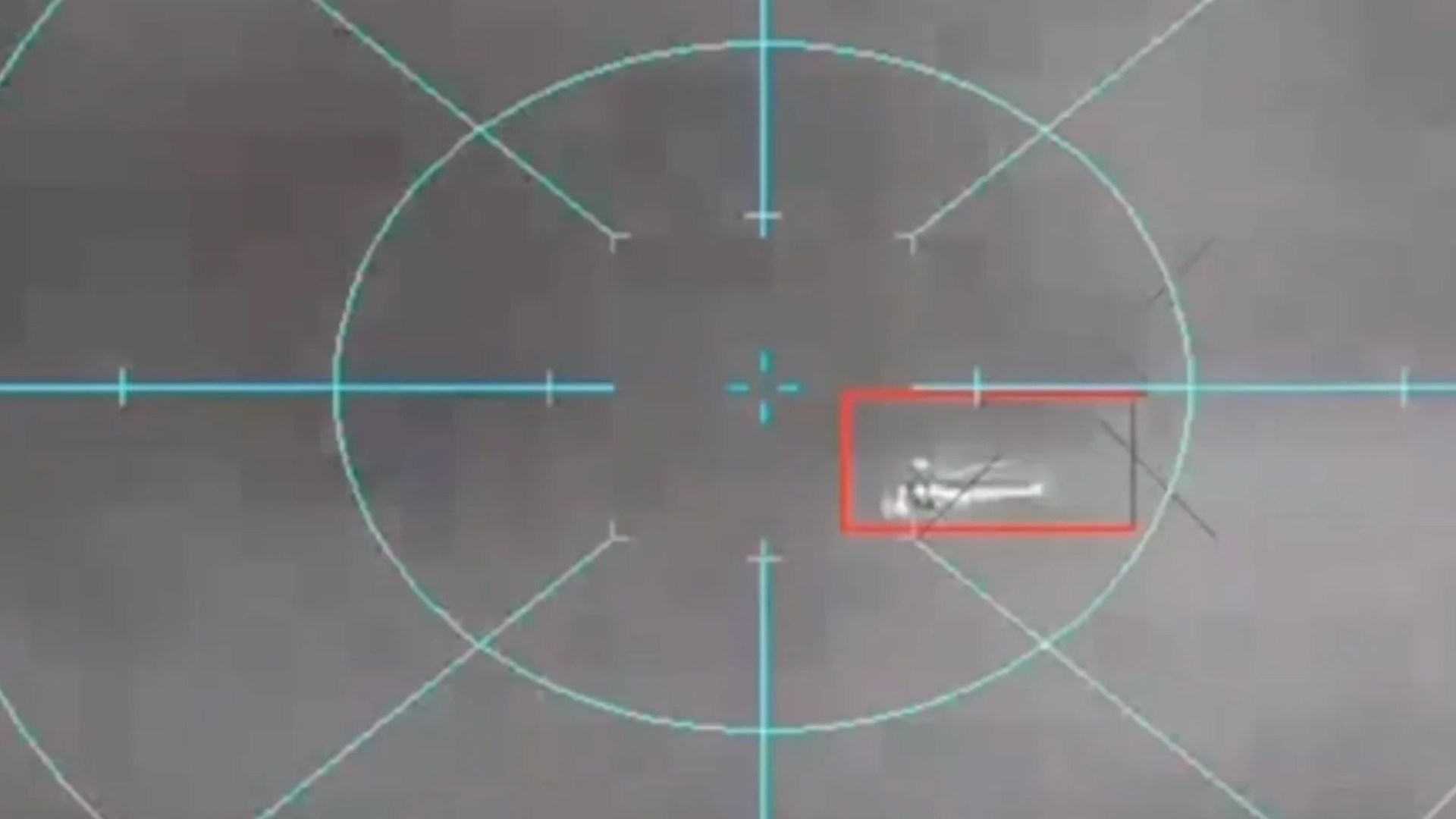
The dawn of 2025 witnessed a groundbreaking military feat, orchestrated by Ukrainian forces, marking a new chapter in naval warfare. A dramatic video released by Kyiv’s military intelligence showcased the unprecedented downing of a Russian Mi-8 military helicopter off the coast of occupied Crimea, achieved through the innovative deployment of a Magura V5 sea drone armed with missiles. This world-first event underscores the evolving role of unmanned systems in modern conflict and highlights Ukraine’s growing prowess in naval drone technology. The grainy black-and-white footage, captured directly from the perspective of the attacking drone, reveals the tense moments leading up to the strike. Bursts of water churn around the drone as it navigates the Black Sea, the Russian helicopter appearing in its sights. A targeting reticle locks onto the Mi-8 before missiles streak across the sky, culminating in a direct hit that sends the helicopter plummeting into the sea. The Ukrainian intelligence agency, GUR, punctuated the video with a “Happy New Year” message, adding a starkly ironic twist to the impactful display of military capability.
This successful strike against an airborne target represents the inaugural instance of a naval drone achieving such a feat. The Magura V5, previously employed against surface vessels, has now proven its versatility and lethality in a new domain. The targeted Mi-8 helicopter, estimated to be worth up to £12 million, serves a crucial role for Russian forces in the ongoing conflict, facilitating the transportation of troops, weaponry, and providing close air support. Its destruction represents a significant tactical blow, potentially disrupting Russian operations in the region. The GUR statement confirmed the use of R-73 “Sea Dragon” missiles, typically air-to-air weapons, adapted for this maritime drone operation, further demonstrating Ukrainian ingenuity in modifying existing armaments for unconventional warfare. While Russia did not immediately acknowledge the loss, reports from Sevastopol mentioned the destruction of two unmanned drone vessels, suggesting an attempt to downplay the significance of the Ukrainian operation.
The strategic implications of this event extend beyond the immediate loss of a single helicopter. Ukraine’s demonstrated ability to deploy armed sea drones effectively against airborne targets significantly alters the naval landscape. This innovative approach challenges traditional naval doctrines and forces a reassessment of vulnerabilities in the face of evolving technologies. The Magura V5, remotely operated and equipped with a substantial payload of explosives, has emerged as a formidable weapon in Ukraine’s arsenal, capable of striking a wide range of targets with precision. Its relatively small size and stealthy profile make it challenging to detect, especially under the cover of darkness, enhancing its effectiveness in surprise attacks. The incident near Cape Tarkhankut underscores the growing asymmetry of the conflict, with Ukraine leveraging technological advancements to counter Russia’s conventional military superiority.
The success of the Magura V5 in downing the Mi-8 helicopter solidifies Ukraine’s position as a pioneer in the field of naval drone warfare. Their consistent and effective deployment of these domestically produced drones has resulted in the destruction or damage of numerous Russian warships in the Black Sea, significantly disrupting Russian naval operations. The drones have proven capable of taking down a variety of targets, including landing ships, patrol boats, intelligence vessels, and frigates. This track record underscores the transformative potential of unmanned systems in modern naval warfare, creating new opportunities for smaller nations to challenge larger naval powers. The adaptability and precision of the Magura V5, combined with its stealth capabilities, make it a game-changer in the maritime domain.
The effectiveness of the Magura V5 extends beyond its individual capabilities. Its successful deployment also highlights the evolving tactical doctrines employed by Ukrainian forces. The adaptation of air-to-air missiles for use on sea drones showcases their ability to innovate and utilize existing resources in creative ways. This approach maximizes their combat effectiveness while circumventing the limitations of traditional weapon systems. The strategic placement of these drones, coupled with their remote operation capabilities, allows for precise targeting and minimizes the risk to Ukrainian personnel. The attack on the Mi-8 helicopter demonstrates the strategic advantage of using unmanned systems to strike high-value targets, potentially disrupting logistical chains and hindering Russian operations.
This successful strike serves as a testament to the rapidly evolving nature of warfare in the 21st century. The Magura V5’s downing of the Mi-8 helicopter symbolizes the growing importance of unmanned systems and the need for traditional military powers to adapt to these new realities. The incident highlights the potential for asymmetric warfare, where smaller nations can leverage technological advancements to counter larger adversaries. The development and deployment of such advanced drone technology by Ukraine marks a significant shift in the balance of power in the Black Sea region, posing a significant challenge to Russian naval dominance. This event has undoubtedly garnered attention from military strategists worldwide, prompting a reassessment of naval vulnerabilities and the future of maritime conflict.