



The second phase of a fragile ceasefire agreement between Israel and Hamas is poised to bring freedom to four Israeli female soldiers held captive for 477 harrowing days. Karina Ariev, Daniella Gilboa, Naama Levy, and Liri Albag, all in their late teens and early twenties, were abducted on October 7 from the Nahal Oz military base during the devastating attacks. Their captivity has been marked by the release of distressing videos by Hamas, showing the women bloodied, bound, and pleading for help. Now, preparations are underway for their return, with the Israeli Defense Forces (IDF) confirming that upon arrival at an army facility near the Gaza border, the women will undergo immediate medical and psychological evaluations before being transferred to hospitals. Their families, gripped by anxiety and anticipation, are already en route to the facility, eager to reunite with their daughters after over a year of agonizing separation. The IDF has appealed for public patience and sensitivity, emphasizing the need to respect the privacy of the hostages and their families during this delicate time.
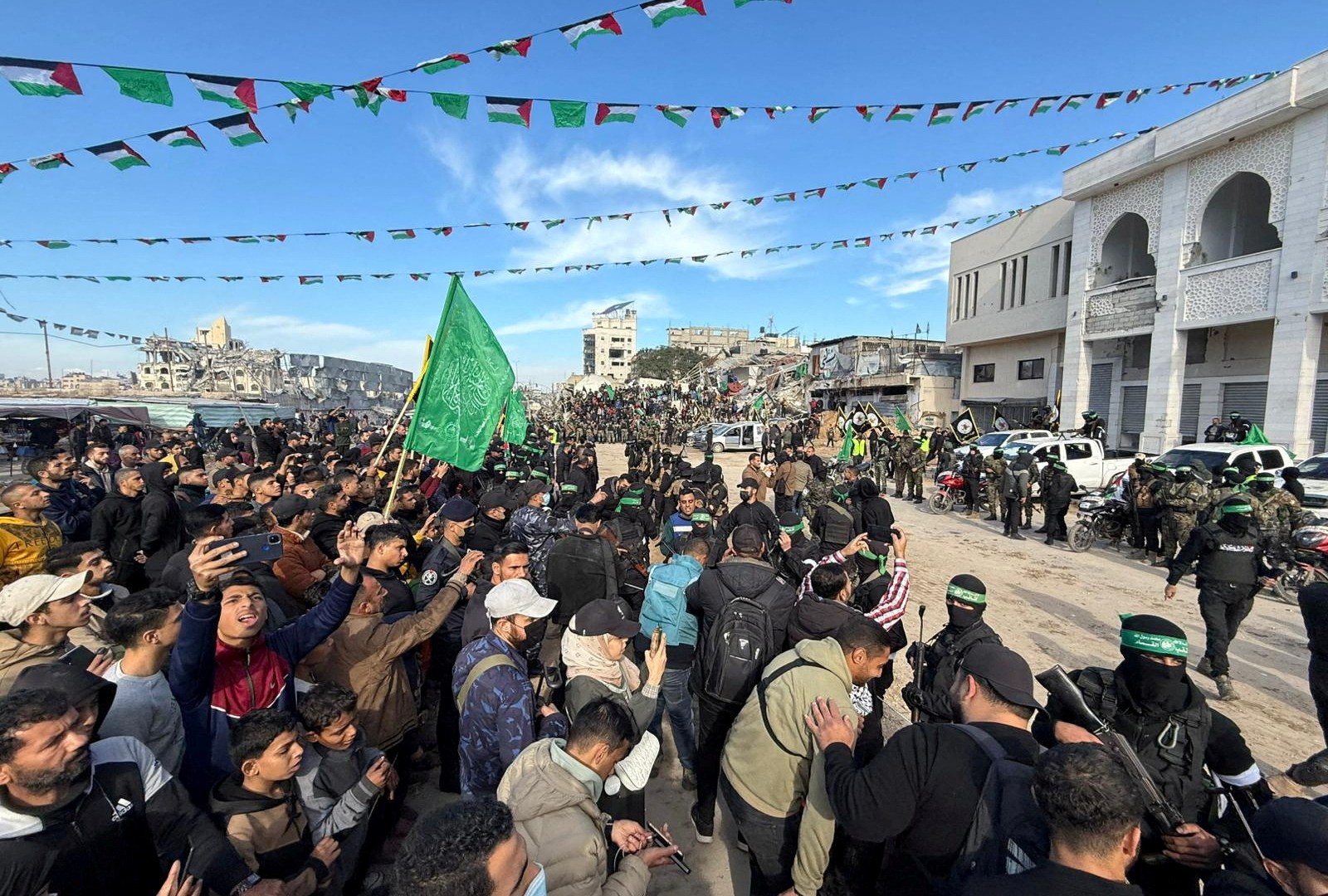
The release process involves a carefully orchestrated handover to the Red Cross in Gaza City, expected to occur by noon local time. Dozens of masked and heavily armed Hamas and Islamic Jihad militants have converged on a prominent square in Gaza City, the designated location for the exchange. Carrying assault rifles and rocket-propelled grenade launchers, these militants stood in formation, brandishing banners and wearing headbands, while crowds of Gaza residents gathered to witness the event. The scene underscores the complex political and security landscape surrounding the hostage situation. Each of the four women endured unique ordeals during their captivity. Daniela, 20, was injured during her abduction, her wounds later displayed in propaganda videos. Naama, also 20, was seen bleeding profusely in footage of her capture. Liri, 19, had only been stationed at Nahal Oz for three days before being taken, while Karina, another 20-year-old surveillance soldier, was abducted amid the chaotic pre-dawn attack. Their individual stories contribute to the overall tragedy of their shared experience.
The release of the four women hinges on a prisoner exchange, with Hamas agreeing to free them in return for 180 Palestinian prisoners. Israeli Prime Minister Benjamin Netanyahu confirmed the soldiers’ identities following disclosure by senior Hamas officials. This exchange marks the second of four planned hostage releases. The first, on January 18, secured the freedom of three captives, including British citizen Emily Damari, whose emotional reunion with her mother became a poignant symbol of hope. The phased agreement stipulates the release of 33 more hostages over the following six weeks, a group comprising women, children, and elderly men. However, the precarious nature of the situation casts a shadow of uncertainty over the fate of other captives.
The ongoing saga of the Bibas brothers, aged two and five, exemplifies the anguish faced by families still awaiting news of their loved ones. Among those listed for release in the initial six-week phase, the young boys remain in Hamas custody, with no confirmation of their well-being. Their parents, Yarden and Shiri Bibas, grapple with the agonizing unknown, highlighting the precariousness of the situation for some families. While the imminent release of the four female soldiers offers a glimmer of hope, the overall picture remains complex.
The IDF acknowledges the fragility of the ceasefire and the challenges ahead, even as preparations for the exchange progress. Red Cross vehicles have begun moving towards Kerem Shalom, signaling the potential imminence of the handover. This second release follows the freeing of three hostages on January 18, including Emily Damari, whose emotional reunion with her mother underscored the human cost of the conflict. Two more sets of releases are planned following this one, as outlined in the ceasefire agreement. Each release represents a step towards resolving the hostage crisis, but also a reminder of the fragility of the peace and the ongoing uncertainty for those still held captive.
The stories of the four women – Liri Elbag, who had only been at her post for three days; Naama Levi and Karina Ariev, both 20-year-old soldiers caught in the violence; and Daniela Gilboa, injured during her capture – illustrate the indiscriminate nature of the conflict and the profound impact on individual lives. Their release represents not only a personal victory for them and their families, but also a significant development in the ongoing negotiations between Israel and Hamas. The fragile ceasefire, with its phased release plan, offers a pathway towards a more enduring resolution, although the fate of those still held captive and the ongoing tensions in the region serve as stark reminders of the challenges that lie ahead.