


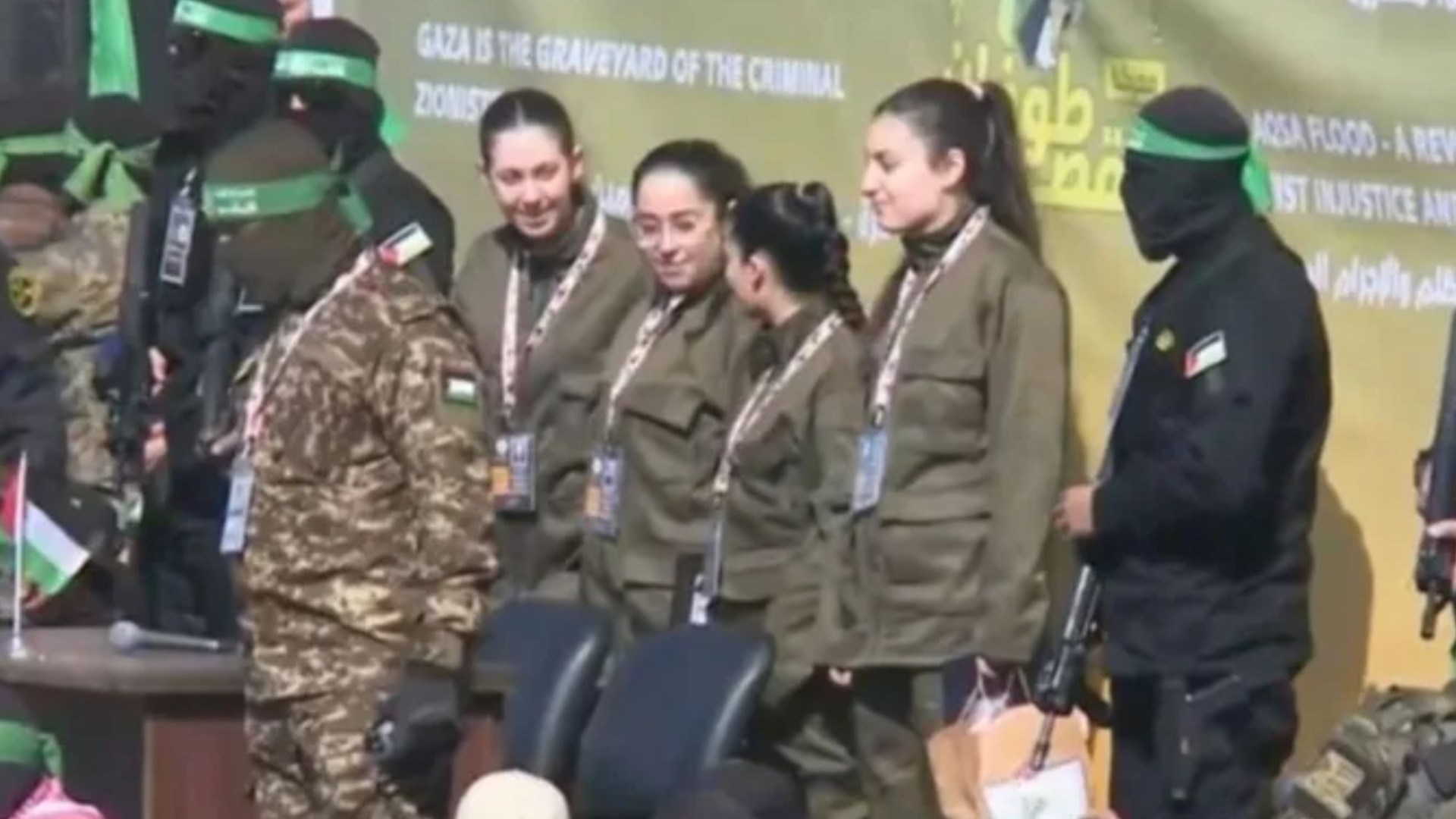
After 477 harrowing days in Hamas captivity, four young Israeli female soldiers—Karina Ariev, Daniela Gilboa, Naama Levy, and Liri Elbag—were finally released as part of a ceasefire agreement between Israel and Hamas. Their release marked the second exchange of hostages under the fragile truce, bringing a wave of relief to Israel and sparking emotional reunions with their families. The women, aged 19 and 20, were captured during the October 7, 2023, attack on the Nahal Oz military base, a harrowing event that seared itself into the Israeli consciousness. They emerged from the heart of Gaza City, escorted by armed Hamas fighters, amidst a chaotic scene of onlookers and militants brandishing weapons. Before their handover to the Red Cross, the women briefly appeared on a stage, offering a fleeting glimpse of their ordeal’s end.
The release process unfolded under intense scrutiny, with images broadcast worldwide showing the women being transferred to Red Cross vehicles. The scene was a complex mix of relief and tension, as armed Hamas members celebrated the exchange while the world watched anxiously. The Red Cross facilitated the transfer, ensuring the safe passage of the four soldiers out of Gaza and towards the Israeli border. Meanwhile, their families, having endured over a year of agonizing uncertainty, were already en route to an emotional reunion, marking the end of their long nightmare. The ceasefire agreement stipulated the release of 180 Palestinian prisoners held in Israel in exchange for the four Israeli soldiers, a delicate balance aimed at de-escalating the conflict.
Upon reaching Israeli territory, the four soldiers were transported to an army facility near the Gaza border. There, they received immediate medical and psychological evaluations to address their physical and emotional needs following their prolonged captivity. The focus shifted to their well-being, providing the necessary support and care after their traumatic experience. This marked the beginning of their reintegration into normal life, a process requiring sensitivity and specialized assistance. The IDF meticulously planned their return, ensuring a smooth transition and prioritizing their health and recovery. The reunions with their families, anticipated to be deeply emotional and private, took place at the hospital following the initial assessments.
The ordeal of these young women began on October 7, 2023, during the pre-dawn Hamas attack on the Nahal Oz military base. Disturbing videos circulated showing the captured soldiers, hands bound, bloodied, and pleading for mercy as Hamas militants paraded them. Liri Elbag, a surveillance soldier for just three days at the time of her capture, was thrust into a horrific situation barely into her military service. Naama Levy was seen in footage with blood-soaked clothing and visible wounds, a stark reminder of the violence inflicted upon them. Daniela Gilboa was also injured during her abduction and subsequently featured in several Hamas propaganda videos. Karina Ariev, the fourth soldier, was captured alongside her comrades in the chaotic assault. Their individual stories represent the collective trauma experienced by the group and the broader impact on Israeli society.
Their release sparked scenes of jubilation and relief across Israel. In Tel Aviv, crowds gathered to watch the handover unfold, many holding posters of other hostages still in captivity. The emotional release was palpable, with tears of joy mixed with the continued anxiety for those yet to return home. The event highlighted the deep emotional toll of the conflict and the shared hope for the safe return of all remaining hostages. While this release brought a measure of closure, the larger issue of ongoing captivity remained, fueling the collective desire for a lasting peace.
The release of the four Israeli soldiers against the backdrop of the Israel-Hamas conflict represented a complex and emotionally charged event. The carefully negotiated exchange, involving the Red Cross and intricate logistical arrangements, underscored the delicate nature of the ceasefire and the human cost of the conflict. The images of the released soldiers, their families’ anxious wait, and the scenes of both celebration and continued concern in Israel painted a vivid picture of the complexities of war and the enduring human spirit. While the release brought a measure of relief and hope, the broader context of the conflict remained, serving as a reminder of the ongoing challenges and the need for a lasting resolution.