



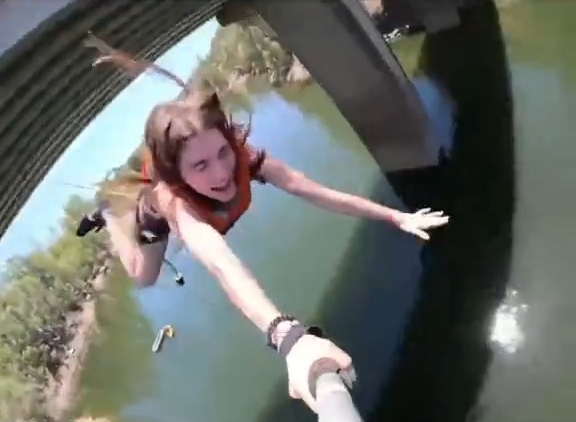
The viral video of Cristina Amaro Priego bungee jumping in Seville, Spain, has ignited a heated debate about consent and the ethics of pushing someone beyond their expressed fear. The footage captures a terrified Cristina clinging to the bridge railing, repeatedly crying “no” and visibly distressed as she struggles to even look at the water below. Despite her pleas for a moment to compose herself, the instructor appears to nudge her, sending her plunging towards the lake. This action, caught on camera, has sparked outrage among many viewers who argue that Cristina’s clear verbal and nonverbal cues of fear should have been respected. They contend that forcing someone to jump against their will, especially in a high-stress situation like bungee jumping, is unethical and potentially dangerous. The instructor’s decision to prioritize the jump over Cristina’s emotional state raises concerns about the responsibility of adventure activity providers to prioritize participant well-being.
The video unfolds with Cristina’s mounting fear palpable. Tears stream down her face as she attempts to retreat from the edge, her arms locked around the railing in a desperate embrace. The instructor, seemingly unfazed by her distress, proceeds to set up a selfie stick with a camera, adding another layer of pressure to the already fraught situation. Cristina’s repeated pleas for “one moment please” are met with what appears to be a knee to her back, propelling her over the edge. This seemingly dismissive response to her fear has fueled the online debate, with many questioning the instructor’s judgment and sensitivity. The act of pushing her, even if intended to help her overcome her fear, is perceived by many as a violation of her autonomy and a disregard for her emotional well-being.
The subsequent slow-motion shot of Cristina’s fall captures her initial shock and terror. Her cries of “oh my goodness” and frantic leg kicks as she descends illustrate the intensity of her fear. However, the narrative takes a turn as Cristina’s screams transform into laughter. This shift in emotion, from sheer terror to exhilaration, adds a complex layer to the story. While initially petrified, Cristina eventually embraces the experience, finding humor in her dramatic reaction. Her TikTok caption, “I was told I won the year’s screaming award,” suggests that she ultimately found the jump, despite the initial trauma, to be a memorable, albeit terrifying, experience.
This eventual enjoyment, however, doesn’t negate the earlier distress and has not quelled the online controversy. The debate centers on the instructor’s actions and whether the push was justified. Critics argue that even if Cristina later enjoyed the jump, the instructor’s decision to disregard her fear was unacceptable. They maintain that her initial “no” should have been respected, regardless of the eventual outcome. The incident raises questions about the balance between encouraging participants to overcome their fears and respecting their boundaries. Should instructors be allowed to push participants past their expressed limits, even in seemingly safe activities like bungee jumping?
The online commentary reveals a divided audience. While some viewers understand the instructor’s intention to help Cristina conquer her fear, the majority condemn the push as forceful and inappropriate. Comments like “And if she didn’t want to, why did he throw her away?” and “She said no, why did he push her?” highlight the widespread disapproval of the instructor’s actions. The concern expressed by many is that such actions could discourage individuals from participating in adventure activities, creating a culture of fear and mistrust. The incident underscores the importance of clear communication and informed consent in such activities.
Beyond the immediate debate about the push, the incident raises broader questions about the ethics of adventure tourism and the responsibility of operators to ensure the psychological well-being of participants. While pushing someone’s boundaries can be a part of overcoming fear and achieving personal growth, it is crucial that this is done with the individual’s explicit consent and within a framework of safety and respect. The video of Cristina’s jump serves as a stark reminder of the fine line between encouragement and coercion, and the importance of prioritizing participant well-being above all else. Her experience, while ultimately ending in laughter, highlights the potential for trauma and the ethical considerations that must be addressed within the adventure tourism industry.