


Penile ossification, a rare condition involving the formation of bone within the soft tissues of the penis, was unexpectedly discovered in a 63-year-old man who presented to the emergency department with knee pain following a fall. While the patient’s chief complaint was related to his knee, he also reported pain in his penis during the examination. This prompted further investigation, revealing the unusual and extensive calcification throughout the entire shaft of his penis, a hallmark of penile ossification. The patient’s case stands out due to the widespread nature of the ossification, as the condition typically affects only a portion of the penile shaft. While the exact cause of the ossification remains undetermined, doctors suspect a connection to Peyronie’s disease, a condition characterized by the development of hardened plaques in the penis, often leading to curvature and erectile dysfunction. The patient’s history of alcoholism may also be a contributing factor.
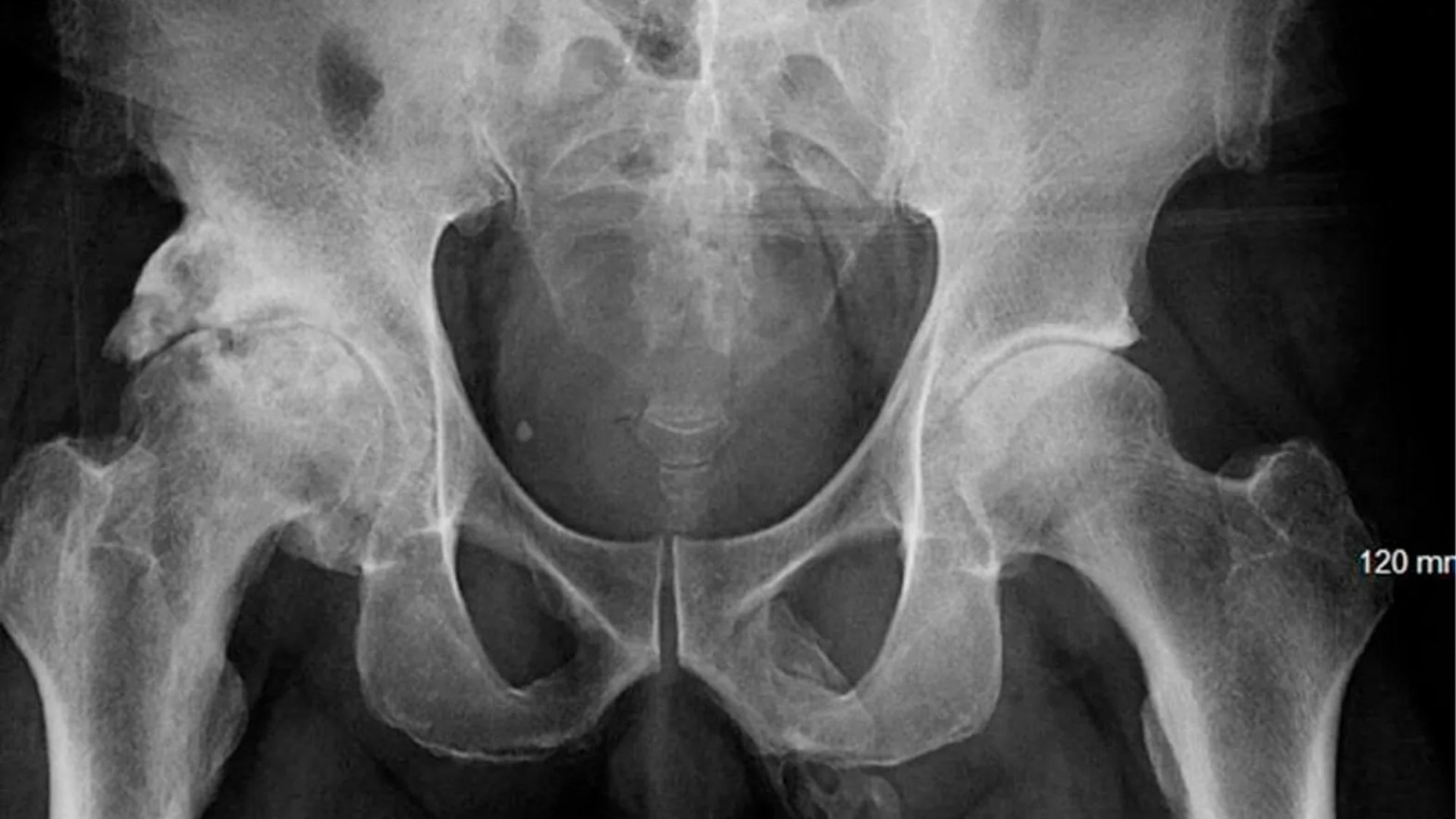
The diagnosis of penile ossification was made incidentally during a pelvic X-ray, which was performed to rule out any fractures related to the patient’s fall. The X-ray revealed extensive plaque-like calcification along the entire length of the penis, strongly suggesting penile ossification. Unfortunately, the patient chose to leave the hospital against medical advice, preventing further investigation and follow-up care. This premature departure hindered the medical team’s ability to perform necessary lab tests and conduct a more thorough examination, leaving some questions about the underlying cause and potential treatment options unanswered.
Penile ossification is an exceedingly rare condition, with fewer than 40 cases documented in medical literature. While the exact mechanisms leading to this condition are not fully understood, several factors have been implicated. Peyronie’s disease, a more common condition affecting men over 40, is often associated with penile ossification. In Peyronie’s disease, the formation of fibrous plaques in the penis can trigger inflammation and subsequent calcification, eventually leading to the formation of bone-like tissue. Other potential contributors include late-stage kidney disease, metabolic abnormalities, repeated trauma to the penis, and chronic inflammation.
The case of the 63-year-old man highlights the importance of thorough medical evaluations, even when the presenting complaint appears straightforward. The unexpected discovery of penile ossification underscores the need for clinicians to consider a broad range of possible diagnoses, especially when patients report multiple symptoms. While the patient’s decision to leave against medical advice prevented a more complete understanding of his specific case, the incident serves as a valuable reminder of the complexities of medical diagnosis and the importance of patient compliance with recommended treatments and follow-up care.
The incident also provides an opportunity to dispel some common myths and misconceptions surrounding penis health. There is no correlation between shoe size and penis size, despite the pervasiveness of this myth. Similarly, creams and oils cannot increase penis size. It’s crucial to rely on factual information from reputable sources when seeking information about sexual health. The average penis size is approximately 9cm when flaccid and 13cm when erect. While the shape of the penis, often described as mushroom-like, has led to various theories, one prominent explanation, known as the semen displacement theory, suggests that this shape helps to remove sperm from previous partners.
While the penis does not contain bones, it can still be injured. A penile fracture, though rare, can occur due to trauma, typically during vigorous sexual activity. This injury involves a rupture of the tunica albuginea, the membrane surrounding the erectile tissues of the penis, leading to bleeding and swelling. It is essential to seek immediate medical attention if a penile fracture is suspected. Open communication with healthcare professionals is crucial for addressing concerns about sexual health and ensuring accurate diagnosis and treatment of any underlying conditions.