



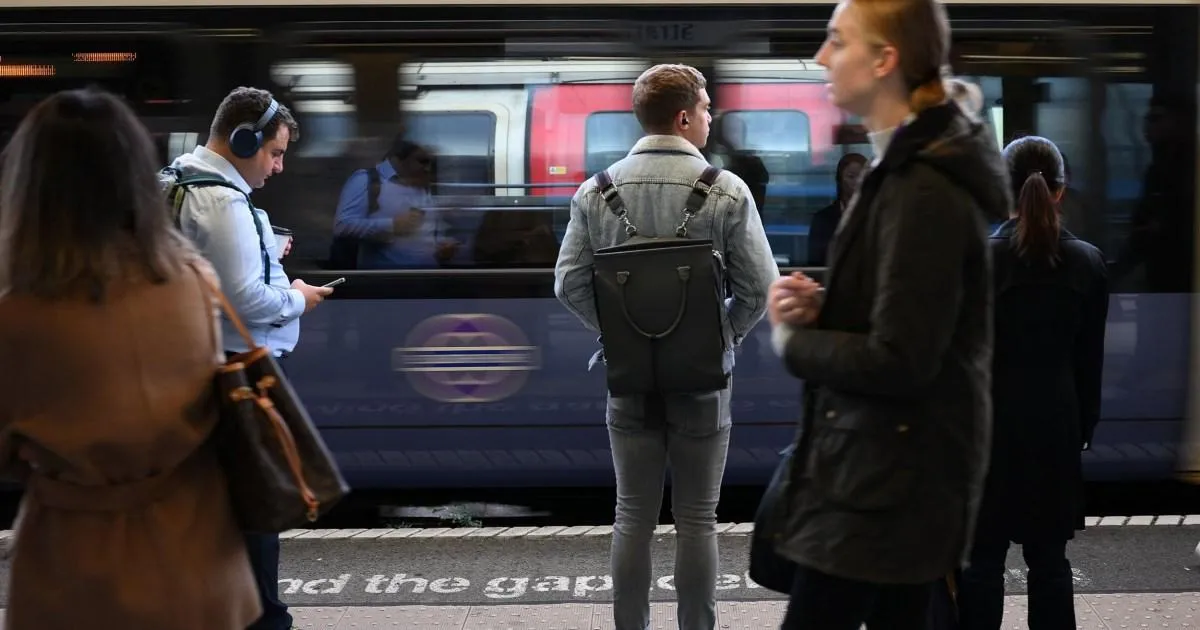
There is a particular kind of dread that settles over a commuter when the morning starts with a notification, not a gentle alarm. Today, that dread arrived early for thousands of Londoners as the Elizabeth line, the gleaming modern artery that was supposed to make cross-city travel effortless, found itself tangled in a familiar mess. A signalling fault at Paddington, that crucial junction where so many journeys begin or end, has thrown the entire line into chaos. Trains are running at reduced speed, some are cancelled, others are delayed, and the ripple effect is being felt all the way out to Heathrow and Reading. National Rail, in that calm, bureaucratic voice that somehow makes bad news worse, has announced that disruption is expected until 10:00. For anyone trying to get to work, to a meeting, to a flight, that is an eternity. The morning rush hour, already a test of patience, has become a slow, sticky crawl. Commuters are doing what they always do: clutching their coffee cups a little tighter, refreshing their apps, and trying to work out whether to wait it out or find another way. The coffee, as one might say, should have been extra strong. Because this is not just a delay; it is a reminder of how much we depend on a system that, for all its shiny trains and modern stations, can still be brought to its knees by a single faulty signal. The platforms are filling up, the information boards are flickering with apologies, and the collective sigh of a city can almost be heard. It is a scene that will be familiar to anyone who has ever stood on a cold platform, watching the minutes tick by, wondering if the train will ever come. And the worst part? The issue is expected to persist through the entire morning rush, meaning that for many, the battle to get to work is only just beginning.
The trouble is not evenly spread. According to the latest travel status updates, the worst delays are on the stretches between Paddington and Heathrow Terminals 4 and 5, and between Paddington and Reading. That is a particularly cruel blow for anyone with a flight to catch. The Elizabeth line was supposed to be the reliable, comfortable way to get to the airport, a smooth glide from central London to the terminal with your suitcase at your feet and time to spare. Instead, passengers are facing the grim choice of sitting on a delayed train, hoping against hope, or abandoning the service altogether and scrambling for a taxi, a car, or a different rail route. The Heathrow Express, if it is running, becomes a lifeline, but it comes at a price. Meanwhile, the District line, which often acts as the unofficial escape route for stranded Elizabeth line passengers, has also been suffering. It was reporting serious delays before being downgraded to minor status, which is a bit like saying a storm has been downgraded to a drizzle: still enough to ruin your day, just not quite as dramatically. The affected stretches include Earl’s Court to Ealing Broadway, Earl’s Court to Kensington (Olympia), Earl’s Court to Richmond, and Upminster to Tower Hill. For anyone trying to navigate west London, that is a significant chunk of the network. And the frustration is compounded by the fact that this is not a new problem. Yesterday, passengers on the same Paddington route were caught up in travel chaos caused by overrunning engineering works that blocked some lines. Two days in a row. Two different excuses. The same result: people left stranded, late, and exhausted. It is enough to make even the most patient commuter question the entire enterprise. The signals, the works, the delays, the revised schedules, the vague announcements about “a fault with the signalling system” — it all adds up to a sense that the system is running on hope as much as on rails. And for those who rely on it every single day, the uncertainty is almost worse than the delay itself.
But behind the jargon and the status updates, there are real people, with real lives, and real reasons to be somewhere. There is the mother trying to get to Heathrow to catch a flight to see her sick parent, watching the minutes tick away and feeling her heart sink. There is the young professional with a 9:30 presentation, rehearsing it in their head while the train sits motionless between stations. There is the shift worker who has already been up since 5 a.m., who just wants to get home, and who now faces another hour of standing in a crowded carriage. There is the student with an exam, the couple trying to make a wedding, the tourist with a suitcase and a confused look, trying to figure out if this is normal. The Elizabeth line, for all its sleek design and automated announcements, is not just a piece of infrastructure. It is a lifeline. It carries people to their jobs, to their loved ones, to their dreams and their obligations. When it fails, it does not just cause inconvenience; it causes stress, anxiety, and sometimes real harm. A missed flight can cost hundreds of pounds. A missed interview can cost a job. A missed moment with a dying relative can cost something that no amount of money can replace. And yet, in the middle of all this, there is also a strange kind of community. Strangers exchange knowing glances. Someone offers a spare phone charger. A woman helps a man with a heavy suitcase down the stairs. A group of commuters collectively groan when the announcement says “revised” instead of “on time.” There is a shared understanding that we are all in this together, even if we will never see each other again. The delay becomes a story, a shared ordeal, a small piece of the city’s collective memory. It is not enough to make up for the frustration, but it is something. It is a reminder that even in a city of nine million people, we are not entirely alone. And when the train finally does arrive, there is a little burst of relief, a quickening of steps, a scramble for seats, and the journey continues, a little later, a little more tired, but still moving.
This morning’s chaos is also a reminder of the fragility of the systems we take for granted. The Elizabeth line, which opened to such fanfare and was hailed as a triumph of modern engineering, is not invincible. It depends on a complex network of signals, switches, and software, all of which must work in perfect harmony. When one small component fails, the entire system slows to a crawl. The signalling fault at Paddington is not just a technical issue; it is a window into the delicate balance that keeps the city moving. And it is not just the Elizabeth line. The District line, with its ancient roots and its own set of challenges, is also struggling. The overrunning engineering works yesterday are another reminder that the network is constantly being maintained, upgraded, and repaired, often at the expense of passenger convenience. It is a never-ending cycle: works cause delays, delays cause frustration, frustration leads to calls for better investment, investment leads to more works, and so on. The language used by the authorities does not help. “Disruption is expected until 10:00” sounds almost clinical, as if the delay is a weather event rather than a human failure. “Trains may be cancelled, delayed or revised” is a phrase that manages to be both vague and deeply unhelpful. What does “revised” even mean? It sounds like the train has been given a new personality, not a new schedule. Commuters are left to decode the messages, to read between the lines, to guess whether “minor delays” means “you might be a little late” or “you should have stayed in bed.” The information is there, but it is not always useful. And in the absence of clear information, rumours spread. Someone says the line is closed. Someone else says it is just a points failure. A third person says they saw a signal engineer with a cup of tea and a worried expression. The truth is often simpler and more frustrating: a fault, a fix, a wait. But the uncertainty is part of the pain. It is the not knowing that wears people down, the constant checking of apps, the desperate hope that the next announcement will be good news. It is enough to make anyone long for a simpler time, when a train was just a train and a delay was just a delay, not a test of one’s ability to cope with ambiguity.
So what is a commuter to do? The first instinct is to reach for the apps, the live departure boards, the journey planners that promise to guide us through the chaos. But even the best technology cannot conjure a train out of thin air. The second instinct is to find an alternative route, to dive into the Underground, to take a bus, to walk, to cycle, to do anything that feels like progress. But the alternatives are often just as crowded, just as delayed, just as unpredictable. The third instinct, and perhaps the most human, is to simply accept the situation, to take a deep breath, and to make the best of it. That might mean buying a second coffee, even if it feels like an extravagance. It might mean calling the office to say you will be late, and hearing, to your surprise, that it is fine. It might mean striking up a conversation with a stranger, discovering that you both have something in common, and realising that the delay has given you a moment of connection you would otherwise have missed. It might mean using the time to read, to listen to a podcast, to stare out the window and let your mind wander. In a world that is always rushing, a delay can be an unwelcome reminder to slow down. That is not to romanticise the situation. Being late is stressful. Missing a flight is expensive. Standing in a crowded train for an extra hour is genuinely unpleasant. But there is a resilience in the way Londoners handle these moments, a grim humour, a determination to carry on. The memes write themselves. The jokes are shared. The collective grumble becomes a collective shrug. And eventually, the train moves, the city breathes again, and the day, though delayed, continues. The coffee, by now, is cold. The meeting, perhaps, has been rescheduled. The flight, maybe, has been missed. But life goes on. The commuter arrives, eventually, a little frazzled, a little late, but still standing. And tomorrow, they will do it all over again, because what else can they do? The city needs them, and they need the city, and the trains, for all their faults, are the threads that hold it all together.
Looking ahead, there is a hope that things will get better. The Elizabeth line is still relatively new, and teething problems are to be expected. The signalling systems will be refined, the engineering works will be completed, and the delays, one hopes, will become less frequent. But the events of this morning, and yesterday, are a reminder that the work is never really done. The network needs constant investment, constant attention, constant care. It needs engineers who understand the signals, planners who understand the passengers, and politicians who understand that transport is not just a matter of concrete and steel, but of people’s lives. It needs a culture that values reliability over speed, communication over jargon, and compassion over blame. For the commuter, the immediate advice is simple: check before you travel, allow extra time, and keep a backup plan in mind. But the deeper lesson is about patience, about flexibility, about the ability to adapt when things do not go as planned. The morning rush hour is a daily act of faith, a belief that the trains will run, that the doors will open, that the journey will be made. When that faith is broken, it is jarring. But it is not the end of the world. The sun still rises, the city still hums, and the Elizabeth line, for all its faults, will carry millions of people again tomorrow. The signal fault at Paddington will be fixed. The overrunning engineering works will eventually finish. The delays will become a memory, a story to tell, a small scar in the collective experience of the city. And the commuters, those resilient, coffee-fueled souls, will keep going. They will keep checking their apps, keep clutching their travel cards, keep hoping for a smooth ride. They will grumble, but they will also adapt. They will find new routes, new strategies, new ways to cope. And in doing so, they will prove, once again, that the real strength of London is not in its tracks or its tunnels, but in the people who keep moving, no matter what. So here is to a better commute tomorrow, to fewer faults, to smoother journeys, and to the simple, precious joy of a train that arrives on time. Until then, keep your coffee strong, your phone charged, and your patience close at hand. The city is waiting, and so are you.