



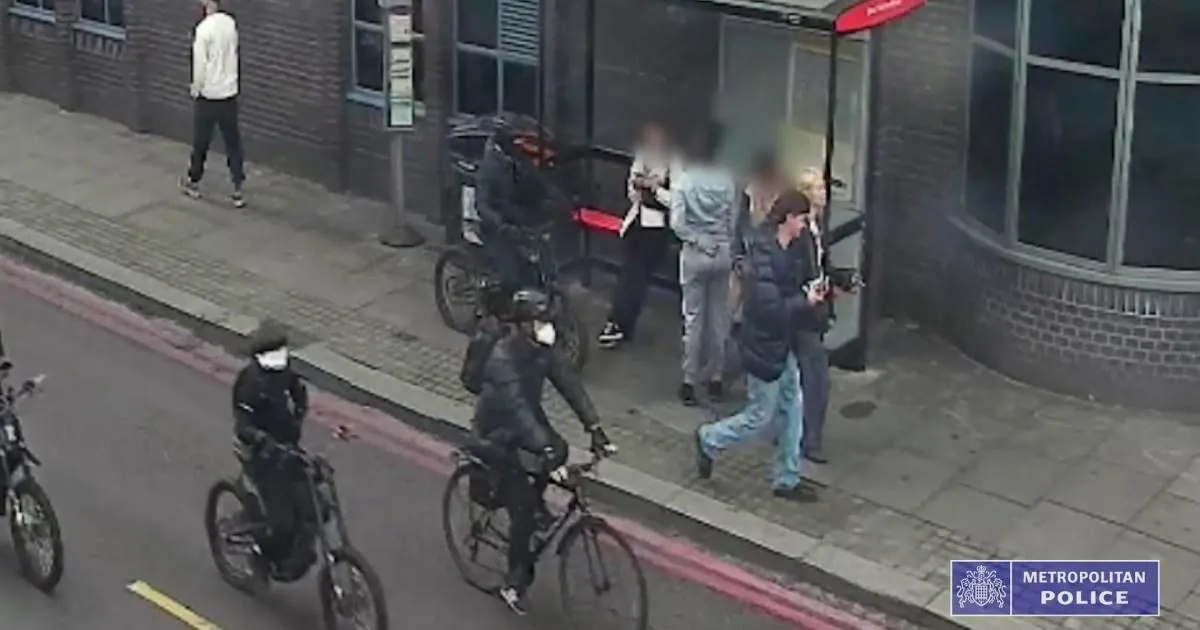
Picture this: you are walking down a busy London street, phone in hand, maybe checking directions or texting a friend. In a split second, someone on an e-bike zooms past, snatches the phone from your fingers, and disappears into traffic. It happens so fast that by the time your brain catches up, the thief is gone. For thousands of people in the capital, this is not a distant fear but a lived nightmare. That is why the Metropolitan Police’s recent crackdown feels so significant. In just one month, officers arrested more than 700 people and seized hundreds of phones believed to be stolen, in a series of operations designed to hit criminals where it hurts. One 21-year-old suspect tried to make a dramatic getaway: he fled on an e-bike, jumped into a pond, and hurled phones away as he ran. Police officers, refusing to let him escape, waded into the water after him. There they discovered the phones wrapped in foil — a simple but effective trick meant to block location tracking. The footage of this chase is almost absurd, but it reveals a serious truth: these thefts are not random acts; they are the work of organised criminals who have turned phone stealing into a profitable business. Alongside the arrests, police recovered drugs, knives, guns, cash and more than 110 illegal e-bikes. The message was unmistakable: the Met is not treating this as low-level crime anymore. Behind every statistic is a real person who lost more than a device — contact numbers, intimate photographs, banking apps, and the feeling of safety that should come with walking down your own street. For some, the ordeal doesn’t end with the theft; it continues with attempts to break into their digital lives. That human cost is why the police are now fighting back with drone control rooms, intelligence-led patrols, and a determination to make the city feel less like a hunting ground.
One of the most troubling aspects of this wave of theft is how organised it has become. Metropolitan Police Commissioner Sir Mark Rowley has spent months pushing phone companies to make stolen handsets “unusable bricks” — effectively turning them into worthless pieces of metal and glass. His frustration is easy to understand. Many stolen phones are not being kept for personal use; they are being shipped abroad and sold. The international trade in stolen mobile phones is worth millions of pounds, and a device stolen in London can actually be worth more in countries like China because it arrives without the restrictions that local phones often come with. This makes phone theft a global industry, not a local nuisance. Even worse, criminals are targeting children as foot soldiers. Earlier this year, the Met revealed it had found adverts on Snapchat offering children as much as £380 to steal a single iPhone, with a £100 bonus for stealing ten. Imagine being a teenager, strapped for cash, targeted by someone promising quick money. It is a predatory recruitment model, one that turns young people into criminals while the adults behind the schemes remain in the shadows. The police are aware of this, which is why their operations are not just about catching the hands that snatch phones. They are also trying to dismantle the networks that finance, direct and reward these young thieves. Seizing illegal e-bikes, for example, is not merely about traffic safety; those bikes are the getaway vehicles used to make thefts quick and hard to follow. Removing them from the street cuts off the mobility that makes these crimes so difficult to stop. Social media platforms also have a role to play. These ads are not hidden away; they are visible to vulnerable young people, and the police cannot remove them alone. The temptation is real, and the long-term consequences for the teenagers who take the bait can be devastating. It may start with a stolen iPhone, but it often ends with a criminal record, a damaged future, and the feeling of being thrown away by the very people who promised them easy money.
Despite the 700 arrests and the seizure of hundreds of devices, the scale of the problem remains staggering. New figures released by the Met show just how much ground there is to cover. In the most recent August alone, the force recorded 3,963 phone thefts and robbery offences. To put that in context, the same month in 2022 saw 3,311 such crimes. The intervening years were even worse: 4,542 in August 2023, 5,597 in August 2024, and 5,099 in the most recent August. There is some encouraging news on the broader trend: phone theft and robbery fell from 81,439 offences in 2024 to 71,867 in 2025. And between January and August of the most recent year, there were 39,793 offences, down from 49,136 during the same period a year earlier. But a decline still means tens of thousands of thefts, and each one represents a moment of violation. Moreover, thieves are adapting. Police have warned that criminals are increasingly using social engineering to get into stolen phones. They pose as legitimate businesses, such as banks or delivery companies, and contact victims on their other devices — perhaps a tablet or laptop — pretending to verify suspicious activity. The goal is to gain passwords, PINs, and account details, so they can drain savings or access personal data. Imagine losing your phone and then, hours later, receiving a text that looks like it’s from your bank asking you to “confirm your identity.” It feels real. It is frighteningly easy to fall for. This is no longer just about the value of the handset; it is about identity theft, financial ruin, and the invasion of private life. Police are working to educate the public, but the criminals keep refining their tricks. Every new scam is another layer of anxiety for victims, who thought the moment of theft was the worst part. In many cases, the worst part is still to come.
For victims, one of the most discouraging parts of phone theft is how rarely a stolen device comes home. Freedom of Information figures released by the Met tell a heartbreaking story. Between 2017 and February 27, 2024, a total of 587,498 phones were stolen in London, excluding the City of London. Of those, only 13,998 were recovered. That means 573,500 devices were never seen again. Put simply, less than one in forty stolen phones makes it back to its owner. It is not hard to understand why. Phones are hidden, fenced, dismantled, or shipped abroad within hours of being stolen. Wrapping them in foil, as the e-bike suspect did, is just one small trick in a much bigger playbook. The chances of justice are equally low. According to figures for the year to the end of December 2025, the Met solved one of the smallest proportions of these offences compared with other police forces in England and Wales. For personal robbery cases, only 6.9% ended with a suspect being identified and dealt with. For theft from the person, the rate was just 0.9%. Let those numbers sink in. Out of a hundred people who have their phones stolen off the street, in almost every case, no one is ever caught. That is not for lack of effort by individual officers; it is a structural issue. The sheer volume of crimes, the anonymity of crowded streets, and the speed of e-bike thieves make identification extremely difficult. But it also means that many victims are left feeling abandoned, as if their crime does not matter. They are told to report it, then never told what happened. Their phone ends up in another country, their photos and messages gone forever, and the person who took it simply moves on to the next victim. The pain of losing a phone is not really about the cost of the device; it is about the loss of memory, privacy and security. And when no one is held accountable, that pain is compounded by a deep sense of injustice.
To fight back, the Met has had to get creative. The recent operations used drone control rooms, with aerial teams helping to track thefts in real time and guide officers on the ground. It is a far cry from the image of a bobby on the beat, but it is exactly the kind of modern policing that phone theft demands. Criminals on e-bikes can move impossibly fast, threading through traffic and down alleyways. Drones give police an eye in the sky, and the technique appears to be paying off. The list of what was seized in one month reads like the contents of a gangster’s toy box: drugs, knives, guns, cash, and more than 110 illegal e-bikes. These are not random finds. Many of the arrested suspects were not just street thieves; they are suspected of robbery, handling stolen goods, and playing a role in the wider criminal networks that profit from stolen phones. The e-bikes, in particular, are a signature of this kind of crime. They are cheap, fast, and quiet, allowing thieves to glide up behind pedestrians and vanish in seconds. By taking them off the streets, police are removing the very tools that make these thefts so difficult to stop. But one month of arrests, however successful, cannot solve the problem overnight. For every illegal e-bike seized, there may be two more waiting in the wings. For every child recruited on Snapchat, there are other vulnerable young people being lured by promises of easy cash. The police can only do so much on their own. They need phone manufacturers to make stolen devices useless, social media platforms to remove criminal ads quickly, and the public to protect their own devices with stronger settings and awareness. Yet the recent operation shows what can happen when law enforcement takes phone theft as seriously as the gun and drug crimes it is often linked to. It also reminds us that behind every arrest there is weeks of detective work, hours of watching drone footage, and officers willing to wade into a cold pond for evidence. That level of commitment deserves recognition, even if the broader battle is far from over.
At its heart, this is not just a story about phones. It is about the safety of a city and the people who live in it. A phone snatched from a hand is more than a financial loss. It can feel like a robbery of your private world. The photos of a late parent, the notes from a child’s first days of school, the encrypted messages with a partner, the banking details that keep your life running — all of it can disappear in a split second. The psychological impact lingers. Many victims describe a new wariness, a constant grip on their bag, an urge to keep their phone hidden even in safe places. That is not how people should have to live. There is cautious hope in the latest figures, which show a decline in phone theft and robbery from the worst peaks. The Met’s intensive operations, combined with the commissioner’s calls for phones to be made into “unusable bricks,” may be starting to turn the tide. But with tens of thousands of offences still recorded every year, and with solve rates still dismally low, there is no room for complacency. The fight requires a partnership. Police must keep up the pressure with visible patrols, drone operations and intelligence work. Phone companies must build stronger security into their devices, making stolen handsets not worth the risk. Social media platforms must take down criminal recruitment ads before they lure another child. And communities must watch out for each other, because the person on the e-bike is often an exploited teenager working for someone far more dangerous. The recent arrests are a reminder that change is possible. But real peace of mind will only come when a stolen phone is worthless, when young people are no longer treated as disposable thieves, and when every victim can feel confident that someone, somewhere, is fighting for them. Until then, London will keep its eyes open — and its phones a little closer.