

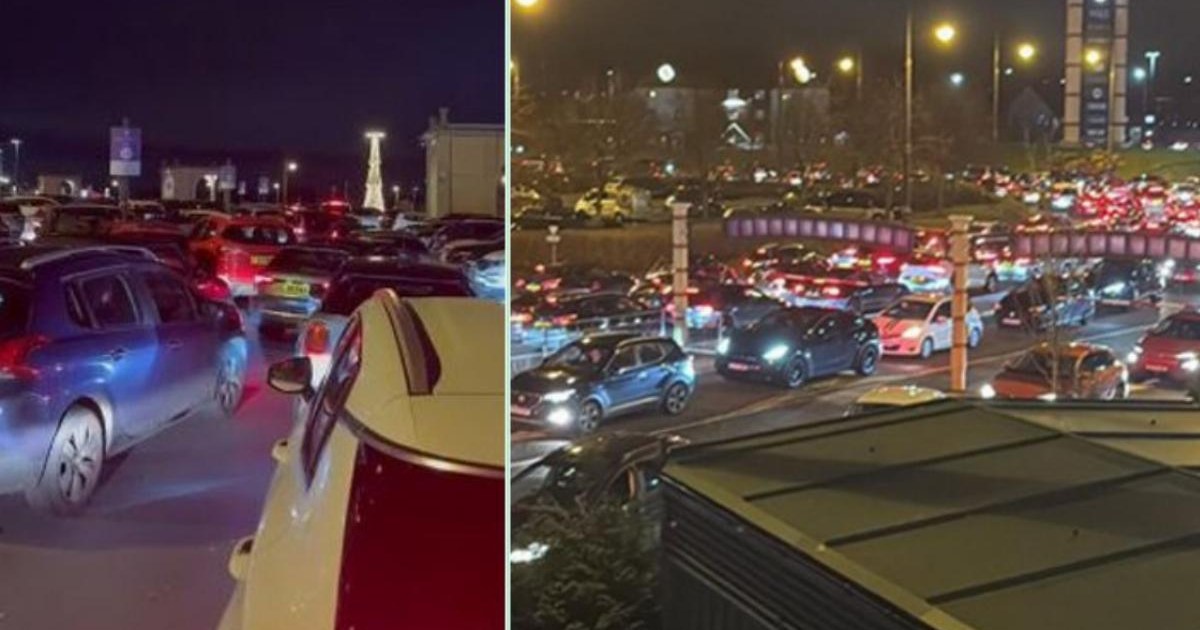
The Trafford Centre in Manchester, a popular shopping and leisure destination, descended into chaos on a busy Sunday as gridlock trapped motorists in the car park for hours, leading to frayed nerves, heated arguments, and even physical altercations. The perfect storm of factors contributing to this unprecedented congestion included the usual throngs of weekend shoppers amplified by the holiday season, coupled with heavy traffic generated by a Manchester United home game at nearby Old Trafford. Visitors who anticipated a leisurely day of shopping or entertainment instead found themselves ensnared in a logistical nightmare, their plans derailed by the immovable mass of vehicles.
Among those caught in the standstill were Cody Fisher and Lewis Moran, who had arrived at midday to see a performance of Wicked. Finding a parking space had already taken over an hour, a harbinger of the difficulties to come. Emerging from the show at 3pm, they found the car park transformed into a sea of stationary vehicles. What they initially perceived as an unusual lull in activity quickly devolved into a frustrating ordeal. As the minutes ticked by, turning into hours, the atmosphere grew increasingly tense, with mounting frustration palpable among the trapped drivers.
The gridlock extended beyond mere inconvenience, morphing into a distressing experience for many. The inability to move, coupled with the uncertainty of when the situation would resolve, amplified anxieties. Children trapped in the stagnant vehicles began to cry, adding to the general sense of unease. The initial murmurs of discontent escalated into raised voices as tempers flared. Some drivers, desperate to escape the confinement, resorted to opening normally closed gates in an attempt to create alternative exit routes, further exacerbating the already chaotic scene.
The mounting tension eventually erupted into physical confrontations. Cody recounted witnessing a particularly disturbing incident involving two women, one of whom had a child with diabetes. The desperation of the situation, coupled with the prolonged confinement, pushed some individuals to the brink, leading to shouting matches and even physical altercations. The car park, intended for convenient access to leisure and shopping, transformed into a pressure cooker of human emotions, fueled by frustration, anxiety, and the primal urge to escape.
After enduring five hours of immobility, Cody and Lewis, like many others, resigned themselves to their fate, returning to their parking space, defeated and exhausted. The experience left them shaken, the sound of screaming and verbal abuse echoing in their memories. Other visitors shared similar harrowing tales. Natalia Suska and her partner Piyush Sheopuri, who had simply gone to the Trafford Centre to collect an online order, found themselves trapped for two hours. Natalia remarked that she had never witnessed such chaos, even during the peak Christmas shopping rush. The sheer scale of the gridlock surpassed even the busiest pre-holiday periods.
The Trafford Centre acknowledged the extraordinary traffic situation, attributing it to the confluence of factors mentioned earlier: the high volume of weekend shoppers, amplified by the holiday season, and the added influx of traffic from the Manchester United game. They stated that they were working with Greater Manchester Police and highway authorities to alleviate the congestion and restore normal traffic flow. While they expressed appreciation for the visitors’ patience, the events of that day served as a stark reminder of the potential for logistical breakdowns in even the most well-planned environments, especially when faced with an unexpected convergence of high-traffic events. The incident underscored the need for robust contingency plans and effective communication strategies to manage such situations and mitigate the distress experienced by those caught in the gridlock.