



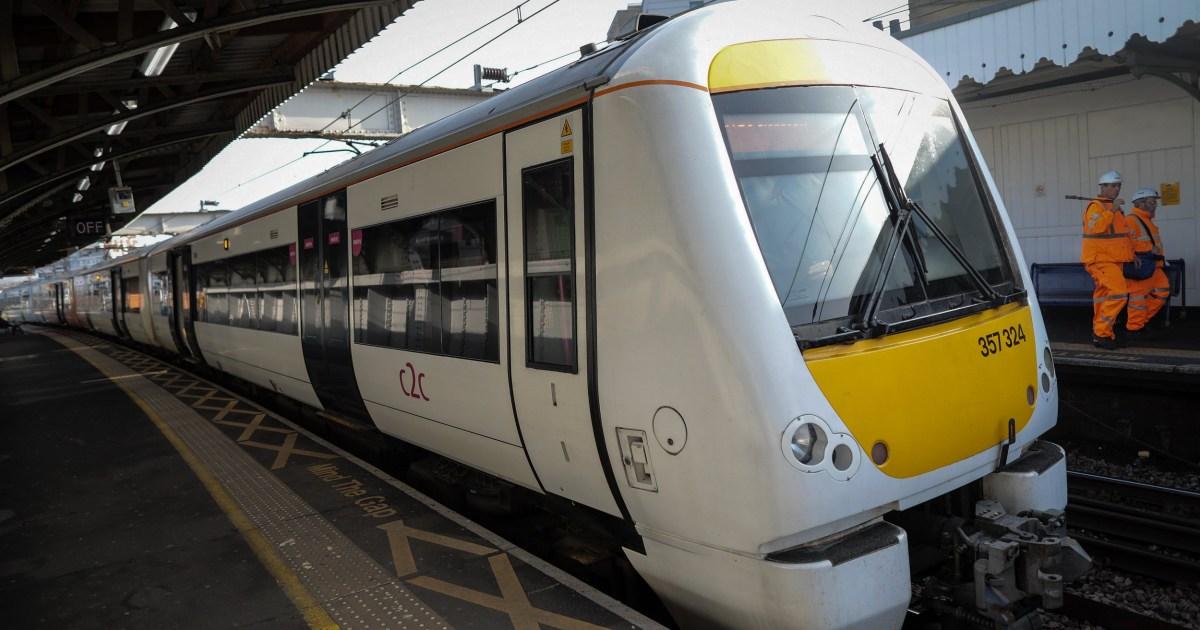
Introduction to c2c and State Control
The UK railway industry has recently undergone a significant Transformation Braking point: The government has brought in a second national operator for the first time, following the acquisition of a second train company by C2C, c2c. Thecompletion of this journey is grounded in Labour’s ambitious renationalisation scheme, which aims to bring railways back into the public sector after years of complaints from passengers about financial burden and poor service quality. The scheme includes taking over responsibility for managing railway infrastructure, including stations and lines, which will be crucial for delivering better quality and reliability.
Introduction to the Labour Renationalisation Scheme
This innovative pipeline suggests that c2c, operating duties from Fenchurch Street Station in the north, will soon be a key player in the UK railway network. The company is the sixth largest train operator by passenger numbers, ranking number six in the UK. Its acquisition by Trenitalia earlier in the year further solidified its position as a state-controlled entity, setting the stage for a unified railway network that aims to reduce costs and improve service quality for all passengers.
The Impact of c2c and Public Ownership
Operated by the Department for Transport (DfT), c2c has a strong customer satisfaction record, with 89% of its passengers rated highly. The company provides services to destinations in Essex, approximately 220 miles south-east of London, and relies heavily on funding. c2c’s success is expected to attract significant financial投资 from the railway industry, further underscoring the importance of its continued operation.
The Larger Network and expansion
The government’s commitment to improving railways through a robust renationalisation initiative is clear. This ambitious plan aims to leverage a unified, state-owned fortnight network that will deliver improved service quality as passengers seek better options. In February, the third largest railway group in the UK, South Western Railway, will be nationalised in October, ensuring that c2c remains a vital player in the growing railway network.
The Trusted Partner by Transport Secretary
Transport Secretary Heidi Alexander has caulpped strong in her renationalisation stance, emphasizing that public ownership will not only reduce costs and save money but also improve service reliability and reduce passenger disruption. She highlights their hopeful vision for public ownership, promising to enhance services and increase capacity. On the other hand, the private sector will continue to carry out routine maintenance and operations, much like alep in a snowball effect.
Great British Railways and Subjective Leverage
The government has earlier hoped to restore profitability by expanding railway network, which could further enable铁路 operators to retain control. But as it strives for success, Greater Anglia, which will be nationalised in October, joins the network, making c2c crucial for future expansion.
Conclusion
The rollout of c2c and the government’s comprehensive railway strategy are forward-thinking initiatives that align with Britain’s current challenges, including rising costs and service reliability. With a unified network under careful governance, railway operators will collectively tackle the nation’s railway challenges, ensuring improved services and lasting passenger benefit. As the railway industry moves forward, the government’s commitment to innovation and stakeholder engagement underscores the importance of c2c and the broader railway railway network as a whole.
Contact for More Information:
For news and analysis, visit the Met Fel —into the deep bottom page.
好玩 with new games and more.
Follow us on Twitter: @MetFoodiance or @{# Metro News}.
Follow us on Instagram: https://www.instagram.com/metfoodiance
Sign up to Metro’s politics newsletter with a free email: [Met News Email](mailto [email protected]).
Image source:https://www相结合一起去网 EFF mnit.p-paris via Google Images“