



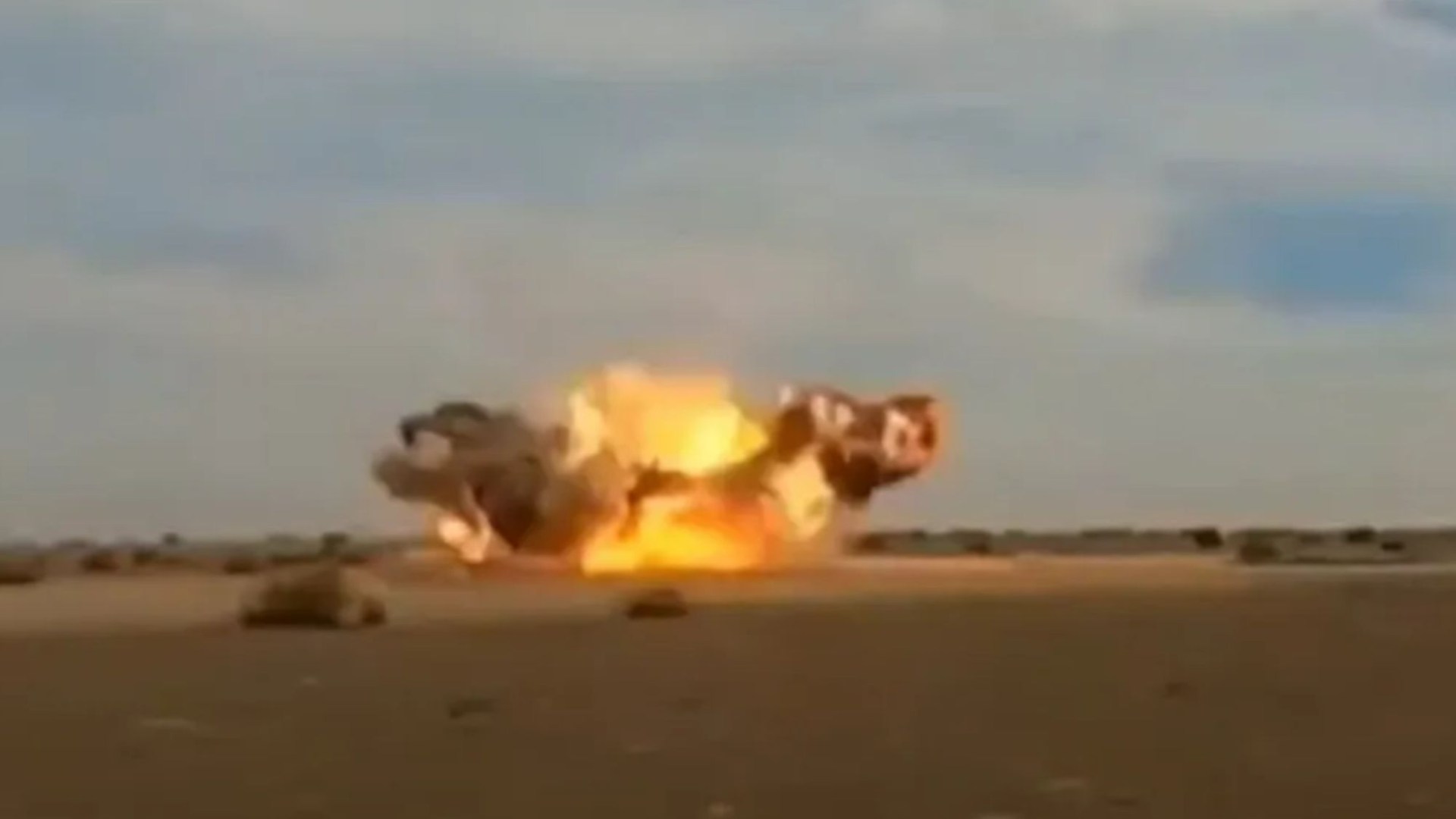
Iran’s military has unveiled its latest unmanned aerial vehicle (UAV), the Shahed-149, nicknamed “Gaza,” marking a significant advancement in its drone program. This large-scale drone, boasting a 22-meter wingspan and weighing over 3,000kg, is designed for long-range missions and substantial payload capacity. With a reported endurance of 35 hours and a top speed of 350kmph, the Gaza can cover distances of up to 1,000km, making it a potent tool for surveillance and offensive operations. Its payload capacity of 500kg allows it to carry up to 13 bombs, further enhancing its destructive potential. Recent demonstrations showcased the drone’s capabilities, including its precision bombing system successfully striking eight targets during a military exercise. The Gaza’s integration of artificial intelligence (AI) capabilities into its missile systems signals Iran’s commitment to developing sophisticated and autonomous weaponry.
The development of the Gaza represents a notable step in Iran’s ongoing efforts to expand and refine its drone arsenal. Initially announced in May 2021, the drone has now been declared fully operational, signifying its readiness for deployment. The public display and successful testing of the Gaza drone underscore Iran’s growing military prowess and its ambition to project power in the region. The drone’s name, Gaza, a reference to the Palestinian territory, also carries political significance, aligning with Iran’s stated support for the Palestinian cause. This naming convention, along with the drone’s capabilities, is likely intended to send a message of deterrence to regional rivals.
Technical specifications suggest the Gaza drone draws inspiration from existing UAV designs, particularly the American MQ-9 Reaper. Similarities in size, range, and payload capacity raise questions about potential technological borrowing or reverse engineering. Iran has a history of adapting and replicating foreign military technology, including drones captured or downed within its territory. The Shahed 171 Simorgh, a copy of the US RQ-170 Sentinel, is a prime example of this practice. The possibility that the Gaza incorporates elements from captured Reaper drones or other foreign UAVs cannot be discounted.
The incorporation of AI into the Gaza’s weaponry marks a significant technological advancement for Iran’s drone program. AI-enabled missiles are capable of greater precision and adaptability, potentially allowing for autonomous target acquisition and engagement. This development reflects a broader trend in military technology toward autonomous systems and highlights Iran’s efforts to remain competitive in this evolving field. The Gaza’s reliance on either a Chinese or Russian navigation system, rather than the commonly used GPS, further underscores Iran’s strategic alliances and its efforts to reduce dependence on Western technology.
The unveiling of the Gaza drone comes against a backdrop of heightened tensions in the region and escalating military competition. Iran’s expanding drone program raises concerns among its adversaries and adds a new dimension to the dynamics of regional security. The Gaza’s long-range capabilities, coupled with its potential for carrying significant payloads, could alter the balance of power and create new challenges for regional stability. The drone’s potential use in future conflicts or as a tool for power projection remains a significant concern for international observers.
The implications of the Gaza drone’s development extend beyond the immediate region. The proliferation of advanced drone technology, particularly to non-state actors, poses a growing threat to global security. The Gaza’s capabilities, if exported or shared with Iran’s allies, could destabilize other regions and exacerbate existing conflicts. The international community faces a growing challenge in regulating the development and proliferation of such advanced drone technology, and the Gaza drone serves as a stark reminder of the rapidly evolving landscape of warfare. Monitoring and addressing the spread of this technology will be crucial for maintaining regional and global stability.