

The baffling disappearance of 83-year-old Paulette Landrieux, an Alzheimer’s patient, from her garden in Andenne, Belgium, in November 2020, remained a heartbreaking mystery for two long years. Her husband and sole caregiver, Marcel Taret, described a routine day where he left Paulette watching television while he hung laundry outside. Turning his back for only a few minutes, he returned to find his wife gone. An extensive search, including a helicopter sweep of the area, yielded no results, leaving Marcel and authorities stumped and ultimately resigning themselves to the likelihood that Paulette’s fate would remain unknown. The case highlights the devastating impact of Alzheimer’s, as Paulette’s vulnerability and tendency to wander contributed to the tragedy.
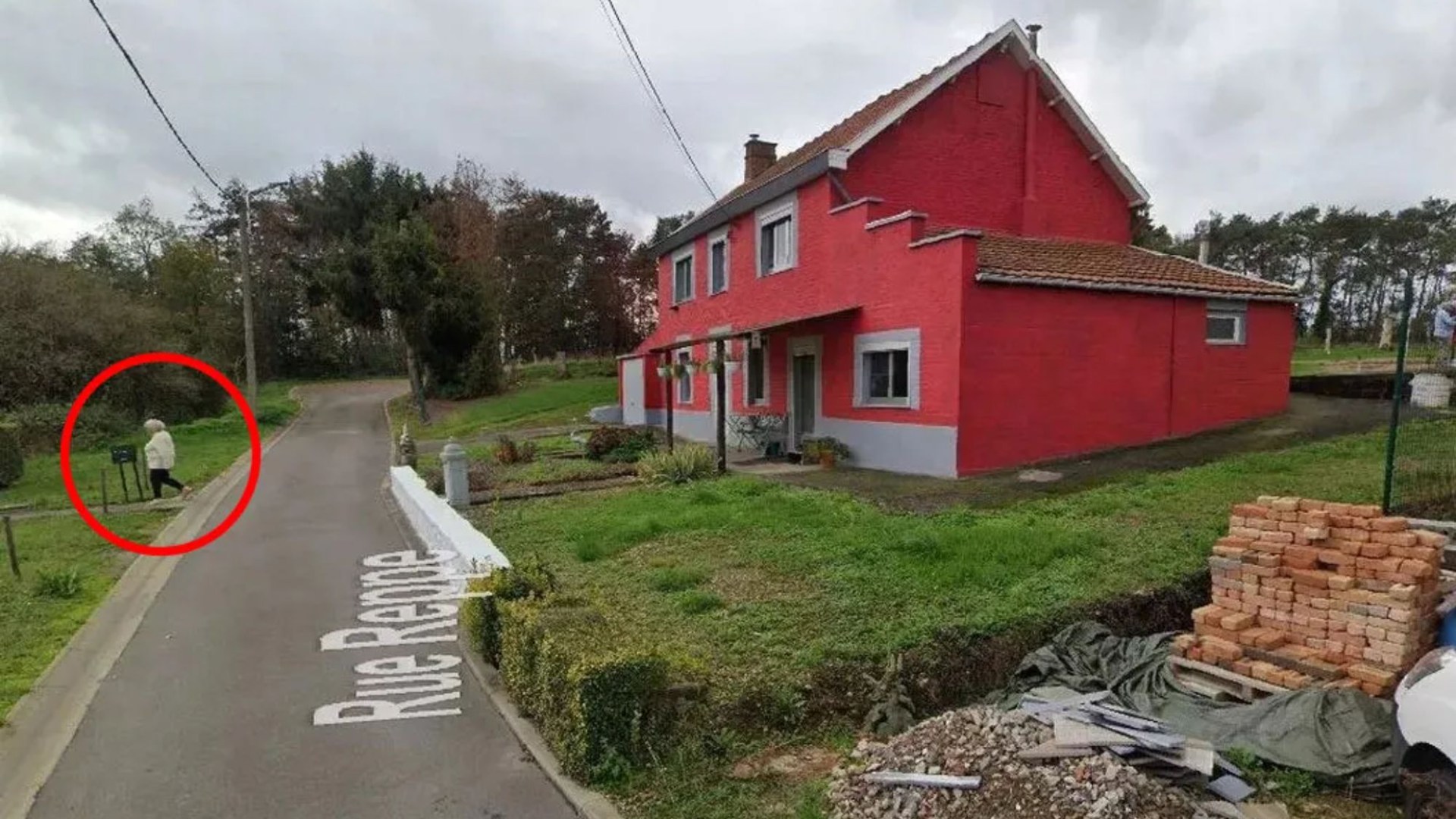
A seemingly unrelated event occurring at the same time Paulette vanished would eventually unlock the mystery. A Google Street View car happened to pass by the Taret residence precisely during the timeframe of Paulette’s disappearance, capturing a critical image. This image, undiscovered for two years, showed Paulette walking away from her house while Marcel was in the background tending to the laundry. While initially just another snapshot of everyday life, this particular frame held a tragic clue. It wasn’t until 2022, two years after the incident, that a neighbor noticed the Google Street View image and recognized the significance of Paulette’s presence. The image served as a crucial time stamp and provided a directional vector for the investigation, finally offering a potential path that Paulette might have taken.
Following the lead provided by the Google Street View image, investigators focused their search across the street from the Taret home. There, they discovered a steep hill leading down to a dense thicket of brambles. Tragically, within this overgrowth, they found Paulette’s remains. It is believed that she became trapped in the brambles shortly after wandering away from her home and subsequently perished. The discovery brought a somber resolution to the two-year-long search, finally providing closure for Marcel and bringing to light the tragic circumstances surrounding Paulette’s disappearance. The case underscores the unexpected ways technology can aid investigations, even years after an incident occurs.
This is not an isolated incident where Google Maps imagery has played a pivotal role in criminal investigations. In a separate, equally chilling case, a Google Street View image captured a disturbing scene that ultimately led to murder arrests. The image depicted a man apparently placing a large plastic bag, suspected to contain a body, into the trunk of a car. This image, combined with other evidence gathered through phone taps authorized by the court, became instrumental in solving the case of a missing Cuban man whose remains were found in a Spanish cemetery over a year after his disappearance. The man’s wife and her former lover were subsequently arrested on suspicion of murder. This case, much like Paulette’s, illustrates the unexpected yet powerful role seemingly mundane digital records can play in solving crimes.
The image, described as “decisive” by local media, provided a critical piece of visual evidence linking the suspects to the victim’s disappearance. Authorities confirmed that the Google Street View image was a key factor in their investigation, ultimately leading to the arrests. The gruesome find in the small village of Andaluz, located in the Soria province of northern Spain, sent shockwaves through the community. The case highlights the increasing importance of digital forensics in modern criminal investigations, demonstrating how seemingly innocuous online imagery can hold crucial clues to solving complex crimes.
These two cases, while distinct in their details, share a common thread: the unexpected role of Google Maps imagery in uncovering the truth. In Paulette’s case, it provided a crucial directional clue that finally led to the discovery of her remains after two years of uncertainty. In the Spanish case, the image offered damning visual evidence linking suspects to a murder. Both instances underscore the power of seemingly passive data collection in providing critical information that can be instrumental in solving crimes and providing closure to grieving families. The use of Google Maps in these investigations highlights the evolving landscape of criminal investigations and the increasing reliance on readily available digital information to solve complex cases.