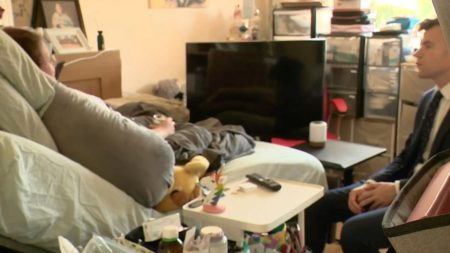



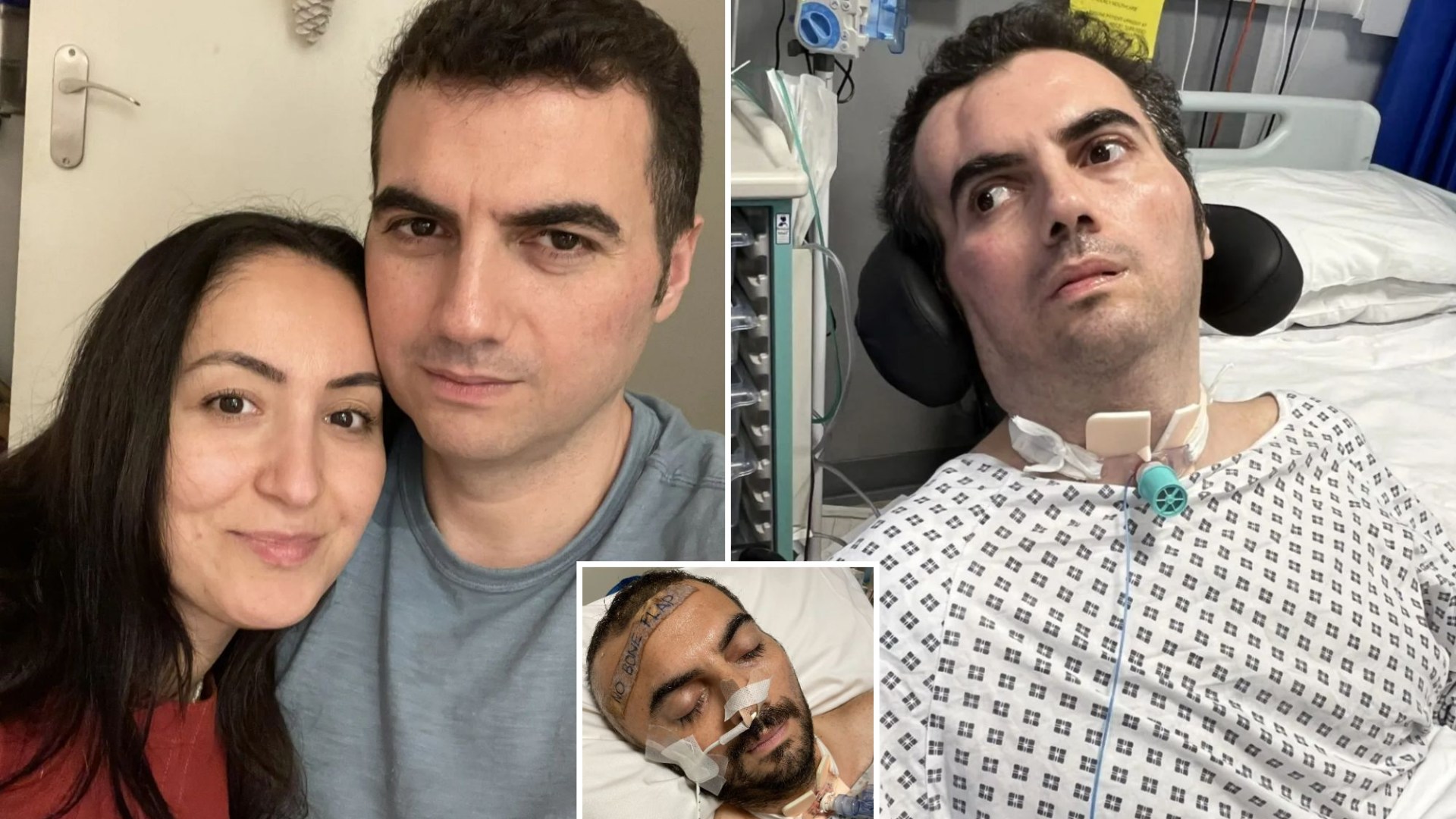
Kerem Akalin, a 47-year-old IT professional from Romford, UK, enjoyed a healthy and active lifestyle until a seemingly innocuous incident during a friendly football game with a colleague in May 2023 drastically altered his life. A football striking his head is believed to have triggered a brain aneurysm, leading to a series of critical medical events. Initially rushed to Queen’s Hospital in Romford, a CT scan revealed the aneurysm, and he subsequently underwent an emergency operation. Despite the procedure, Kerem’s condition deteriorated, and he was diagnosed with a subarachnoid hemorrhage, a severe condition involving bleeding within the brain that can cause widespread damage. This devastating diagnosis left Kerem unable to walk, talk, or eat independently, with only fleeting moments of consciousness where he communicates through blinks and hand squeezes.
His wife, Yasemin, has become his primary caregiver, giving up her job to dedicate herself to his recovery and the care of their two children. She describes the harrowing experience of witnessing her husband’s sudden decline, from a vibrant and healthy individual to someone who requires constant care. Yasemin recounts the initial incident, Kerem’s subsequent hospitalization, and the devastating moment during a family breakfast when he suddenly lost consciousness, marking the onset of the subarachnoid hemorrhage. She has also voiced concerns about aspects of Kerem’s care at Queen’s Hospital, including a retained surgical staple and issues related to a shunt placed to drain excess fluid from his brain.
Yasemin’s relentless pursuit of the best possible care for her husband has led her to seek alternative treatment options in Istanbul, Turkey. Believing that specialized medical interventions and a robotic rehabilitation program unavailable in the UK offer the greatest hope for Kerem’s recovery, she launched a GoFundMe campaign to cover the substantial costs associated with this endeavor. Her fundraising efforts have garnered significant support, demonstrating the community’s empathy for the family’s plight. Yasemin remains steadfast in her determination to explore every avenue for Kerem’s rehabilitation, driven by unwavering love and the hope of witnessing his recovery.
The sudden and dramatic shift in Kerem’s health underscores the unpredictable nature of brain aneurysms. Often asymptomatic until rupture, these weakened areas in blood vessel walls can have catastrophic consequences. In Kerem’s case, the impact of the football seemingly triggered the rupture, leading to the life-altering subarachnoid hemorrhage. While Yasemin expresses frustration with what she perceives as shortcomings in his care at Queen’s Hospital, the NHS Trust has acknowledged the family’s distress and expressed apologies.
The family’s story highlights the emotional and financial burdens placed on families facing such medical crises. Yasemin’s decision to pursue treatment in Istanbul reflects the lengths to which families will go to secure the best possible care for their loved ones, often involving significant financial sacrifices. The ongoing fundraising campaign represents a collective effort to support the Akalin family during this challenging time, enabling them to pursue potentially life-changing treatment options for Kerem.
The future remains uncertain for Kerem, but Yasemin’s unwavering commitment to his recovery provides a beacon of hope. While he currently remains in a largely unresponsive state, his occasional blinks, hand squeezes, and emotional responses offer glimmers of awareness, fueling Yasemin’s determination to continue fighting for his return to a fulfilling life. The family’s story serves as a poignant reminder of the fragility of life and the importance of cherishing every moment. It also underscores the power of love, perseverance, and community support in the face of adversity.