


Zelensky’s Plea for Diplomatic Intervention in Ukraine’s Territorial Dispute
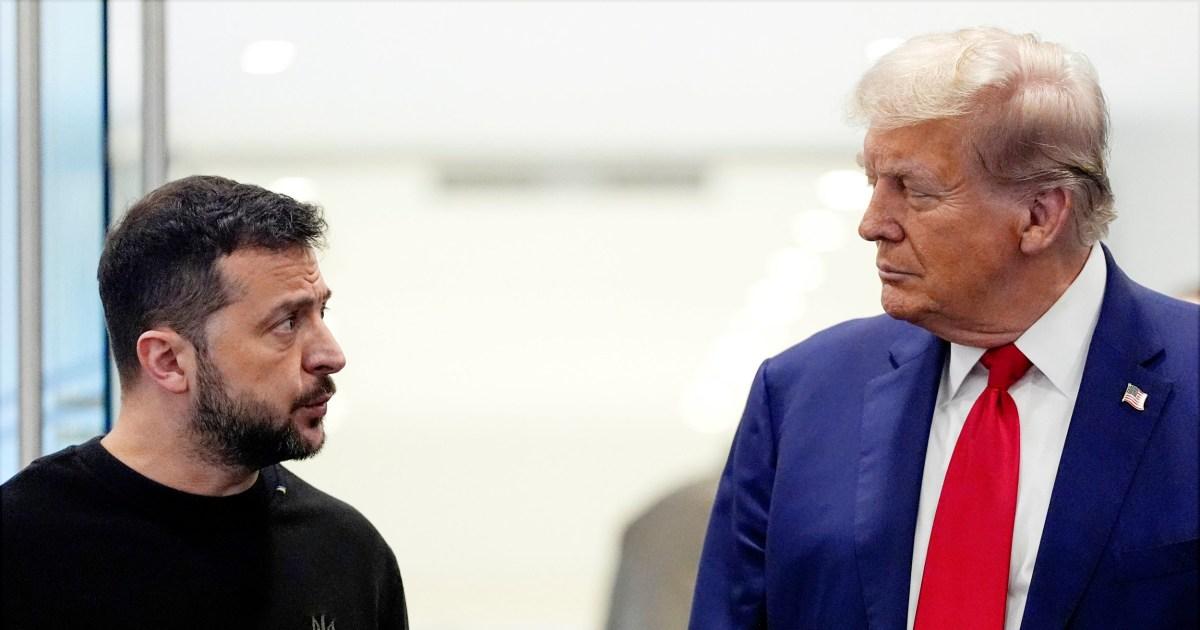
Ukrainian President Volodymyr Zelensky has candidly acknowledged the limitations of his country’s military capabilities in reclaiming territories seized by Russia. In an interview with Le Parisien, Zelensky conceded that Ukraine lacks the military strength to retake Crimea and the Donbas region, areas currently under Russian control. Despite Ukraine’s constitutional prohibition against relinquishing territory, Zelensky emphasized that diplomatic pressure from the international community is the sole viable avenue to compel Russia to negotiate a withdrawal. He underscored the importance of a well-defined action plan, a "peace plan," to be presented to Russia as a basis for negotiations. Crucially, Zelensky insisted that Ukraine holds the exclusive mandate in negotiating with Russia, as the aggrieved party in the conflict. This statement reflects Ukraine’s determination to retain control over its destiny and resist external pressure to accept unfavorable terms. Zelensky’s earlier suggestion of potentially foregoing territorial claims in exchange for NATO membership highlights the complex calculus facing Ukraine, balancing security guarantees against territorial integrity.
Ukraine’s Delicate Balancing Act: Territorial Integrity vs. Security Guarantees
The ongoing conflict has forced Ukraine into a difficult balancing act, weighing the imperative of reclaiming its occupied territories against the equally pressing need for long-term security assurances. Zelensky’s admission of Ukraine’s military constraints underscores the challenging reality facing the country. While Ukraine remains steadfast in its refusal to recognize Russian rule over its territories, the president’s acknowledgement of his country’s military limitations signals a pragmatic recognition of the current power dynamics. This acknowledgment lays bare the difficult choices confronting Ukraine. The suggestion of trading territorial concessions for NATO membership highlights the precarious position Ukraine finds itself in, forced to weigh the relative merits of territorial integrity against the promise of lasting security provided by alliance membership. This dilemma exposes the depth of the strategic challenge facing Ukraine.
The Elusive Path to Peace: Conflicting Demands and Proposals
As the conflict drags on, the path to a peaceful resolution remains elusive, hampered by conflicting demands and ambiguous proposals. Russia’s insistence on Ukraine’s recognition of its territorial claims, including Crimea and the Donbas region, presents a major obstacle to negotiations. Ukraine’s unwavering refusal to cede its sovereign territory creates an impasse, further complicating the search for common ground. The lack of a clear framework for negotiations exacerbates the challenge. While Zelensky has stressed the need for a comprehensive peace plan, the absence of specific details regarding such a plan leaves considerable ambiguity about the potential basis for negotiations. This lack of clarity underscores the difficulty in bridging the divide between the warring parties.
Trump’s Ambitious Peace Plan: A Glimmer of Hope or a Recipe for Further Conflict?
Incoming US President Donald Trump’s assertion of having a plan to swiftly end the Ukraine conflict has injected a new element of uncertainty into the already complex situation. The proposed plan, reportedly involving a combination of territorial concessions, security assurances, and sanctions relief, remains largely opaque, raising concerns about its feasibility and potential consequences. The idea of freezing the conflict along current lines raises questions about the long-term stability of such an arrangement. Moreover, the potential for territorial concessions to be perceived as rewarding Russia’s aggression could create a dangerous precedent. The notion of suspending Ukraine’s NATO application further complicates matters, potentially undermining Ukraine’s security aspirations. The absence of concrete details regarding Trump’s plan makes it difficult to assess its viability and potential implications.
Russia’s Uncompromising Stance: A Precondition for Peace or a Barrier to Negotiations?
Russia’s unwavering demand for Ukraine’s acceptance of its territorial claims, coupled with its rejection of a ceasefire, casts a shadow over prospects for a peaceful resolution. Moscow’s insistence on Ukraine’s surrender of Crimea and other occupied territories sets a high bar for negotiations. The additional demand for Ukraine’s withdrawal from Kherson and Zaporizhzhia, cities still under Kyiv’s control, further complicates the situation. Russia’s stated preference for peace "after our conditions are met and all our goals are achieved" suggests an uncompromising stance that leaves little room for compromise. This position raises questions about Russia’s willingness to engage in meaningful negotiations and its commitment to finding a mutually acceptable solution.
The Uncertain Road Ahead: Navigating the Complexities of the Ukraine Conflict
The path to resolving the Ukraine conflict remains shrouded in uncertainty. The conflicting demands of the warring parties, the absence of a clear framework for negotiations, and the ambiguity surrounding proposed peace plans contribute to a complex and challenging environment. Ukraine’s insistence on preserving its territorial integrity clashes with Russia’s determination to secure its territorial gains. The lack of a shared understanding of the core issues at stake hinders progress towards a negotiated settlement. The international community’s role in mediating the conflict and facilitating dialogue becomes increasingly critical. The need for a comprehensive and sustainable peace plan that addresses the legitimate concerns of both sides is paramount. The road ahead remains fraught with challenges, requiring diplomatic creativity and a commitment to finding common ground to achieve a lasting resolution to the conflict.