


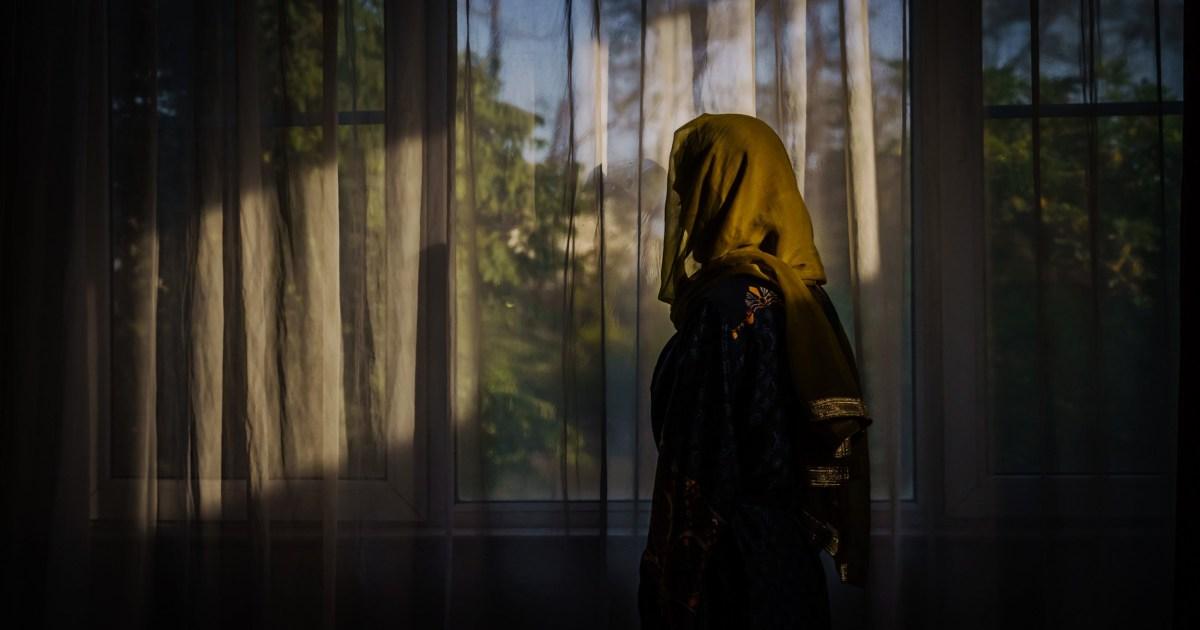
The Taliban’s recent decree regarding women’s visibility from neighboring homes marks another alarming step in their systematic campaign to erase women from public life in Afghanistan. This five-point edict, issued by the Supreme Leader Hibatullah Akhundzada, mandates that windows in adjacent buildings should not offer views into areas where women typically congregate, such as kitchens or water wells. Homeowners are obligated to construct walls or implement other measures to obstruct such views, framing the visibility of women as inherently harmful. This decree exemplifies the Taliban’s deeply ingrained misogyny and their relentless pursuit of control over women’s bodies and movements, further confining them to the domestic sphere and effectively rendering them invisible within society.
This latest decree is not an isolated incident but rather part of a larger, orchestrated effort by the Taliban to restrict women’s freedoms and participation in Afghan society. Since their return to power in 2021, the Taliban have issued over 100 edicts aimed at systematically dismantling women’s rights. These decrees range from banning women from universities and workplaces to halting their education beyond primary school. They have also been barred from public spaces like parks, restaurants, and beauty salons, effectively erasing them from the social fabric of the country. These restrictions, enforced by the state-sponsored “morality police,” represent a severe regression of women’s rights and reflect the Taliban’s rigid and discriminatory interpretation of Islamic law.
The cumulative effect of these decrees is the creation of a gender apartheid system, as rightfully condemned by the United Nations. Women in Afghanistan are increasingly isolated, their basic human rights denied, and their potential stifled. They are subjected to constant surveillance and control, living in fear of retribution for even the smallest perceived transgressions. This systematic oppression has dire consequences for Afghan society as a whole, depriving the country of the contributions of half its population and perpetuating a cycle of inequality and underdevelopment. The international community must not stand idly by as the Taliban continues to erode the fundamental rights of Afghan women and girls.
The decree concerning windows provides a chilling illustration of the Taliban’s obsession with controlling women’s visibility and movement. The mandate to obstruct views into private homes reflects a distorted perception of women as inherently tempting and requiring seclusion. This not only restricts women’s freedom but also reinforces harmful stereotypes and perpetuates a culture of fear and mistrust. The emphasis on preventing “harm” by obscuring women further perpetuates the notion that women are the source of potential problems, rather than acknowledging the oppressive nature of the Taliban’s restrictions.
The enforcement of these edicts by the morality police further exacerbates the climate of fear and repression. These enforcers, empowered to interpret and implement the Taliban’s decrees, operate with impunity, often resorting to violence and intimidation. This creates an environment where women are constantly monitored and punished for any perceived violation of the restrictive rules. The presence of the morality police serves as a constant reminder of the Taliban’s pervasive control over women’s lives and reinforces the message that they are second-class citizens subject to arbitrary restrictions.
The international community has a responsibility to condemn these egregious violations of human rights and to exert pressure on the Taliban to reverse their oppressive policies. The ongoing humanitarian crisis in Afghanistan, compounded by the Taliban’s discriminatory practices, necessitates a concerted international effort to protect the rights and well-being of Afghan women and girls. This includes providing support to women’s organizations on the ground, advocating for the inclusion of women in any peace negotiations, and holding the Taliban accountable for their actions. Failure to act decisively will only embolden the Taliban and further entrench their oppressive regime, condemning generations of Afghan women to a life of subjugation and suffering.