

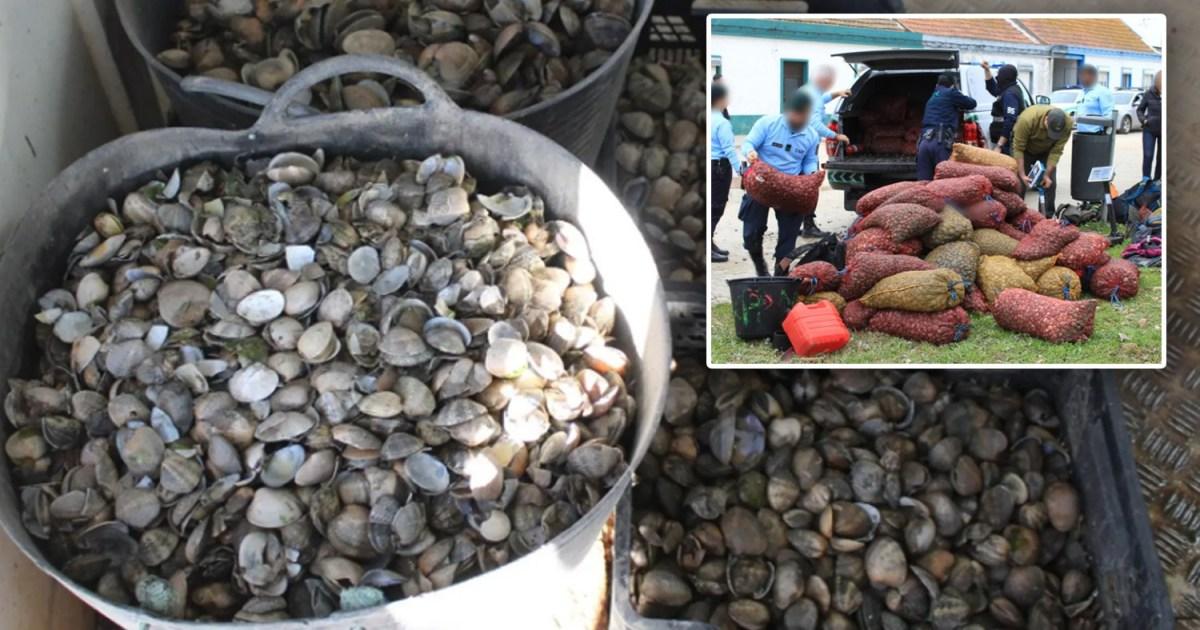
Europol, in a coordinated operation with authorities in Portugal, Spain, and France, has successfully disrupted a major organized crime syndicate involved in the illegal harvesting and distribution of contaminated seafood. This operation resulted in the seizure of over 30 tonnes of contaminated molluscs, primarily Japanese clams, and six tonnes of glass eels, with a combined market value of up to €10 million (£8.2 million). The seized seafood, intended for the Christmas market, posed a significant threat to public health, as consumption of contaminated molluscs can lead to serious illnesses like hepatitis. This operation averted a potential public health crisis, protecting millions of consumers from the risk of food poisoning during the festive season.
The criminal network’s operation involved the illegal harvesting of seafood, specifically Japanese clams, a popular Christmas delicacy in Spain and Portugal, from contaminated waters in Portugal. The group exploited vulnerable Asian workers, paying them meagre wages for their labor while reaping substantial profits from the sale of the illicitly obtained seafood. The clams were then transported to Spain, where fraudulent documentation was created to falsely certify them as safe for human consumption. This deceptive practice allowed the contaminated seafood to enter the market, potentially endangering unsuspecting consumers.
This case marks a significant milestone in the fight against organized crime, as it represents the first documented instance within the European Union where environmental crime and human trafficking have been directly linked. The stark disparity between the market price of the molluscs and the paltry wages paid to the exploited workers provided compelling evidence of the connection between these two criminal activities. This discovery underscores the complex and interconnected nature of organized crime, highlighting the need for coordinated multi-agency efforts to combat such sophisticated criminal enterprises.
Europol played a pivotal role in this operation, providing crucial expertise and support to the participating Member States. Experts from Europol’s Environmental Crime Unit identified the emerging criminal trend and facilitated operational meetings to coordinate the action days. Furthermore, Europol provided financial assistance to national authorities and deployed experts on the ground in Portugal, Spain, and France to support the operation. This collaborative approach proved instrumental in the successful disruption of the criminal network and the seizure of the contaminated seafood.
The operation culminated in the arrest of 62 members of the criminal group, including six individuals identified as “High-Value Targets.” The identification and apprehension of these key figures represent a significant blow to the organization, disrupting its leadership and operational capacity. Europol’s on-the-ground operational analysis played a crucial role in uncovering these High-Value Targets, leading to further investigations that are expected to unravel additional layers of the criminal network and potentially expose other illicit activities.
This successful operation underscores the importance of international cooperation and information sharing in combating transnational organized crime. The coordinated efforts of Europol and the national authorities of Portugal, Spain, and France demonstrated the effectiveness of a collaborative approach in tackling complex criminal networks that exploit vulnerable populations and endanger public health. The seizure of the contaminated seafood and the arrest of key members of the criminal organization represent a significant victory in the ongoing fight against organized crime and its detrimental impact on society and the environment. This case serves as a model for future operations targeting similar criminal activities and reinforces the commitment of law enforcement agencies to protect consumers and the environment from the harmful effects of organized crime.