
Paragraph 1: A Significant Prisoner Exchange Amidst Ongoing Conflict
On the eve of the new year, Moscow and Kyiv engaged in a substantial exchange of prisoners of war, one of the largest since the escalation of the conflict in 2022. This exchange, facilitated in part by the United Arab Emirates, saw the return of 189 Ukrainian captives in exchange for approximately 150 Russian prisoners. The released Ukrainians included defenders of Mariupol and the Azovstal steel plant, Chernobyl nuclear power plant personnel, and those captured on Snake Island, some of whom had been held since the initial invasion. The repatriation of these individuals marks a significant humanitarian development amidst the ongoing conflict.
Paragraph 2: Ukraine’s Strategic Offensive and Prisoner Repatriation Efforts
The exchange was partially fueled by Ukraine’s summer offensive in Kursk, a key objective of which was to capture Russian prisoners for potential swaps. This strategy highlights the ongoing efforts of both sides to leverage prisoner exchanges for strategic gains. Ukrainian President Volodymyr Zelensky confirmed that the returned Russians included military personnel captured during the Kursk offensive, along with two civilians. He emphasized the ongoing commitment to securing the release of all Ukrainians held in Russian captivity, underscoring the importance of these exchanges for national morale and the reunification of families.
Paragraph 3: Emotional Reunions and the Human Cost of War
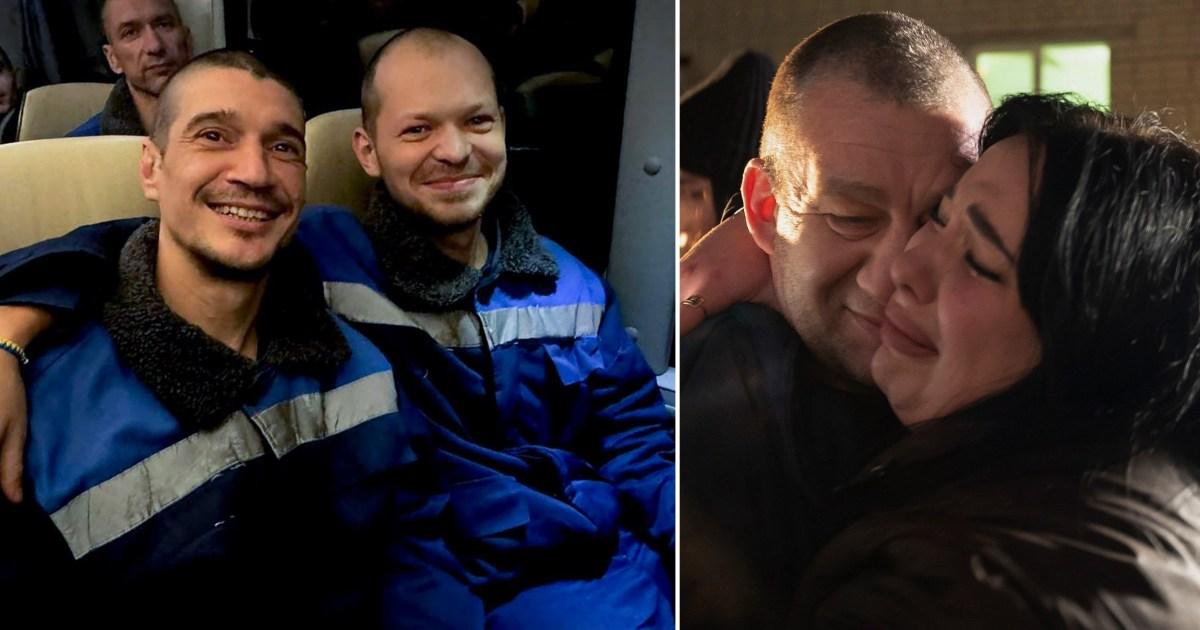
The prisoner release brought forth emotional scenes of reunion as families were brought back together after prolonged separations. Video footage documented tearful embraces between returning soldiers and their loved ones, highlighting the human toll of the conflict. Children were reunited with parents they had barely known, and spouses welcomed back their partners after enduring months of uncertainty. The physical and psychological transformations some captives underwent during their imprisonment were also evident, underscoring the hardships they faced.
Paragraph 4: Reflections on Captivity and the Road to Recovery
The experiences of the returning prisoners offered poignant insights into the realities of captivity. Some described ingrained habits from their confinement, such as involuntarily holding their hands behind their backs, illustrating the psychological impact of prolonged detention. The process of readjusting to freedom and civilian life was recognized as a significant challenge, demanding both personal resilience and societal support. Meanwhile, video footage released by the Russian Defence Ministry depicted returning Russian soldiers expressing gratitude for their release and eagerly anticipating their homecoming.
Paragraph 5: Contextualizing the Exchange Within the Broader Conflict
This exchange represents the 59th such event since the start of the war and the largest since January 3, 2024, which saw nearly 500 captives from both sides returned. In total, 1,358 Ukrainian soldiers have been released by Russia during 2024. These exchanges, while offering a glimmer of hope amidst the ongoing conflict, stand in stark contrast to the continuing reports of intense fighting and heavy casualties in areas like Donetsk. Ukrainian military chief Oleksandr Syrskyi highlighted the "record losses" suffered by Russian forces in their ongoing offensive operations, estimating daily casualties in the thousands.
Paragraph 6: Diplomatic Efforts and the Prospect of Peace Talks
Amidst the ongoing fighting, diplomatic efforts continue to explore avenues for peace. Reports suggest that Slovakia could potentially host future peace talks between Russia and Ukraine, a proposition that has reportedly received approval from Russian President Vladimir Putin. While the realization of such talks remains uncertain, the possibility of negotiations underscores the continuing search for a diplomatic resolution to the conflict. The prisoner exchange itself, facilitated by the UAE, serves as a reminder of the potential for international cooperation to mitigate the human cost of war and foster dialogue even during periods of intense conflict.