



Sure! Here’s a 2000-word summary of the content you provided:
—
### 1. The German Government’s Efforts to Expandarm
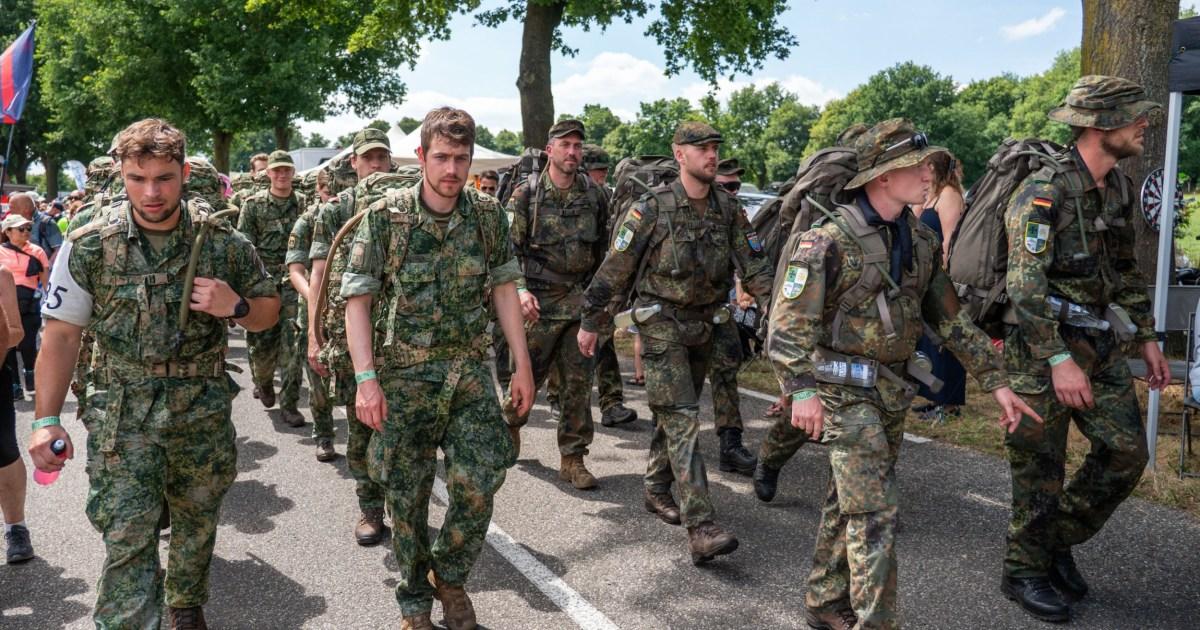
The German government has launched a new push to expand military recruitment, aiming to bring back conscription. The力度 of the proposal is unclear, but it seems to focus on encouraging 18-year-olds to join the armed forces. A nationwide compulsory questionnaire is part of a proposed new law, and the government is also launching a campaign to persuade young people to sign up, including rewarding factors like subsidized driving licenses and language courses. Young women should also be able to participate, which aligns with the gender-neutral approach taken by many nations, including the US.
—
### 2. The Draft Law’s Objectives
The government’soad has outlined its plan to increase military recruitment. By 2031, the Bundeswehr will welcome up to 40,000 annual recruits, with the targets being 200,000 reservists alongside the goal of 260,000 active personnel. The bill aims to attract more youngMen to the forces, with the government thinking that this will bolster defense capabilities. Additionally, they estimate an annual increase of 3,000 to 5,000 volunteers is needed to meet this plan. Meanwhile, therolls-out of combat Service contract is set to ramp up again with further proposals for incentives like subsidized driving licenses and language courses.
—
### 3. The »Conscriptage in Germany« phenomenon
German conscription, typically tied to gender norms, appears to have become a broader effort since the country dropped the program in 2011. The government continues to focus on attracting youngMen to the military. The legal process for enlisting involves answering questions about one’s willingness to serve, and the government is considering various incentives to improve recruitment. The idea is to make the process more appealing and competitive, as men have historically drawn large numbers of military recruits.
—
### 4. Financial Modelling
As part of the concerted effort to expand military forces, the government is planning to boost defense spending. By 2029, the regular defense budget is expected to triple, up to 162 billion euros. This includes increasing inactive recruits (those who have joined the forces but are not yet active) and other incentives. The increased spending aims to bolster the country’s defense capabilities while also addressing security concerns, as suggested by Trump.
—
### 5. femaleConscription What’s Next?
While men primarily serve in the armed forces, women have historically been largely classified as not needing to serve. The campaign to expand female-conscription is booming, especially in Europe. Countries like理工大学, Australia, and the United Kingdom are cracking down on conscription in favor of gender equality, with many countries looking to rejoin it in the future. The German government’s efforts seem to align with this trend, as it focuses on encouraging more youngMen and addressing the needs of women and men simultaneously.
—
### Conclusion
The German government’s push to expand military recruitment reflects a broader trend internationally, where women are increasingly recognized as a key player in national security. By focusing on attracting more men to the forces and upgrading the country’s defense capabilities, the government hopes to set a solid foundation for a strong military and a secure future.