


A chilling series of events unfolded in and around Dunkirk, France, on Saturday, leaving five men dead and a community reeling from shock and grief. A 22-year-old French national, identified as Paul D., and formerly employed as a security guard, embarked on a two-hour killing spree, targeting individuals seemingly unconnected, save for the shooter’s purported resentment towards migrants. The rampage began at the farmhouse of Paul Dekeister, a 29-year-old transport company chief, whom Paul D. had previously worked for. Dekeister was tragically shot and killed in front of his horrified family, marking the beginning of a chain of violence that would claim four more lives. The motive for Dekeister’s murder appears to stem from a prior dispute between him and the suspect.
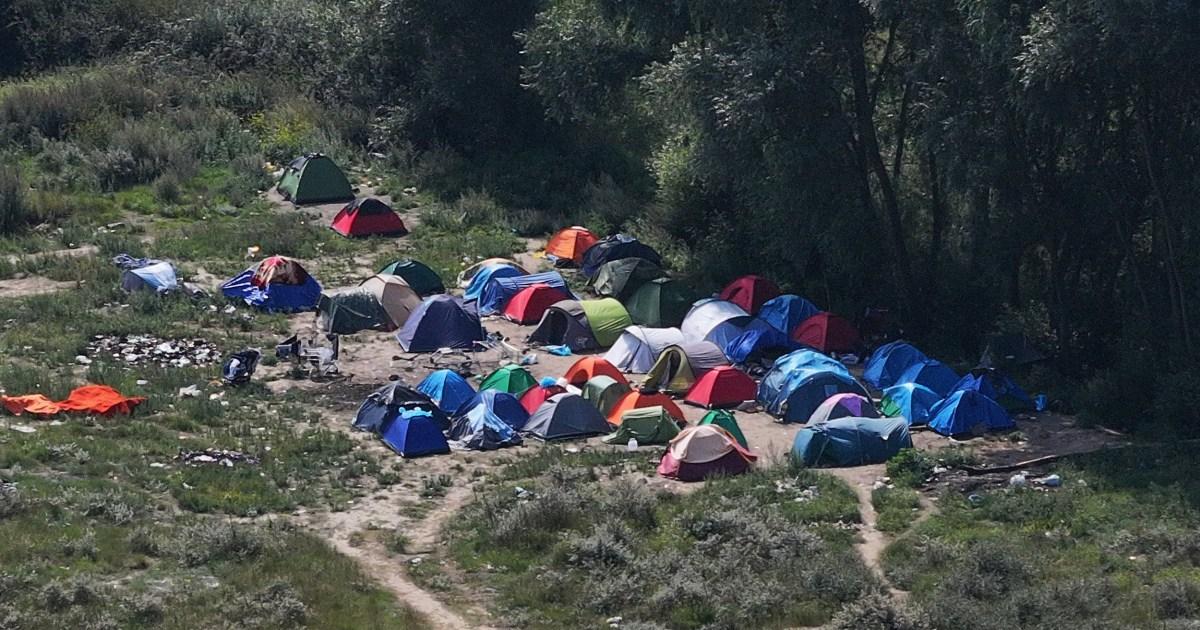
Following the initial attack, Paul D. drove to Loon-Plage, an industrial zone adjacent to the port of Dunkirk and near a migrant camp. Two security guards, Marc, a 33-year-old father of two, and Aurélien, 37, were patrolling the area when they became the next victims of Paul D.’s lethal spree. They were shot dead, their murders occurring just moments before the assailant turned his attention towards the migrant community. The proximity of the security guards’ murders to the migrant camp, coupled with the suspect’s subsequent actions, strongly suggests a premeditated plan fueled by animosity towards migrants.
The final victims were two migrants, identified as Hamid and Hadi. They had recently returned to France after an unsuccessful attempt to cross the English Channel and reach Britain. According to a survivor who witnessed the attack, the two men were part of a larger group when Paul D. opened fire, showering them with approximately 15 bullets. The targeted nature of the attack and the precise headshots inflicted on all five victims paint a picture of a calculated assault carried out by someone with experience handling firearms.
All five murders were executed within a remarkably short timeframe, emphasizing the swift and brutal nature of the attack. Paul D. ultimately surrendered to authorities in Ghyvelde, confessing to the five killings. Upon his arrest, his car was found loaded with firearms, including a legally owned Smith and Wesson 44 Remington rifle. This chilling discovery solidified the image of a man prepared for a violent act, and raises questions about how he acquired the additional weaponry.
The incident sent shockwaves through the communities of Dunkirk, Loon-Plage, and Wormhout. Local authorities, including the mayors of Loon-Plage and Wormhout, expressed their disbelief and sorrow at the senseless violence that had unfolded. The speed and efficiency with which the murders were carried out initially sparked fears that Paul D. might have been working with accomplices, leading to a heavy police presence and roadblocks in the surrounding areas. However, investigations suggest he acted alone.
The incident highlights the precarious situation faced by migrants in the Dunkirk area, many of whom are desperately seeking passage to the UK. The fact that Paul D. reportedly harbored a grudge against migrants adds a disturbing dimension to the tragedy, suggesting a possible hate crime element to the killings. While the exact nature of his animosity remains unclear, it underscores the vulnerability of marginalized communities and the dangers posed by individuals who harbor extremist views. The investigation continues as authorities attempt to piece together the events leading up to the rampage and understand the full extent of Paul D.’s motivations.