


The Discovery of a Hiccuping Star: Unveiling the Mysteries of Stellar Evolution
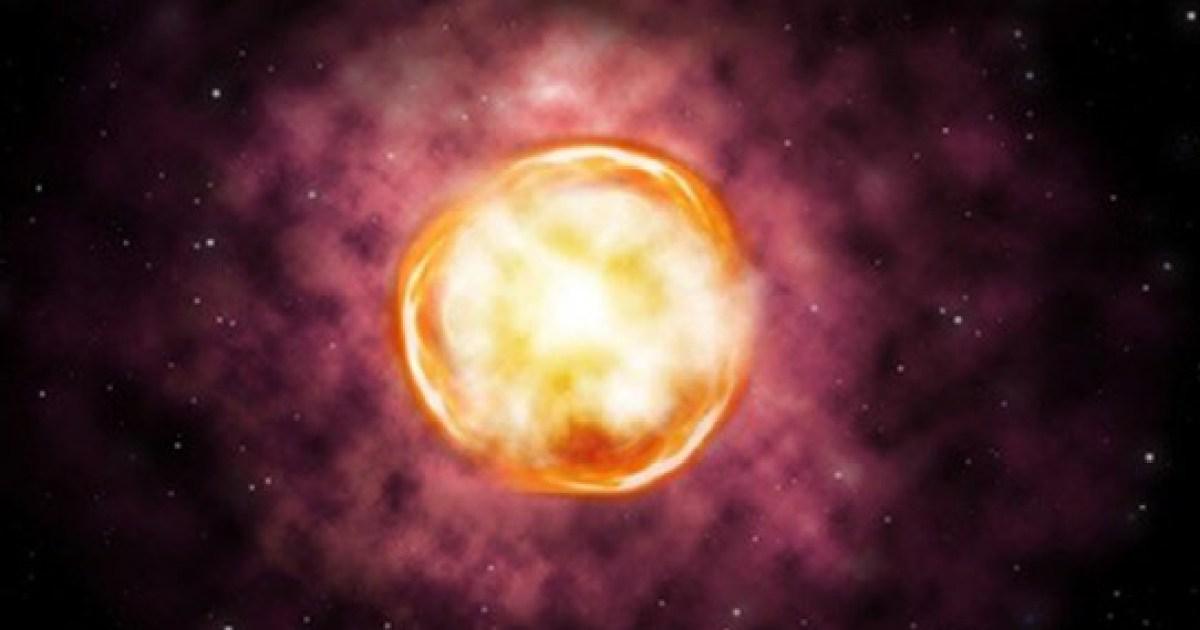
In a groundbreaking discovery, a team of international astronomers has witnessed a rare celestial event: a giant star "hiccuping" in its final stages before exploding as a supernova. This phenomenon, known as Pulsational Pair Instability (PPI), has been theorized for years but never directly observed until now. The discovery provides valuable insights into the behavior of massive stars and their profound influence on the universe’s evolution.
PPI occurs in stars significantly larger than our sun, typically between 60 and 150 times its mass. As these colossal stars approach the end of their lives, their molten cores undergo rapid expansion and contraction, creating a "hiccuping" effect. This process ejects shells of material from the star, gradually stripping down its core. The collisions of these ejected shells generate powerful bursts of light, revealing the star’s internal turmoil.
The groundbreaking observation of PPI was made possible by the detection of supernova SN2020acct in a nearby galaxy. Initially, the supernova exhibited a rapid decline in brightness, a typical characteristic of such explosions. However, several months later, a resurgence of light was detected from the same region. This unexpected reappearance, a telltale sign of PPI, piqued the researchers’ interest and prompted further investigation.
By utilizing telescopes located across the globe, including those in Hawaii, Chile, South Africa, and the US, the astronomers meticulously tracked the supernova’s activity. Their observations confirmed the initial detection of slow-moving shell collisions near the star, providing strong evidence for PPI. The subsequent reappearance of the supernova with an accelerated expansion rate indicated the final explosion of its core, marking the end of the star’s life cycle.
This remarkable discovery of a "hiccuping" star has profound implications for our understanding of stellar evolution. It confirms the existence of PPI as a real phenomenon, offering a crucial piece of the puzzle in unraveling the complex processes governing the lives of massive stars. These massive stars play a critical role in shaping the universe, synthesizing heavy elements that become the building blocks for planets and life itself.
The study of PPI also holds the potential to unlock further secrets of supernovae, the dramatic explosions that mark the deaths of massive stars. Supernovae are responsible for dispersing heavy elements throughout the cosmos, enriching the interstellar medium from which new stars and planetary systems are born. By gaining a deeper understanding of PPI, scientists can refine their models of supernova explosions and better comprehend the intricate mechanisms that drive these cosmic events.
Delving Deeper into the Significance of PPI
The confirmation of PPI provides crucial insights into the final stages of a massive star’s life, offering a glimpse into the dramatic events that precede a supernova explosion. This pulsating phase, characterized by the rhythmic expansion and contraction of the star’s core, serves as a precursor to the ultimate cataclysm.
The ejection of shells during PPI is a critical aspect of this pre-supernova phase. These shells, composed of stellar material, are propelled outwards at varying speeds, creating a complex interplay of interactions. The collisions between these shells generate intense bursts of light, providing observable evidence of the star’s internal struggle.
The discovery of SN2020acct and its subsequent reappearance offered a unique opportunity to confirm the existence of PPI. The initial detection of slow-moving shell collisions, followed by the accelerated expansion of the supernova, provided compelling evidence for this phenomenon. The faintness of the shell collisions had previously hindered their detection, making this observation a significant breakthrough.
The confirmation of PPI enhances our understanding of the diverse array of supernovae. Not all massive stars undergo this pulsating phase before exploding. The type of supernova depends on the initial mass of the star and other factors. Understanding PPI helps categorize and predict the behavior of certain types of supernovae, adding another layer to our comprehension of these powerful cosmic explosions.
The Broader Implications for Astrophysics
Beyond the specific case of SN2020acct, the discovery of PPI carries broader implications for the field of astrophysics. It expands our knowledge of stellar evolution, providing a more complete picture of the processes that govern the lives and deaths of massive stars. These stars play a pivotal role in the universe’s evolution, shaping the composition of galaxies and contributing to the creation of heavy elements.
The study of PPI also has implications for our understanding of supernovae, the explosive endpoints of massive stars. By refining our models of supernova explosions, we can gain deeper insights into the mechanisms that drive these powerful events. This knowledge is crucial for interpreting the light emitted by distant supernovae, which are used as "standard candles" to measure cosmic distances and probe the expansion of the universe.
The discovery of PPI also underscores the importance of continuous observation and international collaboration in astronomy. The coordinated efforts of astronomers using telescopes around the world were instrumental in capturing the rare and fleeting signals of this "hiccuping" star. This collaborative approach is essential for pushing the boundaries of our knowledge about the universe.
In conclusion, the discovery of a "hiccuping" star and the confirmation of PPI mark a significant milestone in astronomy. This rare phenomenon provides a unique window into the final stages of massive stars’ lives and adds a new dimension to our understanding of stellar evolution. The observations of SN2020acct serve as a testament to the power of international collaboration and the importance of continuous exploration in unraveling the mysteries of the cosmos. The universe continues to surprise us with its complexity and beauty, reminding us that there is still much to learn about the vast expanse beyond our planet.