

The Genesis of Putin’s Power: A Look Back at His First Address
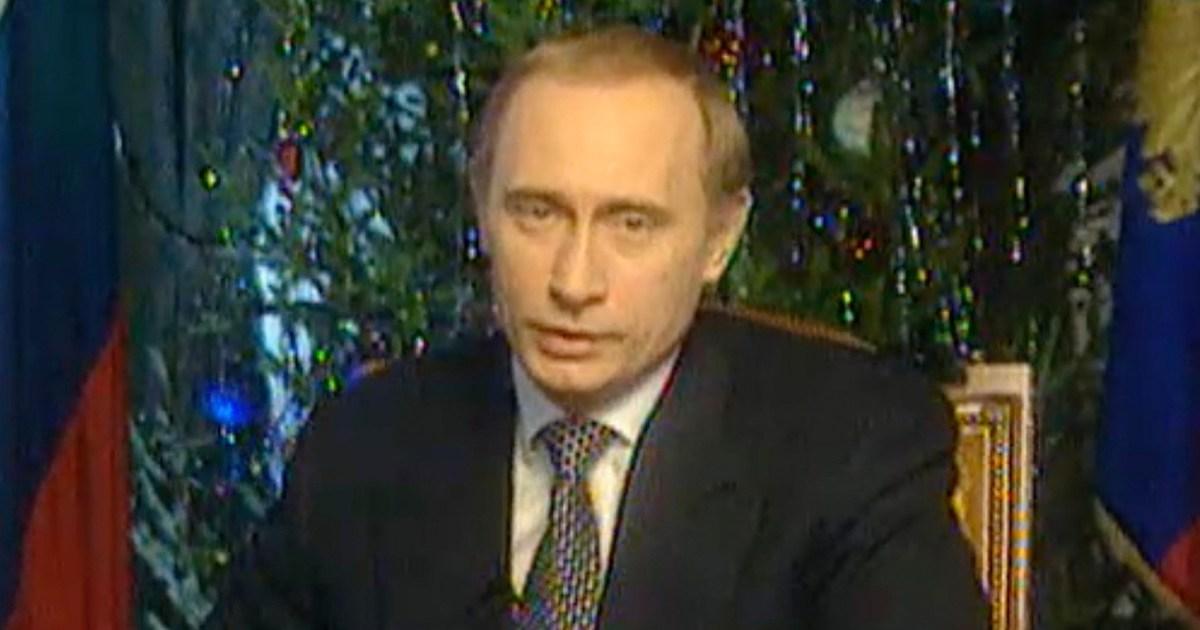
On the cusp of the new millennium, December 31, 1999, Russia witnessed a pivotal moment in its history. Boris Yeltsin, the first president of the post-Soviet era, abruptly resigned, leaving the reins of power to his then-prime minister, Vladimir Putin. In a hastily arranged televised address, a relatively unknown Putin, a former KGB officer, introduced himself to the Russian people and the world. This address, unearthed recently, provides a stark contrast to the current political landscape of Russia, highlighting the dramatic shift in Putin’s rhetoric and governance over the past two and a half decades. At the time, Putin presented himself as a champion of democratic values, pledging to uphold freedom of speech, freedom of conscience, freedom of the media, and property rights. He assured the nation that there would be no power vacuum and that the transition would be smooth, emphasizing adherence to the Russian constitution. This commitment to democratic ideals stood in stark contrast to the subsequent trajectory of his presidency, marked by increasing authoritarianism and suppression of dissent.
A Promise of Freedom and Stability: Putin’s Initial Pledge to Russia
Putin’s 1999 New Year’s Eve address was meticulously crafted to project an image of stability and continuity. He acknowledged the unexpected nature of his ascension to power and sought to reassure a nation grappling with economic hardship and political uncertainty. He praised Yeltsin’s legacy, crediting him with guiding Russia towards democracy and reforms, and wished him health and happiness. This conciliatory tone, coupled with his emphasis on respecting the constitution and upholding fundamental freedoms, was strategically deployed to gain public trust and consolidate his position. He emphasized the continued operation of state institutions, including the armed forces and law enforcement agencies, underscoring the message of stability and order. Notably, he warned against any attempts to violate Russian laws and the constitution, promising resolute suppression of such actions. This seemingly firm stance on legality, juxtaposed with his later disregard for democratic norms, reveals the deceptive nature of his initial pronouncements.
The Unraveling of Democratic Ideals: From Promises to Repression
The contrast between Putin’s inaugural address and the current reality in Russia is striking. The freedoms he pledged to protect have been systematically eroded under his rule. Independent media outlets have been silenced, political opposition has been crushed, and dissent is met with harsh repression. Prominent critics, like Boris Nemtsov and Alexei Navalny, have been either assassinated or imprisoned. The very principles he vowed to uphold – freedom of speech, freedom of conscience, freedom of the media, and property rights – have been undermined, replaced by a climate of fear and intimidation. The promise of a stable, democratic Russia, offered on that New Year’s Eve, has given way to an increasingly autocratic regime, where power is centralized and dissent is quashed.
The Consolidation of Power: Putin’s Long Reign and the Erosion of Democracy
Putin’s tenure as president, spanning all but four years since 2000 (during which he served as prime minister), has witnessed a steady erosion of democratic institutions. Elections have become predictable exercises in maintaining his grip on power, with opposition candidates facing intimidation, legal challenges, and media blackouts. The independent judiciary has been weakened, allowing for politically motivated prosecutions and the silencing of dissenting voices. The once vibrant civil society has been stifled, with non-governmental organizations facing increasing restrictions and surveillance. The concentration of power in the Kremlin, coupled with the weakening of checks and balances, has paved the way for an authoritarian system where dissent is stifled and the rule of law is selectively applied.
The Ukraine Conflict and Its Impact on Putin’s Image
The 2022 invasion of Ukraine has further solidified Putin’s image as a strongman leader willing to use military force to achieve his geopolitical objectives. The conflict has resulted in a devastating loss of life and widespread destruction, exacerbating tensions between Russia and the West. International condemnation and sanctions have further isolated Russia, pushing it closer to China and other authoritarian regimes. The war has also served as a pretext for further crackdowns on dissent within Russia, with anti-war protests met with swift and brutal repression. The conflict has dramatically reshaped the geopolitical landscape and underscored the far-reaching consequences of Putin’s consolidation of power.
From Democratic Facade to Authoritarian Reality: The Transformation of Putin’s Russia
The unearthed footage of Putin’s first address serves as a poignant reminder of the deceptive nature of his early pronouncements. His initial promises of freedom and democracy have been replaced by a reality characterized by repression, censorship, and the concentration of power. The trajectory of Putin’s rule underscores the fragility of democratic institutions and the dangers of unchecked executive power. The contrast between his 1999 address and the current state of Russia serves as a stark warning against the seductive allure of authoritarianism and the importance of vigilance in protecting democratic values. The footage offers a glimpse into a pivotal moment in Russian history, a moment when the seeds of the current political landscape were sown, masked by promises of a different future.