



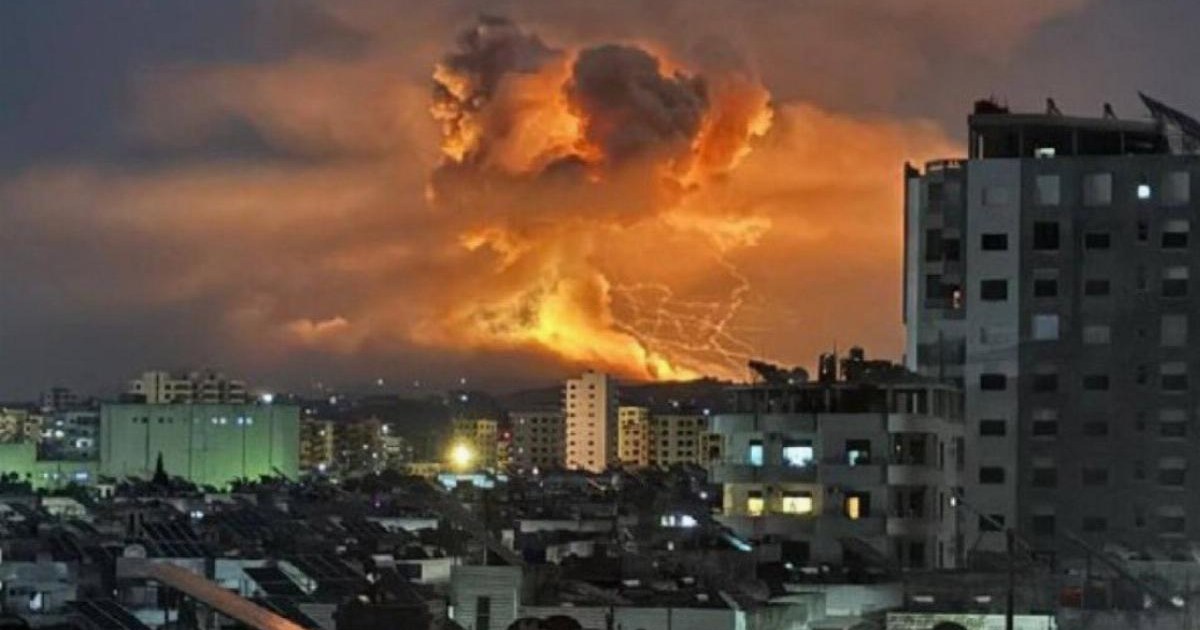
Israel recently launched a significant air strike against targets in Syria’s coastal Tartus region, marking the most intense attack in the area since Israel began operations there over a decade ago. The strike generated a massive explosion, visible from a considerable distance and registering a 3.0 magnitude on seismic sensors. The blast’s intensity was so profound that it was detected by a magnetometer station over 500 miles away in western Turkey. The targeted area housed one of Russia’s two military bases in Syria, serving as an ammunition depot and naval base. The presence of these munitions likely contributed to the scale of the explosion and subsequent secondary blasts. The Syrian Observatory for Human Rights reported that the Israeli warplanes targeted various sites, including air defense units and surface-to-surface missile depots.
This assertive action by Israel follows the recent downfall of Syrian dictator Bashar al-Assad, who enjoyed Russia’s backing. While Israel has not officially acknowledged the strike, Prime Minister Benjamin Netanyahu previously authorized the bombing of strategic Syrian military sites to prevent them from falling into the hands of jihadist groups. Former head of Israel’s National Security Council, Giora Eiland, emphasized Israel’s strategic priority of ensuring that Syria’s future leadership lacks the capability to threaten Israel. Given the absence of a substantial opposing military force, Eiland suggested that dismantling Syria’s strategic assets presents a relatively straightforward mission for Israel. The targeted military site had served as a crucial hub for arms and supplies during Russia’s intervention in the Syrian civil war starting in 2015. In 2017, the facility underwent expansion under Vladimir Putin, following Assad’s offer of a 49-year lease to Russia in exchange for continued support. However, experts believe the Russian presence at the base decreased significantly after Putin’s invasion of Ukraine.
The aftermath of Assad’s fall has prompted Russia to evacuate some diplomatic personnel from Syria. In addition to the air strike, Israel has seized the Golan Heights buffer zone on the Israeli-Syrian border, a move drawing international criticism. Critics accuse Israel of violating the 1974 ceasefire and potentially exploiting Syria’s instability for territorial gain. Netanyahu, however, maintains that Israel will prevent any hostile force from establishing a presence on its borders. The collapse of Assad’s regime came after an 11-day offensive by a rebel coalition, spearheaded by the Islamist group Hayat Tahrir al-Sham (HTS). Assad, along with his family, reportedly fled to Russia.
Concurrent with the Syrian operation, Israel continues its military engagement in other regions. Despite a ceasefire agreement, Israel continues to target Lebanon. Furthermore, the 14-month bombardment of Gaza shows no sign of abating. A recent Israeli air strike on a school sheltering displaced people in Beit Hanoun, northern Gaza, resulted in the tragic deaths of at least 15 people, including children. Further casualties were reported in Gaza City, where three Israeli air strikes targeting houses sheltering displaced people killed at least 17, including women and children. Disturbing accounts describe the horrific aftermath, with survivors recounting finding their families amidst the rubble, victims of the devastating strikes.
Israel’s justification for these attacks focuses on targeting “terrorist cells” and “meeting points.” Another air strike in central Gaza claimed the life of Palestinian journalist Ahmed al-Lawh, who worked for Al Jazeera. The mounting death toll in Gaza, officially at 45,000, likely underrepresents the true extent of the casualties. This escalating conflict continues to generate international concern and condemnation as Israel’s actions in the region become increasingly assertive and consequential.
The volatile situation in the Middle East underscores the complex web of geopolitical interests and long-standing conflicts. Israel’s strategic objectives, coupled with the instability caused by the fall of the Assad regime, have created a highly charged environment. The international community remains deeply concerned about the ongoing violence and its humanitarian consequences, particularly in Gaza. The situation demands a concerted effort towards de-escalation and a renewed commitment to finding peaceful resolutions to the long-standing disputes that fuel this ongoing crisis. The scale and intensity of the recent attacks highlight the urgency of addressing the root causes of the conflict and preventing further loss of life.