


Paragraph 1: The Enigmatic Artifacts of Bahra 1
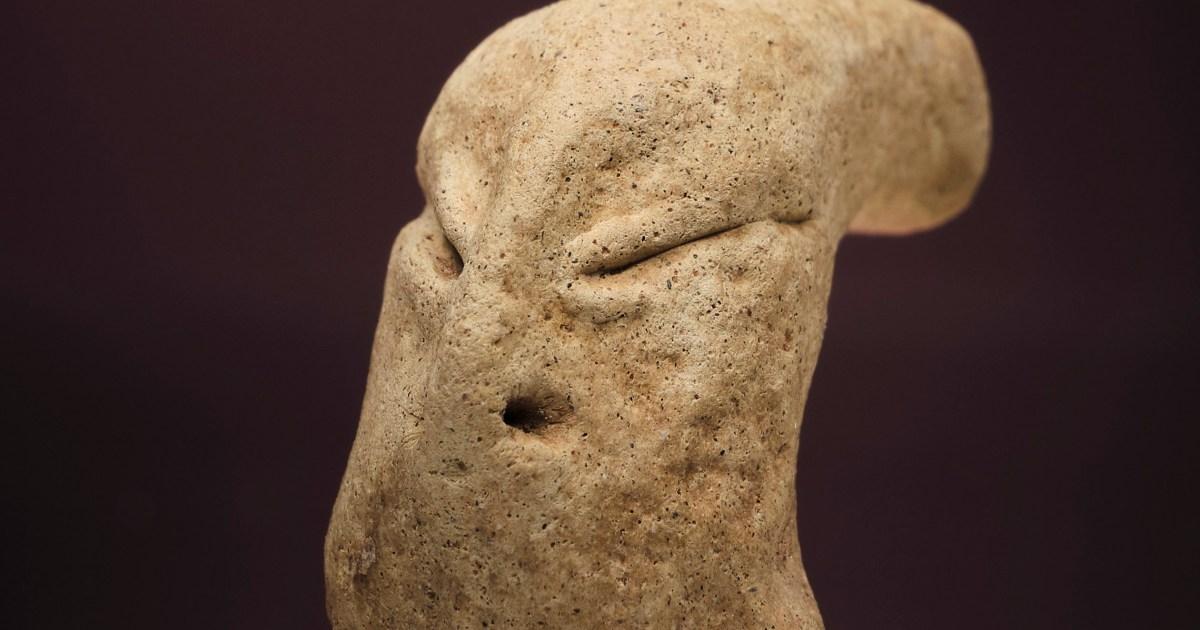
In the sands of Kuwait, a team of archaeologists has unearthed a collection of artifacts that resemble figures from science fiction rather than historical relics. These statues and masks, with their elongated heads, flattened noses, and oversized eyes, evoke images of extraterrestrial beings, sparking intrigue and speculation about their origins and purpose. Discovered during a joint excavation by Kuwait’s National Council of Arts and Letters (NNCAL) and the Polish Centre of Mediterranean Archaeology at the University of Warsaw, these peculiar objects offer a glimpse into the Ubaid culture, a period in Arabian prehistory spanning from 5500 to 4000 B.C. The Bahra 1 site, the location of this extraordinary find, has become a focal point for understanding life in Stone Age Arabia.
Paragraph 2: Unraveling the Ubaid Culture
The Ubaid period represents a significant era in the development of ancient Arabian societies. The artifacts discovered at Bahra 1 provide valuable insights into the cultural practices, artistic expressions, and technological advancements of the Ubaid people. The unusual features of the statues and masks raise questions about their symbolic meaning and potential ritualistic use within the Ubaid community. While similar artifacts have been found in Mesopotamia, this discovery marks the first time such objects have been unearthed in the Gulf region, highlighting the cultural exchange and interconnectedness of ancient civilizations.
Paragraph 3: Bahra 1: A Hub of Pottery Production
The excavations at Bahra 1 have yielded more than just enigmatic statues. The site has also proven to be a significant center for pottery production during the Ubaid period. Archaeologists have uncovered evidence of large-scale pottery manufacturing, revealing the range and sophistication of ceramic techniques employed by the Ubaid people. The discovery of "Coarse Red Ware," a new type of clay, adds another layer to the understanding of Ubaid pottery production and provides valuable material for scientific analysis. This revelation positions Bahra 1 as the oldest known pottery production site in the Gulf region, solidifying its importance in the archaeological landscape of ancient Arabia.
Paragraph 4: Deciphering the Environmental Past
The artifacts and materials found at Bahra 1 offer a unique opportunity to reconstruct the environmental conditions of the Arabian Stone Age. Through archaeobotanical analyses, specialists have examined organic remains embedded in the Coarse Red Ware, uncovering traces of wild plants such as reeds. These findings suggest the utilization of local resources in pottery production. Interestingly, imported Ubaid ware has revealed remnants of cultivated plants like barley and wheat, indicating agricultural practices and trade networks within the region. These discoveries provide a glimpse into the subsistence strategies and environmental interactions of the Ubaid people.
Paragraph 5: A Window into the Past, A Path to the Future
The 2024 excavation season at Bahra 1 has concluded, but the research continues. The unearthed artifacts, coupled with scientific analyses, have generated significant momentum in understanding the Ubaid culture and the broader context of Stone Age Arabia. The unique features of the statues and masks remain a puzzle, prompting further investigation into their symbolic and ritualistic significance. The discovery of Bahra 1 as a major pottery production center adds a crucial piece to the puzzle of ancient Arabian trade and technological development.
Paragraph 6: The Ongoing Quest for Knowledge
The Bahra 1 excavation represents a significant step forward in unraveling the mysteries of the Ubaid culture and the broader history of ancient Arabia. The alien-like features of the statues and masks continue to intrigue researchers, while the discovery of extensive pottery production sheds light on the technological advancements and trade networks of the time. Archaeobotanical analyses offer a glimpse into the environmental landscape and subsistence strategies of the Ubaid people. As the research continues, further discoveries and analyses promise to provide even richer insights into this fascinating period of human history, illuminating the lives, beliefs, and ingenuity of the people who inhabited this ancient land. The quest for knowledge continues, driven by the desire to understand our past and connect it to the present.