



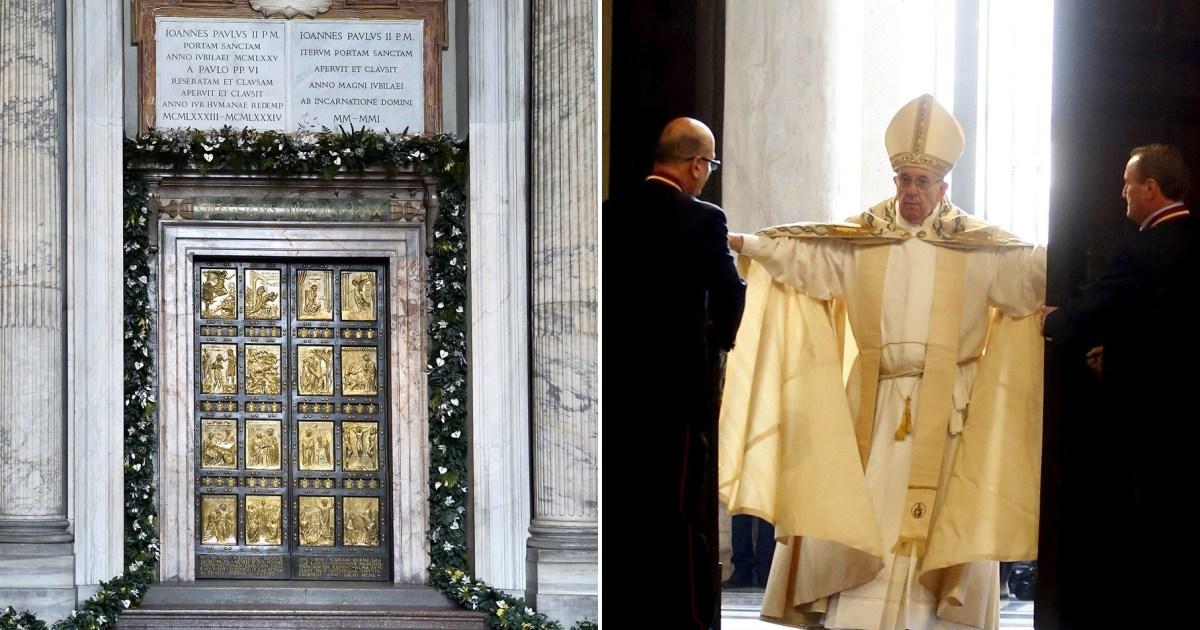
The Catholic Church is preparing for a momentous occasion, the opening of the Holy Doors, marking the commencement of the Jubilee Year 2025. This tradition, steeped in centuries of religious observance, symbolizes a period of grace, forgiveness, and spiritual renewal for the faithful. The Jubilee Year, a concept originating in the Old Testament, traditionally offers a pathway for believers to seek atonement for their sins and experience a deeper connection with God. The upcoming Jubilee, declared by Pope Francis, carries special significance, incorporating a novel element in its observance – the opening of a symbolic door in a prison setting, extending the message of hope and redemption to those incarcerated.
The central ritual of the Jubilee Year revolves around the opening of the Holy Doors, designated portals in specific basilicas that are traditionally sealed during non-Jubilee years. For the 2025 Jubilee, these sacred entrances will be unveiled at four prominent Roman basilicas: St. Peter’s Basilica in the Vatican, St. John Lateran, St. Mary Major, and St. Paul Outside the Walls. Adding a unique dimension to this Jubilee, a symbolic door will also be opened at Rebibbia Prison in Rome, a gesture intended to convey a message of hope and spiritual inclusion to prisoners worldwide. These doors, typically bricked up from the inside, will be ceremoniously unsealed by Pope Francis, signifying the beginning of the Holy Year and inviting pilgrims from around the globe to pass through them as a tangible act of seeking spiritual grace.
The tradition of opening Holy Doors traces its roots back to 1300, with the ritual itself first established in 1423. These doors, remaining open throughout the Jubilee year, offer a symbolic passageway for believers to approach God, seeking forgiveness and spiritual renewal. At the culmination of the Jubilee Year on January 6, 2026, the Pope will be the last to pass through these portals before they are sealed once more, marking the conclusion of this special period of grace. The inclusion of Rebibbia Prison in this tradition signifies a broadened scope of the Jubilee’s message, extending its embrace to those often marginalized by society.
Pope Francis, in his announcement of the Jubilee Year, expressed his hope that it would serve as a time of profound personal encounter with Jesus Christ, the ultimate “door” to salvation. This aspiration for genuine spiritual connection aligns with the Pope’s consistent emphasis on pastoral outreach and inclusivity, reflecting his commitment to engaging with those on the peripheries of society. His choice to incorporate a prison into the Jubilee rituals underscores this pastoral focus, offering a tangible expression of hope and redemption to the incarcerated.
The Vatican’s preparations for the Jubilee Year also include the unveiling of its annual Nativity scene, a symbolic representation of the birth of Jesus. This year’s display carries a poignant message of solidarity with the Palestinian people, featuring the infant Jesus lying in a manger lined with a keffiyeh, a traditional Palestinian scarf. This symbolic gesture reflects the Pope’s ongoing concern for peace and justice in the Holy Land, highlighting the suffering of those affected by conflict and displacement. The Nativity scene serves not only as a reminder of the Christmas story but also as a call for peace and compassion in regions experiencing hardship.
Beyond the symbolic gestures and rituals, the Jubilee Year also provides an opportunity for personal reflection and spiritual growth. It is a time for individuals to examine their lives, seek forgiveness for their transgressions, and renew their commitment to faith. The opening of the Holy Doors serves as a physical manifestation of this inner journey, a symbolic passageway towards spiritual renewal. Pope Francis, in his pronouncements on the upcoming Jubilee, has encouraged believers to embrace this opportunity for personal transformation and to deepen their relationship with God. The inclusion of the prison in the Jubilee rituals further emphasizes the universal nature of this call to spiritual renewal, extending its reach to all individuals, regardless of their circumstances.