



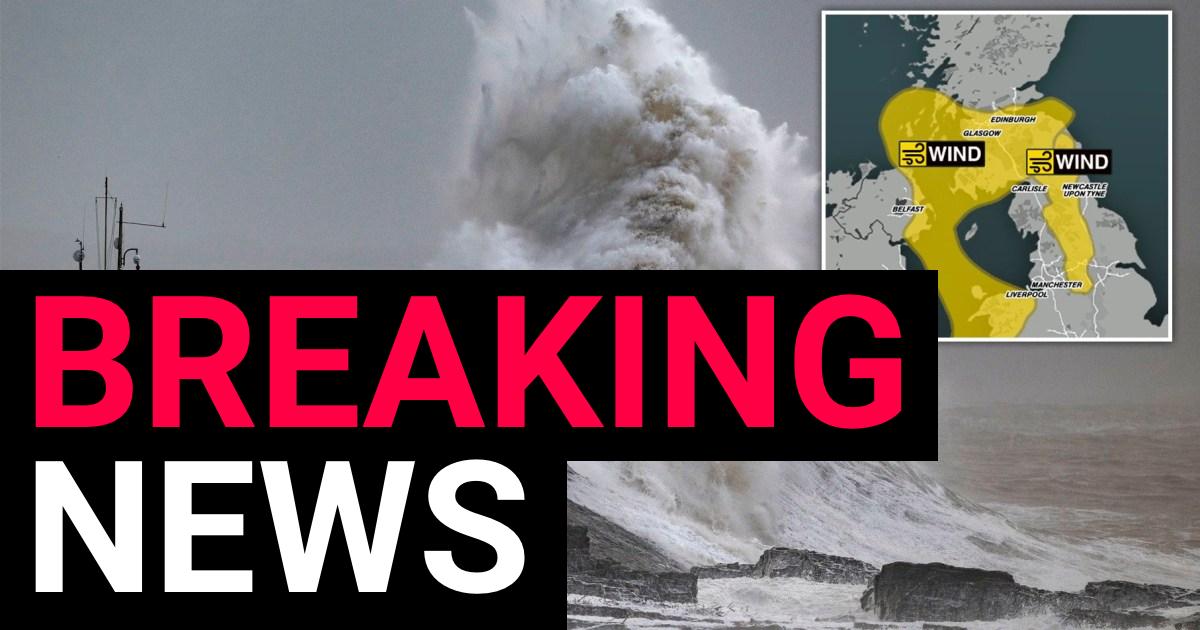
The UK braces for another round of severe weather as the Met Office issues two yellow weather warnings for strong winds, bringing potential disruption to travel and daily life just weeks after the devastating impact of Storm Arwen. These warnings follow closely on the heels of Storm Barra, which further compounded the challenges faced by communities still recovering from Arwen’s onslaught. This succession of storms highlights the increasing frequency and intensity of extreme weather events, raising concerns about the UK’s preparedness and resilience in the face of a changing climate. The warnings underscore the need for continued vigilance and proactive measures to mitigate the risks associated with such weather phenomena.
The first yellow wind warning covers a large swathe of northern England and parts of southern Scotland, effective from 3 am to 2 pm on Wednesday. This region can expect gales exceeding 60 mph, posing a significant threat to infrastructure, transportation, and public safety. The second warning encompasses the Welsh coast, coastal Northern Ireland, and southern Scotland, beginning at 3 pm on Tuesday and lasting until 8 pm on Wednesday. While not predicting winds as strong as the first warning, this area is still anticipated to experience gusts of 40 to 50 mph inland, with potentially stronger gusts of 50 to 60 mph in exposed coastal locations. These sustained high winds can lead to downed power lines, fallen trees, and damage to property, disrupting essential services and posing risks to individuals.
The Met Office warns of likely travel disruptions across the affected regions, impacting road, rail, air, and ferry services. Commuters should anticipate delays and potential cancellations of bus and train services. Coastal areas are particularly vulnerable, with large waves expected to create hazardous conditions. Authorities urge residents to exercise caution, avoid unnecessary travel, and secure loose objects that could be blown around by the strong winds. The warnings highlight the importance of preparedness and proactive measures to minimize the impact of severe weather on daily life.
The recent storms, particularly Arwen and Barra, have left a trail of destruction across the UK, serving as stark reminders of the disruptive power of nature. Storm Arwen, which struck in late November, left hundreds of thousands of homes without power, some for extended periods, highlighting vulnerabilities in the national grid and the challenges of restoring essential services in remote areas. The storm also caused significant damage to infrastructure, including downed trees and power lines, disrupting transportation and communication networks. Storm Barra, following close behind, exacerbated the situation, further delaying recovery efforts and compounding the hardship faced by affected communities.
The human cost of these storms is also significant. Two men tragically lost their lives during Storm Arwen after being struck by falling trees, underscoring the direct threat to life posed by extreme weather events. The disappearance and subsequent death of former England rugby international Tom Voyce during flooding caused by Storm Arwen further emphasized the dangers associated with these storms. These tragedies serve as poignant reminders of the need for increased public awareness and preparedness in the face of increasingly volatile weather patterns.
The repeated occurrence of severe storms raises concerns about the UK’s preparedness and resilience in a changing climate. The increasing frequency and intensity of extreme weather events necessitate a proactive approach to mitigating risks and ensuring the safety and well-being of communities. This includes investing in robust infrastructure, strengthening emergency response capabilities, and improving early warning systems. Furthermore, promoting public awareness and education about the dangers of severe weather is crucial for fostering a culture of preparedness and resilience. The challenges posed by these recent storms underscore the urgency of addressing climate change and its associated impacts on weather patterns.