


The UK faced significant travel disruptions on December 21, 2024, one of the busiest travel days of the Christmas period, due to strong winds reaching speeds of up to 80 mph. Major roadways, including the M48 Severn Bridge and the A66 trans-Pennine route, were closed to all traffic, while the A15 Humber Bridge restricted access to high-sided vehicles. The M25, M4, and M5 motorways, typically congested during peak travel times, were anticipated to experience further delays due to the adverse weather conditions. The strong winds caused widespread disruption across multiple transportation modes, impacting road, air, rail, and ferry services.
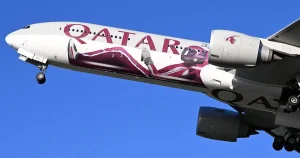
Air travel was significantly affected, with Heathrow Airport reporting cancellations and delays of over 200 flights due to strong winds and airspace restrictions. Dramatic footage emerged of an Air Lingus flight struggling to land at Leeds Bradford Airport, battling powerful crosswinds that forced the aircraft into a sideways approach before touching down. Ferry services were also suspended, with P&O Ferries halting its Larne-Cairnryan crossing for at least 24 hours, further complicating travel plans for those attempting to cross the Irish Sea.
Rail and bus services also experienced disruptions and cancellations, primarily in Scotland, Northern Ireland, and parts of northern England, regions covered by Met Office yellow wind warnings. The widespread transportation disruptions highlighted the vulnerability of the UK’s travel network to extreme weather events, particularly during busy periods like the Christmas holiday season. The combination of high winds, holiday travel volume, and various incidents further exacerbated the travel challenges faced by commuters and holiday travelers.
Beyond the wind-related disruptions, other incidents added to the travel woes. A multi-vehicle crash on the M6 near Crewe caused significant traffic jams, with tailbacks stretching for at least four miles and delays of up to 30 minutes. Two lanes were closed northbound between junctions 17 and 18, adding to the congestion already caused by the adverse weather. A road traffic collision on the M1 near St Albans further compounded the problems, closing two of three southbound lanes and causing delays of approximately 15 minutes. The incident created knock-on congestion up to junction 8 and on the connecting A414 eastbound.
In London, a person being hit by a train between Birkbeck and Beckenham Junction stations led to the suspension of train services between Brixton and Shortlands. Emergency services responded to the incident, requiring the electricity supply to be switched off for safe access. Southeastern and Southern train services were cancelled, delayed, or diverted, adding to the travel disruptions in the capital. Further complicating the London commute, planned closures and disruptions on the London Underground and DLR networks continued. The DLR experienced service suspensions between various stations, while the Piccadilly line faced severe delays due to a train shortage caused by leaf fall on the tracks.
The combination of high winds, traffic accidents, and planned engineering works created a perfect storm of travel disruption across the UK. Major roads were closed, flights were grounded or delayed, ferry services were suspended, and rail and bus services faced cancellations and disruptions. The incidents underscored the challenges of maintaining a robust transportation network during periods of adverse weather and high demand, particularly during the holiday season. The cumulative effect of these disruptions left many travelers stranded or facing significant delays, highlighting the importance of robust contingency planning and effective communication during such events.