


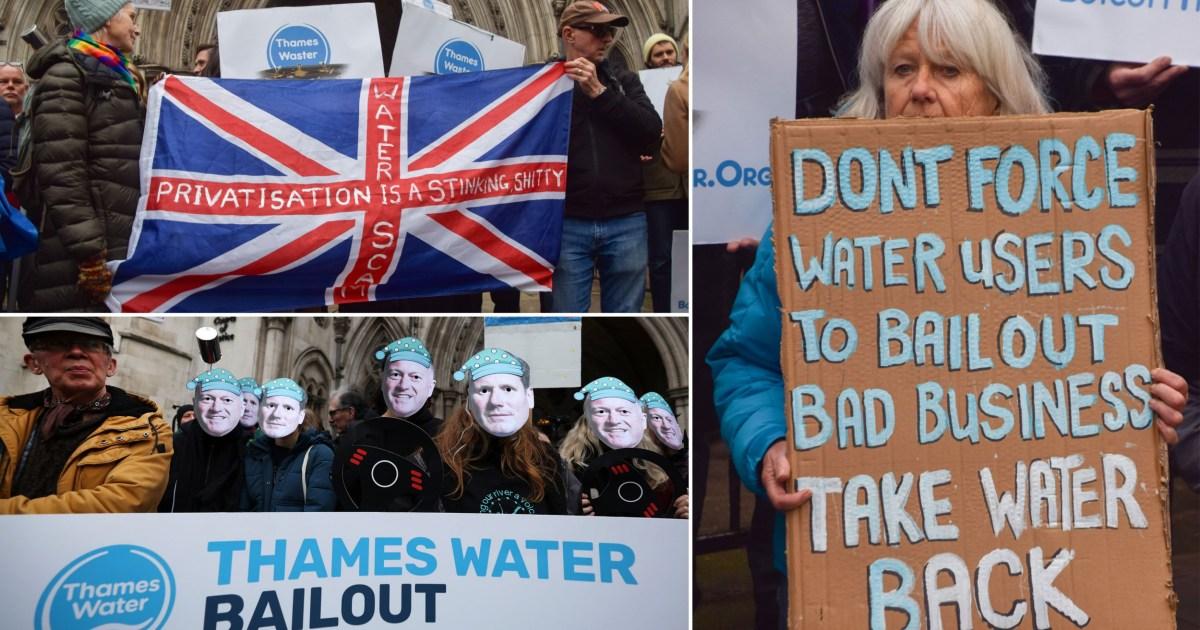
Thames Water Bailout Sparks Public Outcry and Legal Challenge
Thames Water, a major UK water utility, is facing severe financial difficulties and has sought a £3 billion loan from the High Court to avoid potential bankruptcy by March. This move has sparked significant public outrage and protests, with campaigners arguing that the bailout will burden customers with increased water bills. Demonstrators gathered outside the High Court during preliminary proceedings, voicing concerns about the financial implications of the loan and the lack of public consultation in the process. Windrush Against Sewage Pollution, a campaign group, delivered a letter to the presiding judge, urging the court to consider public submissions before granting final approval for the bailout.
The core issue at stake is the potential impact on Thames Water customers. Analysis by We Own It suggests that the average customer could face a £250 annual increase in water bills if the bailout is granted. Critics argue that this places an unfair burden on consumers, effectively forcing them to shoulder the consequences of the company’s financial mismanagement. The situation is further complicated by the upcoming decision by Ofwat, the water regulator, regarding the permissible increase in water bills over the next five years. If Thames Water is granted the loan and simultaneously permitted to raise its rates, customers could face a double blow to their finances.
The protests highlight a broader concern about the performance of privatized water companies in the UK. Thames Water, like several other water utilities, has been criticized for its record on pollution incidents. In the six months leading up to September 30, the company reported a 40% increase in category one to three pollution incidents, totaling 359. This raises questions about the company’s investment in essential infrastructure and its commitment to environmental protection. Campaigners argue that a bailout would reward poor management and a lack of accountability.
Various solutions have been proposed to address the Thames Water crisis. Some campaigners advocate for public ownership of the company, citing the precedent of the Blair government’s intervention in the privatized rail industry in 2002. This approach, they suggest, would allow for greater public control over the company’s operations and investments, ultimately benefiting consumers and the environment. Another suggestion involves placing Thames Water into special administration, revoking its license, and bringing it under public ownership. This could potentially reduce the company’s debt burden, making it more financially viable for public investment in the future.
The government’s response to the situation has been cautious, stating that it is closely monitoring the legal proceedings and refraining from further comment. However, the Department for Environmental and Rural Affairs (Defra) has recently announced measures to increase compensation for customers impacted by water service failures. This includes higher payouts for issues such as low water pressure and sewer flooding, reflecting a growing recognition of the need to protect consumers from the consequences of water company mismanagement.
The Thames Water bailout case raises fundamental questions about the privatization of essential utilities and the balance between corporate interests and public welfare. The outcome of the High Court proceedings and the subsequent regulatory decisions will have significant implications for Thames Water customers, the future of the water industry, and the broader debate on the role of private companies in providing essential services. The public outcry underscores the need for greater transparency, accountability, and public participation in decisions that affect access to essential resources like water.