

The festive season, a time of joy and reunion, also brings the inevitable surge of holiday travel, promising potential chaos on Britain’s roads and railways. A confluence of factors, including a mid-week Christmas and planned rail engineering works, is expected to exacerbate the usual holiday rush, creating a prolonged period of pre-Christmas travel frenzy. Motoring experts predict a record-breaking 29 million trips before Christmas Day, followed by a similar wave of return journeys, setting the stage for potential gridlock on major motorways and around key transport hubs. Drivers are being urged to avoid peak travel times, if possible, to mitigate the risk of encountering significant delays and disruptions.
The looming Christmas getaway is expected to peak across two weekends, with the weekend before Christmas anticipated to be the busiest, seeing an estimated 14.3 million journeys. This surge comes on the heels of a predicted 5.7 million drivers taking to the roads on the Wednesday and Thursday preceding the weekend, indicating a longer than usual period of heightened traffic volume. “Frantic Friday” is projected to witness around 3 million journeys, escalating to 3.7 million on “Snarl-up Saturday.” However, the pinnacle of pre-Christmas travel is anticipated on Christmas Eve, with a staggering 3.8 million drivers planning journeys, coinciding with regular commuter traffic and significantly increasing the likelihood of widespread congestion and delays.
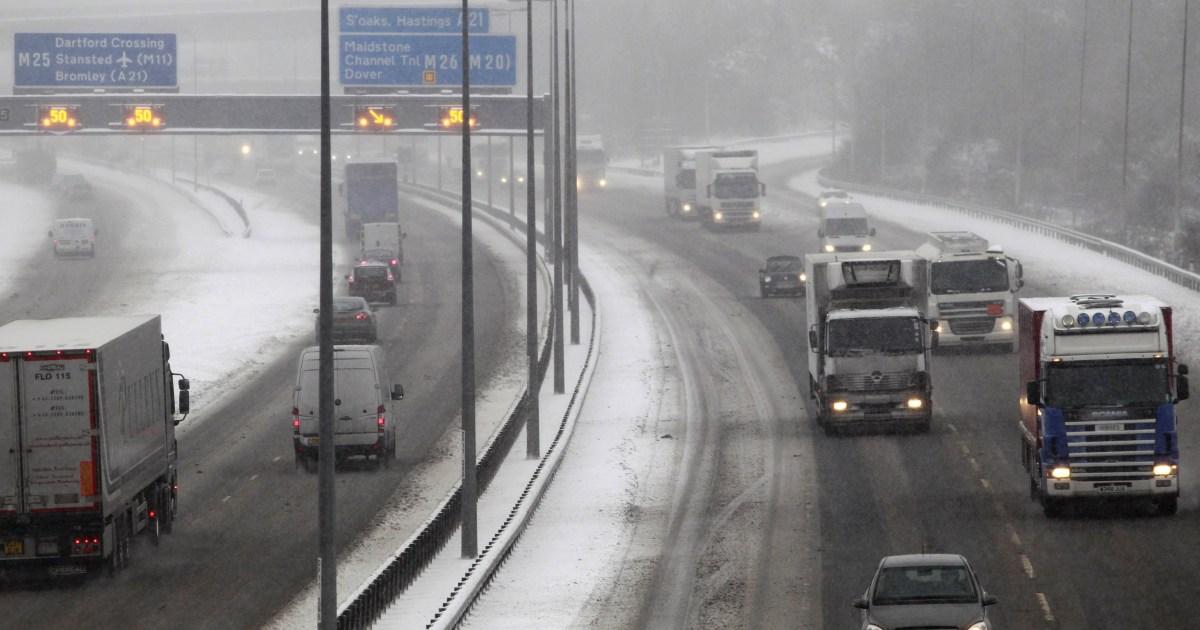
The major traffic hotspots are predicted to include key motorways such as the M25, M3, and M53, alongside routes leading to Gatwick Airport. Other areas of concern include the M4/M5 interchange near Bristol and the M60 near Manchester. Motorists are advised to be prepared for significant delays on these routes, particularly during peak hours. The M3, for instance, is expected to experience queues exceeding 45 minutes between Junction 2 (M25) and the south coast on Friday evening. Similarly, the M25 anticlockwise, from the M1 junction near Watford to the M24 for Gatwick Airport, is also identified as a potential bottleneck.
While roads are expected to bear the brunt of the holiday travel surge, the rail network is also facing significant disruptions due to planned engineering works. These works, typically scheduled during the holiday period to minimize disruption to regular commuters, will impact major stations like London Liverpool Street, Paddington, and St Pancras. Liverpool Street, the UK’s busiest station, will be entirely closed between Christmas and New Year, affecting numerous services, including the Stansted Express, Elizabeth line, Greater Anglia, c2c, and some Overground lines. The closure of such a crucial transport hub is likely to further increase pressure on road networks as travellers seek alternative means of transport.
The combination of record-breaking road trips and significant rail disruptions paints a picture of potential travel mayhem during the Christmas period. To navigate this challenging travel landscape, motorists are advised to plan their journeys meticulously, considering alternative routes and avoiding peak hours whenever possible. The worst travel times are identified as between 1 pm and 7 pm on “Frantic Friday” and “Snarl-up Saturday.” If travel can be delayed until after 6 pm in the lead-up to Christmas, it might help avoid the worst of the getaway rush.
For return journeys, the busiest period is predicted to be Boxing Day, with an estimated 4.4 million trips, followed by Friday, December 27th, with a projected 3.8 million journeys. The convergence of road and rail disruptions underscores the importance of careful planning and flexibility for all holiday travellers. Staying informed about traffic updates, alternative routes, and rail service disruptions will be crucial for navigating the complexities of Christmas travel and ensuring a smoother, less stressful journey.