



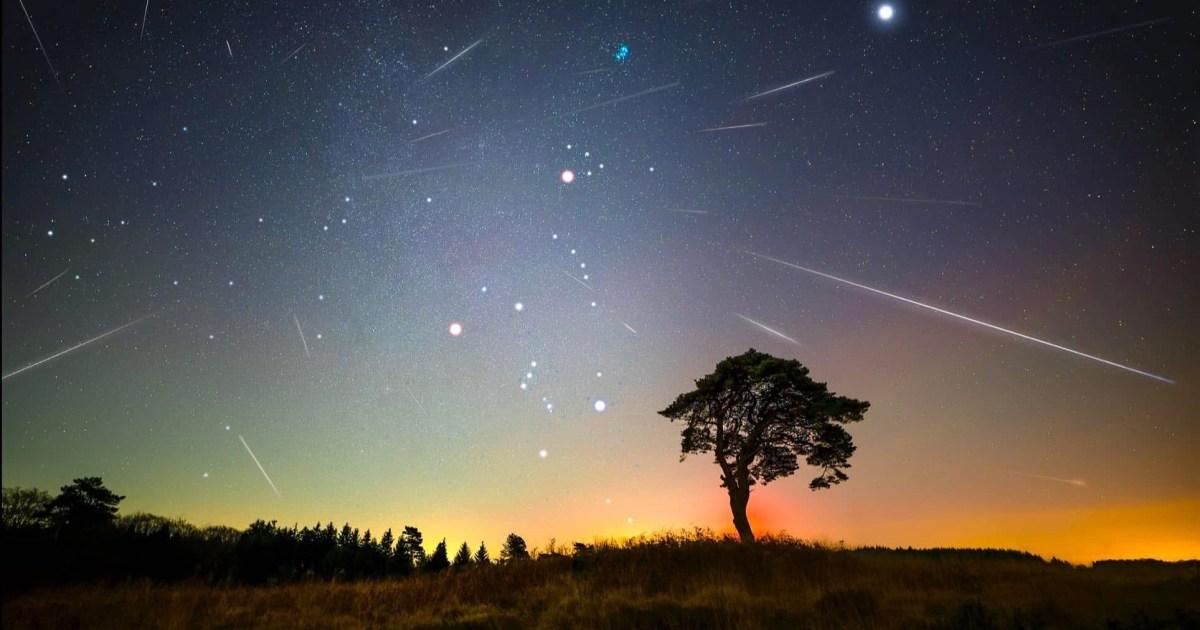
The Geminid meteor shower, an annual celestial spectacle, graces the night sky every December, offering a dazzling display of multi-colored meteors. Unlike most meteor showers originating from cometary debris, the Geminids are unique, stemming from the rocky asteroid 3200 Phaethon. This asteroid, unlike icy comets, leaves behind a trail of rocky particles that intersect with Earth’s atmosphere, creating a vibrant shower distinct in its composition and visual characteristics.
As Earth traverses through this debris field, the particles, traveling at speeds up to 150,000 mph (241,000 km/h), collide with the atmosphere. This high-speed impact causes the particles to vaporize, leaving behind incandescent streaks of light—the meteors we observe. The Geminids are particularly renowned for their diverse color palette, showcasing hues of yellow, green, red, and blue, in addition to the typical white. This vibrant display is attributed to the presence of trace metals like sodium and calcium within the asteroid’s fragments, similar to the elements used to create colorful fireworks.
The Geminid meteor shower is active from December 4th to 20th each year, typically peaking around mid-December. During its peak, under ideal conditions, the shower can produce an impressive display of over 120 meteors per hour, rivaling the famed Perseids meteor shower in August. However, the actual number of visible meteors can be significantly lower due to factors like light pollution, cloud cover, and the moon’s phase. A full moon, for instance, can wash out the fainter meteors, diminishing the overall spectacle.
To maximize your chances of witnessing this celestial event, seek out locations far from urban light pollution. Wide-open spaces, away from streetlights and buildings, offer the best viewing opportunities. Since meteors can appear anywhere in the sky, a broad, unobstructed view is essential. While the meteors appear to radiate from the constellation Gemini, hence the shower’s name, it’s best to avoid looking directly at this radiant point. Focusing on the darker areas slightly away from the radiant will yield a more expansive view and prevent potential eye strain. No special equipment like binoculars or telescopes is required; the naked eye is perfectly suited for observing these fleeting streaks of light.
Observing a meteor shower requires patience. It’s a waiting game, with no precise time guaranteeing maximum visibility. Comfort is key; bring a comfortable chair or blanket to lie on and dress warmly, as you might be outside for an extended period. While the Geminids are visible from both hemispheres, those in the Northern Hemisphere are generally treated to a more vibrant display due to the radiant’s higher position in the sky. Checking weather forecasts beforehand is crucial, as cloud cover can significantly obstruct the view.
The Geminids offer a unique opportunity to connect with the cosmos. This remarkable shower, born from a rocky asteroid rather than a comet, showcases the diversity of celestial events and the fascinating interplay between Earth and the remnants of our solar system’s formation. The vibrant colors, the sheer number of meteors during peak activity, and the accessibility of viewing with the naked eye make the Geminids a truly captivating astronomical event, accessible to anyone willing to venture out into the darkness and look up.