



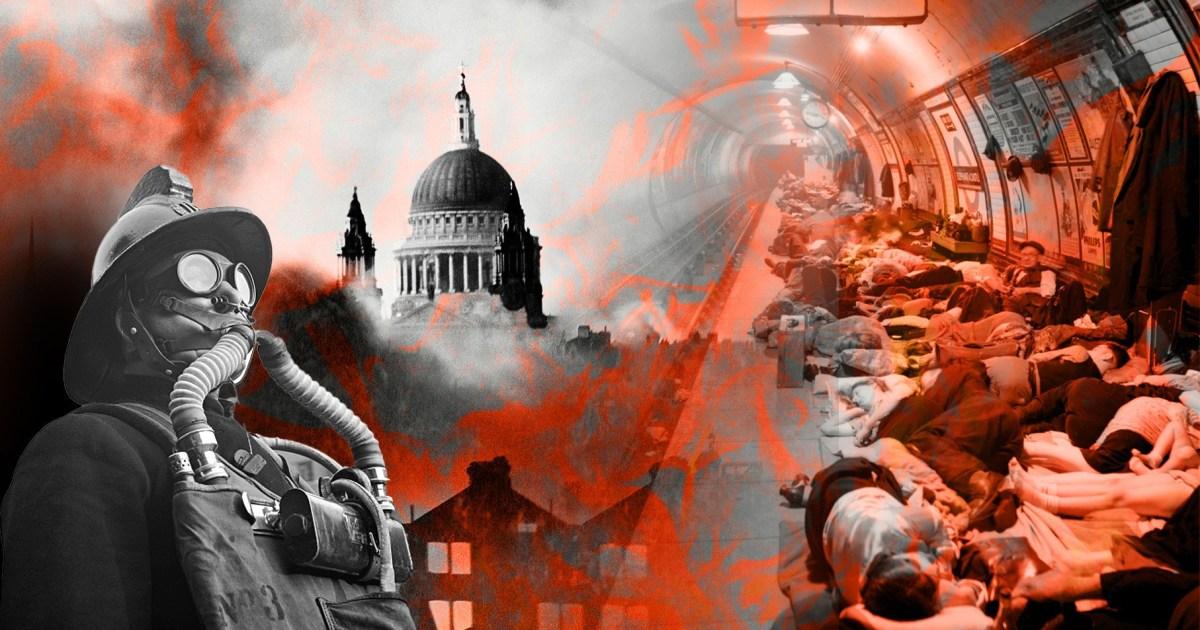
The night of December 29, 1940, remains etched in London’s history as the most devastating night of the Blitz, a period of sustained aerial bombing by the German Luftwaffe during World War II. As dawn broke on that fateful day, a thick haze of smoke choked the narrow streets, a grim testament to the relentless onslaught that had rained down upon the capital. More than 100,000 bombs had been dropped, transforming the heart of London into a scene of widespread destruction. American journalist Ernie Pyle, witnessing the inferno firsthand, aptly dubbed it the “Second Great Fire of London,” a chilling echo of the devastating 1666 conflagration. The attacks, commencing around 6:15 pm and continuing until approximately 9 pm, focused heavily on central London, obliterating vast swathes of the historic square mile. The immediate death toll reached 160, a number that tragically climbed in the following days as those succumbing to their injuries were counted.
Pyle’s vivid descriptions capture the horrifying beauty of the blazing city: “For on that night this old, old city – even though I must bite my tongue in shame for saying it – was the most beautiful sight I have ever seen. You have all seen big fires, but I doubt if you have ever seen the whole horizon of a city lined with great fires – scores of them, perhaps hundreds.” He further recounted the awe-inspiring spectacle of St. Paul’s Cathedral, its iconic dome and spires silhouetted against a backdrop of billowing pinkish-white smoke and towering flames. Despite being directly in the line of fire, St. Paul’s miraculously survived, becoming a symbol of resilience amidst the devastation.
The iconic image of St. Paul’s Cathedral standing defiant amidst the inferno became a powerful symbol of London’s resolve. Prime Minister Winston Churchill’s explicit order, “St. Paul’s must be saved at all costs,” underscored the cathedral’s symbolic importance. Despite being struck by 28 incendiary bombs, the building remained remarkably intact, its survival captured in the now-famous photograph “St. Paul’s Survives.” The widespread use of incendiary devices compounded the destruction throughout the city. These bombs, designed to ignite fires, spread rapidly and proved incredibly difficult to extinguish, contributing to the widespread devastation. Further exacerbating the situation was the low tide of the River Thames, which hampered firefighting efforts by limiting access to water. Sam Chauveau, a former London firefighter, recalled the daunting task of battling the flames atop the stock exchange, witnessing the sky transform from an inky black to a fiery orange as the city burned around them.
The targeted attacks on central London aimed to cripple the city’s infrastructure and morale. The Nazis focused on key areas, including train stations, in their attempt to disrupt transportation and communication networks. The Dean of St. Paul’s, W.R. Matthews, recorded his experiences of the relentless bombing in his book “St. Paul’s Cathedral in Wartime.” He recounted the constant barrage of bombs falling on the cathedral and the tireless efforts of the watch to extinguish the fires using sandbags and stirrup pumps, resources deemed vital due to the high demand for water elsewhere. From his vantage point, he witnessed the “magnificent though terrible spectacle” of fires raging on all sides of the cathedral, a testament to the indiscriminate nature of the bombing. Observers stationed on the roof of the Daily Telegraph building, with a clear view of St. Paul’s from the west, believed the cathedral was doomed, describing a “veritable cascade of bombs” hitting and glancing off the dome.
The resilience of the St. Paul’s watch is evident in their ability to quell most fires near the cathedral despite limited resources. Dean Matthews recounts extinguishing a bomb that fell into the Library aisle with the help of Mr. Allen, a moment he cherished as his personal contribution to the war effort. He humorously remarked on his “affection for the scar left by that bomb,” a tangible reminder of the night’s events. The relentless Blitz, while peaking on December 29, 1940, continued to terrorize London and other British cities for months. Between September 1940 and May 1941, German bombers unleashed a staggering 100 tonnes of explosives on 16 cities across Britain.
London endured 71 aerial attacks during the Blitz, including 57 consecutive nights of bombing. The first 30 days alone resulted in nearly 6,000 deaths and twice as many severe injuries. The devastating campaign ultimately claimed the lives of over 20,000 Londoners, rendered 1.5 million homeless, and dramatically reshaped the city’s landscape, marking the most significant transformation since the Great Fire of 1666. The Blitz, while inflicting unimaginable destruction and loss of life, also revealed the spirit of resilience and determination of the Londoners. Life continued amidst the rubble, with milkmen making their rounds and people carrying on with their daily routines as best they could. The image of a milkman navigating the debris-strewn streets became another iconic symbol of London’s indomitable spirit. The night of December 29, 1940, serves as a stark reminder of the horrors of war and the enduring strength of the human spirit in the face of adversity.