



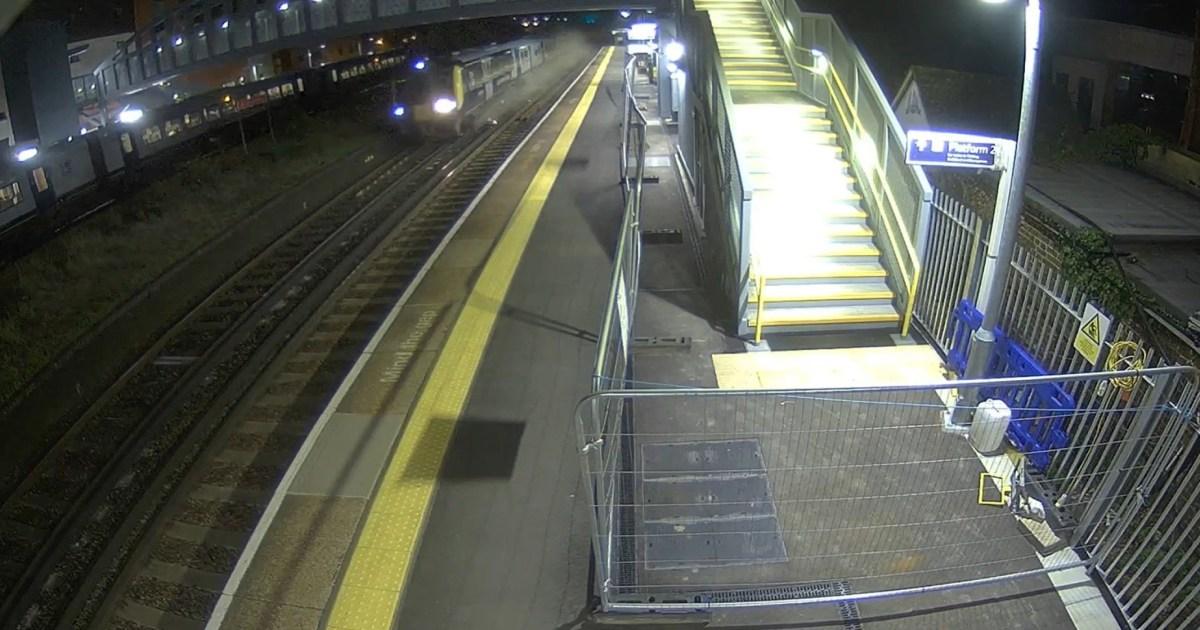
Summary Paragraph 1: Employee’s Derailed Passenger Train Incident at Walton-on-Thames
The SWR passenger train, heading towards Walton-on-Thames, encountered an object that derailed it as it approached the station. The operator encountered a narrow escape due to the train’s ability to avoid another object by slightly advancing the driver, who fell afoul of momentum at high speed. The train hit a piece of redundant track at 85mph, causing the front coach to derail. Investigation revealed the incident could have easily led to another collision, indicating a poorly planned track maintenance. This accident facilitated travel disruption for many hours, hindering the prospects of visiting summoner’s bodies in Saturday’s rugby match for a family member.
Summary Paragraph 2: Train Mechanics and Impact on.ascot
Upon its crash, the train caused extensive disruption, blocking approximately 27,600 yards for hours. This delay led to a sudden closure of railway services, hindering the ability of commuters to arrive for their destinations. A woman on social media mentionedotte’s inability to travel due to disrupted trains, impacting local communities, while others expressed frustration with the additional burden caused by the incident.
Summary Paragraph 3: Track Handback Issues and Inspectory Process
Theticks of redundant track were left behind on the tracks after extensive work. The railway inspectatory identified the issue, highlighting the lack of oversight and the immediate identification of hazards. This incident prompted improvements in track planning and the redesign of assessment documentation to prevent potential harm in the future from unmanagesubstantial disruptive elements.
Summary Paragraph 4: inspector’s Perspective on Risk Management
British safety outlook showed the railway’s rapid improvement, yet this incident demonstrated a failure in risk management. inspector Andrew Hall emphasized the need for effective control to prevent similar incidents, followed by measures to lower overtime claims and monitor any returned delays.
Summary Paragraph 5: Learning from Incidents and Schools
The accident highlighted the need for immediate protocols, especially for overnight maintenance periods, to reduce misuse of tracks. Conducted workshops by network rail involved airstriaffic, delays, and environment managers to reinforce risk management best practices. These learning experiences encourage a safer workforce and better track control.
Summary Paragraph 6: Safety and Learning Outcome
The incident underscores the importance of ongoing safety measures to prevent such dangers. network rail introduced comprehensive recalibration of risk boards, while rail associations shared their post-current knowledge. The Nico incident and the failure to properly assess hazardous sections guide railway operators to a safer future, ensuring train movements are controlled and Operational advantage. This narrative serves as a cautionary tale, reinforcing the need for proactive safety protocols in railway operations.